What Is Bath Hardware, Exactly?
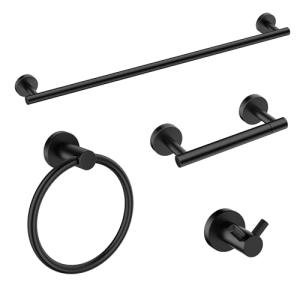
Bath hardware refers to the mounted fixtures and accessories that support the daily function of your bathroom. Unlike plumbing fixtures (faucets, showerheads, drains), bath hardware pieces are typically non-plumbed and wall or cabinet mounted. They include:
Towel bars and towel rings — the workhorses of the category. Towel bars come in standard lengths of 18 inches and 24 inches, with longer 30-inch and 36-inch options available for larger bathrooms or double-wide bars. Towel rings are a compact alternative when wall space is limited.
Robe hooks — a single hook or a double hook mounted near the shower, tub, or door. Deceptively simple, but endlessly useful. Nobody wants to drape a robe over the towel bar.
Toilet paper holders — available in standard surface-mounted styles, recessed in-wall versions, freestanding floor units, and spring-loaded or pivoting designs that make changing the roll easier than it sounds.
Shower caddies and shelving — corner shelves, tension pole caddies, and wall-mounted storage that keep shampoos, conditioners, and soaps organized inside the shower or tub area.
Cabinet hardware — the knobs, pulls, and handles on your vanity drawers and doors. Small in size, big in visual impact.
Grab bars — safety-focused hardware that's increasingly being designed to look beautiful, not institutional. Modern grab bars come in the same finishes as decorative hardware, making them a seamless addition to any bathroom.
Towel warmers — a step above the standard towel bar, these heated rails keep towels dry and warm. Once considered a luxury item, they've become much more accessible across a range of price points.
Why Bath Hardware Matters More Than You Think
Here's a thought experiment: imagine your bathroom with mismatched hardware — a chrome towel bar, a brushed nickel toilet paper holder, oil-rubbed bronze cabinet pulls, and a polished gold robe hook. Even if each piece is individually attractive, the overall effect feels chaotic and unfinished. Now imagine the same room with every piece in a single coordinated finish. Suddenly the whole space feels intentional, curated, and put-together — even if nothing else changed.
That's the power of bath hardware. It's one of the most cost-effective ways to refresh a bathroom without any major construction. A full set of coordinated hardware — towel bar, toilet paper holder, robe hook, and towel ring — can typically be installed over a weekend with basic tools, and the transformation is immediate.
Beyond aesthetics, well-chosen hardware makes a real difference in everyday usability. A towel bar positioned at the wrong height is annoying every single morning. A toilet paper holder that wobbles every time you reach for it is a small but persistent frustration. A soap dish that pools water and never drains properly becomes a breeding ground for mildew. These things matter in a room you use multiple times every day.
Materials: What You're Really Buying
The material your bath hardware is made from determines how long it lasts, how it handles the humid bathroom environment, and how much maintenance it requires over time.
Solid brass is widely considered the gold standard for bath hardware. It's naturally corrosion-resistant, extremely durable, and holds a finish exceptionally well. Solid brass hardware can last decades with minimal upkeep. It tends to sit at a higher price point, but the longevity justifies the investment.
Stainless steel is a strong runner-up — highly resistant to rust and corrosion, low-maintenance, and well-suited to modern design aesthetics. It's a particularly smart choice for bathrooms that see heavy use or high humidity.
Zinc alloy is common in mid-range hardware. It's heavier than plastic, holds detail well, and can be finished attractively. It's less corrosion-resistant than brass or stainless steel, but a good quality zinc alloy piece with a proper coating will perform reliably for many years.
Aluminum is lightweight and rust-resistant, making it a solid choice for certain hardware types, though it's generally considered less premium than brass or steel.
What to watch out for: hollow or thin-gauge metal construction. Some lower-priced hardware pieces look perfectly fine in photos but feel flimsy when installed. If you can handle the piece before buying, a solid weight is a good sign of quality construction.
Finishes: Where Style Meets Durability
The finish is the surface coating applied to the base material, and it's what you actually see and touch. The finish affects both the look of the hardware and how well it holds up over time.
Polished chrome is the classic bathroom finish — bright, reflective, and clean. It pairs beautifully with white and grey color schemes and suits both traditional and contemporary styles. It shows water spots and fingerprints more readily than matte finishes, so it requires a little more regular wiping down.
Brushed nickel has been a dominant finish in bathroom design for the past two decades, and for good reason. Its soft, muted sheen is versatile enough to work in almost any style of bathroom, and it hides water spots and minor scratches far better than polished surfaces.
Matte black has surged in popularity and shows no signs of slowing down. It creates bold contrast in light-toned bathrooms, suits modern and industrial aesthetics beautifully, and has a sophisticated, intentional quality that can feel very high-end. Like brushed nickel, it's forgiving with everyday marks and smudges.
Oil-rubbed bronze brings warmth and depth to a bathroom. The deliberately antiqued, dark brown tones suit traditional, rustic, and transitional spaces particularly well. It tends to develop subtle variation over time, which adds character rather than looking worn.
Polished brass and unlacquered brass have made a genuine comeback in interior design. Warm gold tones feel luxurious without being over-the-top, and unlacquered brass develops a natural patina over time that many homeowners love.
Satin brass and champagne bronze occupy a softer middle ground — warmer than nickel but subtler than polished brass. These finishes work exceptionally well in transitional spaces that blend traditional and contemporary elements.
One of the biggest trends right now is mixing metals thoughtfully. The key word is thoughtfully — it works best when one finish is dominant and a second acts as an accent, rather than three or four competing equally for attention.
For longevity, look for hardware with PVD (physical vapor deposition) coatings. PVD is a finishing process that bonds the surface color at a molecular level, making it significantly more resistant to scratching, tarnishing, and the inevitable abuse of daily bathroom use.
Buying as a Set vs. Mixing Individual Pieces
There are two main approaches to purchasing bath hardware.
Hardware sets — typically sold as 3-piece or 5-piece collections — include matching towel bar, toilet paper holder, towel ring, and robe hook(s), all in the same finish and design line. Sets are the most reliable way to ensure a cohesive look, and they're often more economical than buying individual pieces from the same collection separately. They're ideal for full bathroom refreshes and renovation projects.
Individual pieces give you more flexibility to choose the exact configuration you need. Maybe your bathroom layout calls for two robe hooks instead of one, or you need a longer towel bar than what's included in standard sets. Buying individual pieces lets you customize to your specific space.
If mixing pieces from different collections or brands, always prioritize matching the finish. Slight differences in hardware profile are usually not noticeable in daily use; mismatched finishes are immediately apparent.
Choosing Hardware for Your Bathroom Style
Your bathroom's overall aesthetic should guide your hardware selection, but it doesn't have to limit it.
Modern and contemporary bathrooms call for clean lines, minimal ornamentation, and bold finishes. Matte black, polished chrome, and brushed nickel all work well. Look for hardware with geometric profiles and concealed or minimalist mounting hardware.
Traditional and transitional spaces suit warmer finishes like oil-rubbed bronze, polished brass, or champagne bronze. Hardware with subtle curves, classic profiles, and more visible detailing integrates naturally.
Farmhouse and rustic bathrooms pair well with matte black or unlacquered brass, particularly pieces with a more handcrafted or forge-like quality. Simple, utilitarian shapes work better than ornate ones.
Eclectic or maximalist bathrooms are actually the most forgiving — bolder, more sculptural hardware pieces can be a genuine design statement. Antique brass, hand-hammered finishes, and unusual silhouettes all find a natural home here.
Installation: What to Know Before You Buy
Most bath hardware is surface-mounted, meaning it attaches directly to the wall surface using screws and mounting plates. For tile walls, you'll need masonry drill bits and appropriate anchors. Drywall installation is simpler but it's worth anchoring into wall studs wherever possible, especially for towel bars and grab bars that will bear real weight.
Standard towel bar height is typically 48 inches from the floor, though this can be adjusted based on your own height and preference. Toilet paper holders are generally positioned 26 inches from the floor, set to the side of the toilet within comfortable reach. Robe hooks work best at around 65–70 inches from the floor — high enough to keep a robe or towel off the ground, but reachable without stretching.
Some newer hardware lines include installation innovations like pre-marked templates or press-and-mark ink stamps that show you exactly where to drill, eliminating a lot of the guesswork from the process.
A Note on Accessibility
If you're designing a bathroom for aging-in-place or for someone with mobility considerations, bath hardware selection becomes even more important. Modern grab bars are a far cry from the institutional steel bars of decades past — today's options come in the same decorative finishes as standard hardware and are designed to look like they belong in the room. ADA-compliant hardware has specific requirements around projection, clearance, and structural support. When in doubt, consulting a licensed contractor for grab bar installation is a smart call, as proper wall blocking or reinforcement is often required.
Bath hardware is one of those categories where a modest investment pays outsized dividends in both daily experience and visual satisfaction. The pieces you choose will be used by everyone in your household, multiple times a day, for years. Buying well-made hardware in a coordinated finish, suited to your bathroom's style and your household's real needs, is simply a good decision — one you'll be quietly grateful for every single morning.
Take the time to measure your space, choose a finish you genuinely love, and prioritize solid materials over bargain pricing. Your bathroom will thank you.