Why a Pool Brush Is the Most Underrated Tool You Own
Ask any experienced pool owner what single piece of equipment they'd never go without, and a surprising number will say their pool brush — not their robotic cleaner, not their chemical kit, not their filter system. Just a simple brush on a pole.
That answer might seem old-fashioned, but there's real wisdom behind it. Robotic and automatic pool cleaners do an admirable job of sweeping debris from the floor, but they can't reach the corners, the steps, the tight curve where your wall meets the floor, or the waterline tiles where calcium scale quietly builds up. Only a brush gets in there. And while pool chemicals are critical for sanitizing water, they work dramatically better when algae and biofilm have first been physically disrupted from the pool surface. A brush doesn't replace your other tools — it makes all of them work better.
Beyond the cleaning benefits, brushing your pool regularly is one of the most cost-effective habits you can build. Algae and bacteria are invisible long before they're visible. By the time you can see green or yellow patches forming on your walls, the growth has usually been underway for several days. A quick weekly brushing session knocks those spores loose before they establish, which means fewer chemical treatments, less strain on your filter, and fewer surprise green-pool emergencies on the morning of a pool party.
Simply put: if you brush weekly, your pool stays cleaner with less effort. It's one of those rare situations where doing more of a simple thing actually saves you time and money overall.
The Main Types of Pool Brushes
Not all pool brushes are created equal, and the differences between them matter quite a bit depending on your pool's surface material and your cleaning goals. Here's a breakdown of what's out there and what each type is best for.
Nylon Pool Brushes
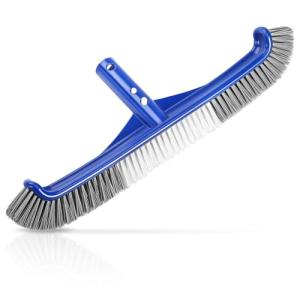
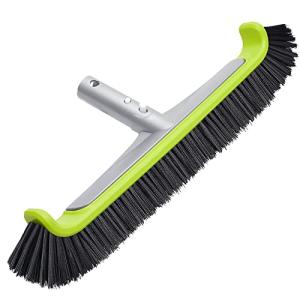
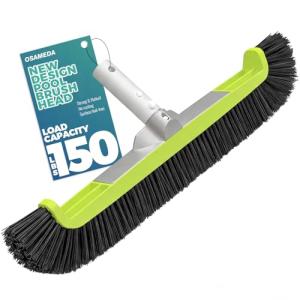
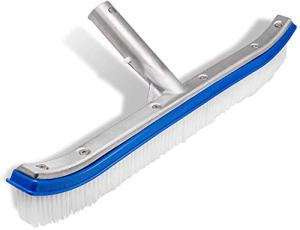
Nylon brushes are the workhorses of everyday pool maintenance. They're the most common type on the market for good reason: they're safe to use on virtually every pool surface, including vinyl liners, fiberglass shells, painted concrete, and tile. The bristles are flexible enough to avoid scratching or tearing delicate surfaces, yet stiff enough to dislodge the light dirt, dust, and early-stage algae spores that accumulate week to week.
If you're new to pool ownership and unsure where to start, a nylon brush is almost always the right first choice. It's forgiving, widely compatible, and handles the vast majority of routine cleaning tasks without any risk of damaging your pool. Nylon is also more durable than older polypropylene bristles — it holds up better against pool chemicals and temperature swings, meaning it won't become brittle and shed into your water prematurely.
One thing to keep in mind: nylon brushes are excellent for regular maintenance but may struggle against stubborn algae stains or deep-seated grime. That's where other brush types come in.
Stainless Steel Pool Brushes
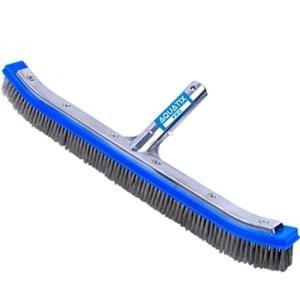
Stainless steel brushes are the heavy hitters of the pool brush world. Their rigid metal bristles are designed for one purpose: aggressive removal of tough algae, black algae, stubborn stains, and mineral deposits from hard pool surfaces. If you've got a concrete or gunite pool and you're dealing with a serious algae outbreak, a stainless steel brush will do what no nylon brush can.
That power comes with an important caveat. Stainless steel bristles should never be used on vinyl liners, fiberglass surfaces, or painted concrete. The metal will scratch and potentially tear softer materials, causing damage that's expensive to repair. Think of steel brushes as a specialist tool rather than an everyday cleaner — they're for targeted, occasional use on the right surfaces only.
For concrete and gunite pool owners, a stainless steel brush is genuinely worth having on hand, even if you only reach for it a few times a season when algae treatment is needed.
Combination Pool Brushes
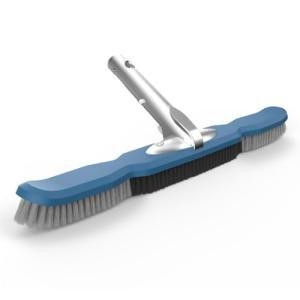
Combination brushes split the difference between nylon and stainless steel by incorporating both bristle types — usually alternating rows or a 50/50 blend across the brush head. This design makes them versatile enough to handle everything from routine maintenance to tougher algae and staining issues.
They're particularly popular with concrete and plaster pool owners who want a single brush that can manage both weekly upkeep and occasional deep cleaning without needing to swap tools. A well-made combination brush can tackle yellow (mustard) algae and green algae on harder surfaces, while still being safe for new plaster, which is more sensitive than older, fully cured surfaces.
If you have a concrete pool and want to simplify your tool kit, a combination brush is often the smartest buy.
Corner and Crevice Brushes
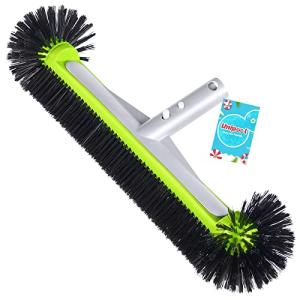
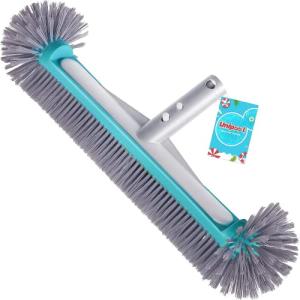
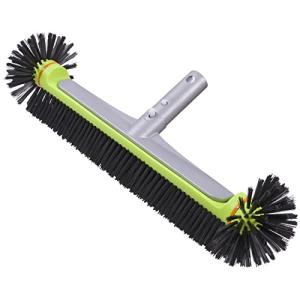
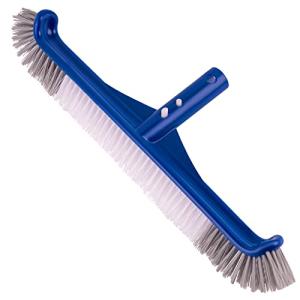
Standard flat brushes cover wide surfaces efficiently, but they're not designed for the tight spots. Corner brushes solve this problem with an angled or curved profile that slips into steps, corners, behind ladders, and along the tight edges where walls meet the floor. These are the areas where algae and grime most commonly build up — partly because water circulation is weaker there, and partly because most cleaning tools simply skip over them.
Corner brushes are typically made with nylon bristles, making them safe for all surface types. They're not meant to replace your main brush but to work alongside it, finishing the spots your larger brush can't reach. Having a corner brush in your kit is one of those small things that makes a noticeable difference in the overall cleanliness of your pool.
Tile and Waterline Brushes
If your pool has a tiled waterline or interior tile work, you'll want a brush specifically designed for that job. Tile brushes are narrower and have stiffer bristles to tackle calcium scale, mineral deposits, and algae that accumulate right at the waterline — that chalky white or grey line you sometimes see just above the water's surface.
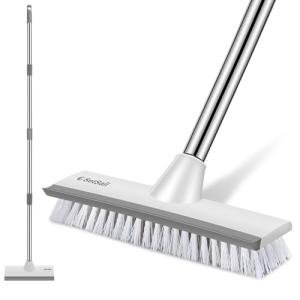
These brushes connect to a pole just like standard pool brushes, though some compact versions are designed for hand use when you're working right at the waterline. The bristles are firm enough to remove buildup without scratching tile glazing, making them a smarter choice than using a general-purpose brush on your tile work.
Matching Your Brush to Your Pool Surface
Getting the surface match right is arguably the single most important decision you'll make when choosing a pool brush. Use the wrong type and you can cause real, costly damage.
Vinyl liner pools should only ever use soft nylon or polypropylene bristles. Wire or stainless steel bristles can scratch the liner or, worse, create small tears that allow water to seep behind it. Protect your investment and stick to gentle bristles for all regular use.
Fiberglass pools also call for nylon brushes exclusively. Fiberglass is relatively smooth, which is one of its advantages — it discourages algae from taking hold as easily as rougher surfaces. Maintaining that smooth surface means keeping abrasive brushes away from it entirely.
Concrete and gunite pools are the most durable and can handle stiff bristles without concern. These surfaces are porous and genuinely benefit from the extra scrubbing power of stainless steel or combination brushes, particularly along the floor and lower walls where algae spores tend to grip hardest.
Plaster pools benefit from combination or nylon brushes, with stainless steel reserved for stubborn algae only. If you have newer plaster — say, within the first year or two after installation — be especially cautious and lean toward softer bristles while the surface cures.
Pebble Tech and aggregate finishes are textured surfaces that need a brush with enough backbone to get down into the texture. A stiff nylon brush or a combination brush works well here. Stainless steel is generally considered too aggressive even for these surfaces and risks dislodging aggregate over time.
Size and Shape: Getting the Right Fit for Your Pool
Pool brush widths typically run from about 12 inches up to 24 inches, with 18 inches being the most common size recommended for general use. Wider brushes cover more ground per stroke, which makes cleaning faster and less physically tiring — particularly for larger in-ground pools. For above-ground pools and smaller backyard pools, an 18-inch brush is usually ideal. If you're maintaining a larger commercial-style or oversized residential pool, going up to a 24-inch head makes sense.
Shape matters too. Brushes designed for round above-ground pools often have a slight curve to their heads that helps them conform to the pool wall more naturally. Rectangular flat brushes suit the straight walls and floors of in-ground pools. Whatever shape you choose, look for brushes with curved or angled end caps — these help the brush stay in contact with the surface as you work into corners, rather than skipping over them.
Handle Compatibility and Pole Connection
Almost all pool brushes connect to a standard telescopic pool pole via a universal clip or swivel attachment. Before buying, double-check that the brush you're considering fits standard pole sizes — most do, but it's worth confirming to avoid the frustration of an incompatible fit.
Telescopic poles in the 8- to 15-foot range are the most practical for residential pools, giving you enough reach to work from the pool deck without needing to get in the water. If you have a deep-end that's 8 feet or deeper, the longer end of that range gives you comfortable reach to the floor while standing at the edge.
Look for poles with a solid locking mechanism that won't collapse mid-use and a material that resists corrosion — aluminum is the most popular choice because it's lightweight, strong, and holds up well against chlorine and sunlight.
Features Worth Paying Attention To
Bristle density affects cleaning effectiveness and durability. Densely packed bristles clean more thoroughly and tend to last longer before shedding. Cheaper brushes often have sparse bristle layouts that wear out quickly and can shed into your pool, potentially clogging your filter.
Frame material influences how long the brush head holds together. Aluminum-backed brush heads offer better rigidity than plastic frames, especially for combination and stainless steel brushes where the force applied during scrubbing is higher.
Floating design is a feature you'll see on some specialty brushes — if the brush head falls off the pole while you're working (it happens), a floating brush is much easier to retrieve than one that sinks.
Tail guides or back fins help maintain consistent surface contact as you push the brush along the pool wall, which improves cleaning efficiency and reduces the effort required per stroke.
How to Get the Most Out of Your Pool Brush
Owning the right brush is half the battle — using it properly is the other half.
Start brushing from the deep end of your pool and work your way toward the shallow end. This technique pushes dislodged debris toward the main drain, where it can be captured by your filtration system rather than redistributed around the pool. Use long, overlapping strokes and apply steady pressure rather than short, frantic scrubbing.
Brush weekly as a baseline — twice a week in summer, when heat and sunlight accelerate algae growth. After chemical treatments, especially algaecide applications, a thorough brushing session helps break up treated algae so your filtration system can remove it efficiently.
After each use, rinse your brush thoroughly with a garden hose. Pool chemicals, if left to dry in the bristles, gradually degrade the material and shorten the brush's lifespan. Store your brush out of direct sunlight when it's not in use — UV exposure stiffens and weakens bristles faster than almost anything else.
Replacing Your Pool Brush
Even a quality pool brush won't last forever. You'll know it's time to replace yours when the bristles start shedding into the pool during use, when the brush head warps or cracks, or when the bristles flatten out and stop making proper contact with the pool surface. Bristle shedding is particularly important to address promptly — loose bristles can pass through your filter and collect in return lines.
The lifespan of a pool brush varies widely based on quality and care. Budget brushes may last only a season or two. Mid-range to premium brushes, properly rinsed and stored, can often hold up for several years of regular use.
Choosing the Right Pool Brush
If your pool has a vinyl liner or fiberglass shell, buy a quality nylon brush and never deviate from it. If your pool is concrete, gunite, or plaster, a combination brush covers everyday cleaning, with a stainless steel brush available for those occasional deep-cleaning sessions when algae gets serious. Add a corner brush and a tile brush to your kit for complete coverage, and pair everything with a solid telescopic pole in the 8-to-15-foot range.
A pool brush is one of the least expensive tools in your maintenance kit, but its impact on water clarity, surface condition, and chemical efficiency is hard to overstate. Choose the right one for your surface, use it consistently, and your pool will thank you all season long.