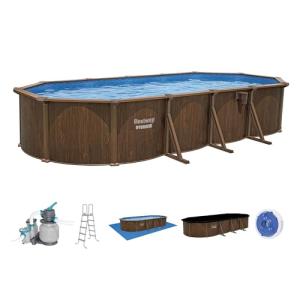
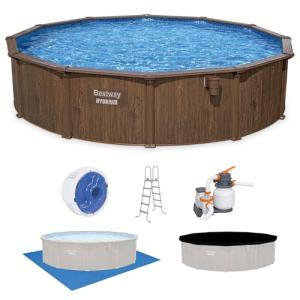
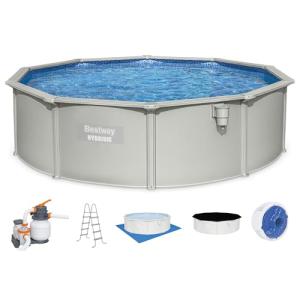
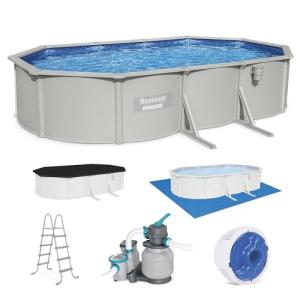
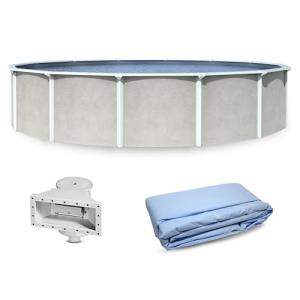
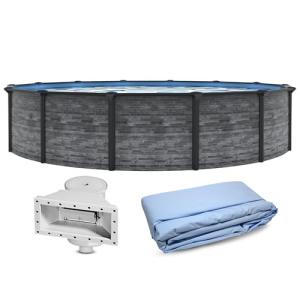
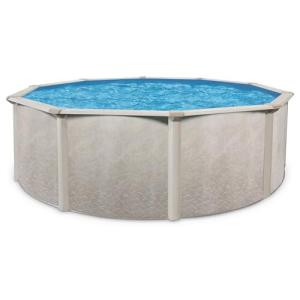
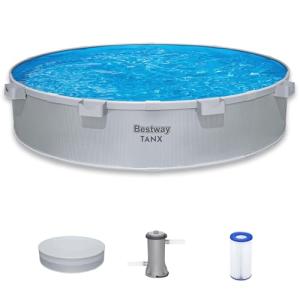
What Is a Steel Wall Pool?
There's something satisfying about a pool that feels built, not just assembled. Steel wall pools deliver exactly that — a solid, dependable swimming pool structure that has been the backbone of backyard pool installations across North America for decades.
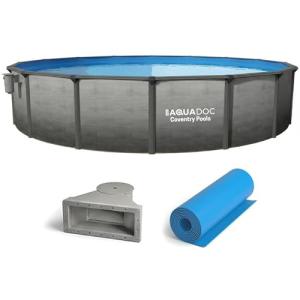
At their core, steel wall pools use panels of heavy-gauge galvanized steel to form the structural walls of the pool. Those panels are bolted together, braced with A-frame supports, and fitted with a vinyl liner to create a watertight swimming environment. Whether you're going in-ground, semi-inground, or above-ground, steel walls give your pool a structural foundation that's difficult to beat at the price point.
They're not glamorous in the way a custom poured concrete pool is, but that's actually part of the appeal. Steel wall pools are accessible, strong, proven, and — when properly installed and maintained — they last a very long time.
Why Choose Steel? The Core Advantages
Strength You Can Depend On
Steel is the material of bridges and skyscrapers for a reason. When it comes to pool walls, that same engineering logic applies. Steel wall panels are significantly stronger than their polymer counterparts, and that matters when you're dealing with underground pressure, rocky soil, clay, or shifting ground in colder climates.
Most steel pool panels are manufactured from 14-gauge steel with a G235 (Z720) zinc galvanized coating. That galvanized layer acts as the first line of defense against rust, giving the steel long-term protection from moisture, chemicals, and the soil it's buried in. The panels themselves feature flanges on the top, bottom, and sides that interlock and add rigidity to the entire structure.
If your yard has rocky ground or dense clay — soil conditions that can cause problems for polymer walls — steel is the recommended choice by most pool professionals. It handles those underground challenges without cracking or compromising its shape.
A More Affordable Starting Point
Let's be practical: steel wall pools typically cost less upfront than polymer alternatives. The price difference has narrowed in recent years, but steel still gives you more structural pool for your money. If you're working within a budget and want to avoid compromise on pool quality, a steel wall kit is one of the most cost-effective ways to get a properly built, durable swimming pool.
The savings don't stop at the initial purchase either. Steel walls are strong enough to be backfilled with the excavated dirt after the liner is filled — you don't need to buy expensive gravel as backfill material the way you often do with polymer systems. That alone can save hundreds of dollars on the average installation.
Cold Climate Performance
If you live somewhere that sees hard winters, steel is your friend. Polymer walls can struggle when the ground freezes and thaws repeatedly — the expansion and contraction of soil can cause polymer panels to crack under that pressure. Steel flexes and holds. Pool professionals in New England and other cold-weather regions consistently recommend steel wall pools for exactly this reason.
Adjustability During Installation
One practical advantage that doesn't get enough attention is the adjustable turnbuckle brace system used with steel walls. During installation, you can actually move the wall in or out to make sure it's perfectly plumb. That kind of fine-tuning during construction leads to a more precisely built pool. Polymer systems typically use a fixed K-brace that doesn't offer the same flexibility.
Above-Ground vs. In-Ground Steel Wall Pools
Above-Ground Steel Wall Pools
Above-ground steel wall pools represent the most accessible entry point into pool ownership. They sit on top of the ground, are relatively quick to install, and can be removed or relocated if needed (before any concrete work is done, at least). They're a popular choice for families who want a full-size swimming pool experience without the commitment or cost of a complete excavation.
Above-ground steel wall pools come in round, oval, and rectangular shapes. Round pools are structurally the simplest because the circular form distributes water pressure evenly across the wall without needing additional bracing. Oval and rectangular pools require more substantial bracing systems to counteract the lateral pressure on the straight wall sections, but modern A-frame brace designs handle this well.
Wall height options typically include 42-inch and 48-inch panels. The 42-inch wall has been the standard for years, providing a shallow end depth of around 3 feet 4 inches. The 48-inch wall is gaining popularity, particularly among families who play pool sports and want a deeper shallow end without sacrificing flat bottom area.
Semi-Inground Steel Wall Pools
Semi-inground installation is the middle ground — part of the pool is sunk into the earth, part remains above. This approach gives the pool a more built-in appearance, reduces the visual height of the pool walls, and allows easier access for kids. It's also a smart solution for sloped yards where a fully above-ground installation would look awkward or be structurally difficult.
In-Ground Steel Wall Pools
A fully in-ground steel wall pool is a more permanent commitment, but the result looks and functions like any traditional in-ground pool. Once installed with concrete and coping, the pool becomes a fixed feature of your yard. These pools offer the deepest range of customization — shapes, depths, steps, built-in swimouts, lighting, and more.
With the pliability of steel panels, pool shapes can be customized to almost any configuration. Some manufacturers offer over 80 standard pool shapes, and custom designs are also possible. The steel can be formed to any radius, meaning curved walls, kidney shapes, L-shapes, and freeform designs are all achievable.
What to Look for When Buying a Steel Wall Pool
Panel Gauge and Coating
Not all steel wall panels are created equal. The gauge (thickness) of the steel matters — 14-gauge is the industry standard for quality pool kits, and you should be cautious about thinner panels being marketed at lower prices. Alongside gauge, look at the galvanized coating rating. A G235 or Z720 coating offers meaningful corrosion resistance. Some premium pools also include additional coatings or painted finishes on interior-facing surfaces.
Warranty Coverage
A manufacturer's warranty is one of the clearest signals of how confident they are in their product. Look for pool kits with a lifetime or long-term structural warranty on the wall panels. A warranty shorter than 25–30 years on the structural components should raise questions. Read the fine print too — warranties that only cover certain parts under certain conditions are often structured to protect the company, not the customer.
Brace System Quality
The wall panels are only as good as the brace system holding them in place. A-frame steel braces are the industry standard, and the stronger and more numerous those braces are, the more stable your pool will be over time. If you're planning a heavier deck — brick coping, stone surrounds, poured concrete — make sure the kit includes sufficient brace support for that added load.
Skimmer Panel Material
Where the skimmer and return fittings cut through the pool wall is the most vulnerable point in any steel wall pool. Water, chemicals, and constant contact at these penetration points make corrosion more likely here than anywhere else on the wall. Higher-end steel pools address this with a stainless steel skimmer panel — a reinforced section of wall around the fittings that resists corrosion far better than galvanized steel alone. If you're running a saltwater system or live in a humid coastal environment, a stainless steel service panel is worth the upgrade.
Shape and Size Options
Think honestly about how you'll use the pool. A round 24-foot pool gives you great swimming space but limited room for lap swimming or pool games. Rectangular pools are better for laps and structured play but require more space and more bracing. Oval pools split the difference. Think about the layout of your yard, how much decking you want around the pool, and how many people will typically be using it at once before you settle on a size and shape.
Steel Wall Pools and Saltwater Systems
There's a common misconception that steel wall pools can't be used with saltwater sanitation systems. That's not quite accurate. Many steel wall pools are compatible with saltwater chlorine generators, but it does require some attention.
Salt water is more corrosive than freshwater, and that makes the choice of materials more important. Pools designed for saltwater use should include stainless steel service wall panels at the skimmer and return openings, as those areas are most at risk. The rest of the galvanized steel wall is generally fine for saltwater use when the pool chemistry is properly maintained.
If you know from the start that you want a saltwater pool, look specifically for kits marketed as saltwater-compatible — these will typically include the reinforced skimmer panel as standard rather than as an add-on.
Installation: What's Involved
Steel wall pools are among the most DIY-friendly pool options on the market, particularly for above-ground and semi-inground installations. Most kits come with detailed instructions, and many homeowners successfully install them with a small team over a weekend.
That said, a few things are worth knowing before you dive in. You'll need at minimum two people — ideally three or four for larger pools, especially when handling the long, heavy steel panels. Pre-cutting the panels for skimmers and lights is typically done at the factory based on your order specifications, which simplifies the on-site work considerably.
For in-ground installations, access to an excavator makes a significant difference. Digging by hand is possible for smaller pools, but it's slow and exhausting. Once you're in the ground with concrete, the pool is permanent — there's no moving it later — so take your time with layout and positioning.
For oval above-ground pools, make sure the bottom rails and stabilizer bars are properly positioned before raising the walls. The lateral pressure on oval wall sections is substantial, and a correctly installed brace system from the start prevents headaches later.
Maintenance and Long-Term Care
A steel wall pool is a long-term investment, and a little routine care goes a long way toward protecting that investment. The most important maintenance factor unique to steel walls is preventing corrosion — not just from the water side, but from the ground side too.
Keep your water chemistry balanced. Consistent pH, alkalinity, and sanitizer levels protect your liner (which is the first barrier between the water and the steel), and they reduce the chemical load the walls are exposed to at penetration points. Letting chemistry drift, particularly letting pH run low or allowing saltwater concentration to get too high, accelerates wear on all metal components.
Inspect the area around the base of above-ground pools periodically. Pooling water or soggy ground against the bottom rail can accelerate rust at the bottom of the panels. Ensuring good drainage around the pool perimeter is simple preventive maintenance that pays off over time.
When it's time to replace the liner — typically every 10–15 years — take the opportunity to inspect the wall panels carefully. Minor surface rust can often be treated and isn't an immediate structural concern. Corrosion that has eaten through the panel is more serious and those sections may need to be replaced or reinforced before the new liner goes in.
Steel Wall Pools vs. Other Pool Types: A Quick Comparison
Steel wall pools occupy a sensible middle ground in the overall pool market. Concrete pools offer the most customization and prestige, but they cost significantly more, take longer to build, and require more ongoing maintenance. Fiberglass pools are low-maintenance and quick to install, but you're limited to factory-molded shapes and sizes. Polymer wall pools are a close sibling to steel — lighter, better in corrosive soil environments, but pricier and less suited to cold climates.
For most homeowners who want a durable, customizable, proven pool structure at a reasonable cost — particularly in cooler climates with typical soil conditions — steel wall pools hit the right balance of all those factors.
Steel wall pools have been a trusted part of the backyard swimming pool industry for good reason. They're strong, adaptable, affordable, and when built right, they last for decades. Whether you're planning a simple above-ground setup for family summers or a fully excavated in-ground installation with custom coping and lighting, steel walls give you a structural foundation you can genuinely rely on.
Take your time selecting the right size and shape for your space, prioritize quality panel gauges and warranty coverage, and pay attention to the little details — like skimmer panel material and brace system strength — that separate a good pool kit from a great one. Get those decisions right, and your steel wall pool will be the centerpiece of your backyard for many years to come.