What's Actually in a Pool Maintenance Kit?
This is the question most people ask first, and the honest answer is: it depends on the kit. Some are focused purely on physical cleaning tools, others are all about water chemistry, and many combine both. Here's a breakdown of what you're likely to find across different kit types.
Physical Cleaning Tools
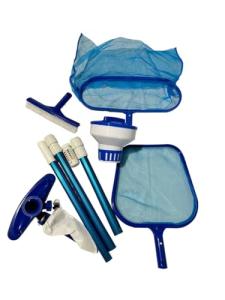
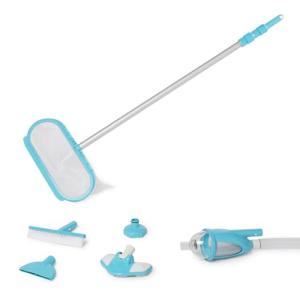
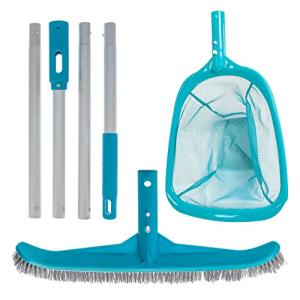
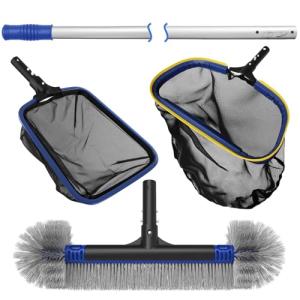
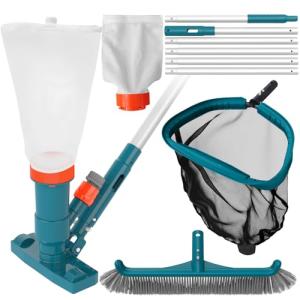
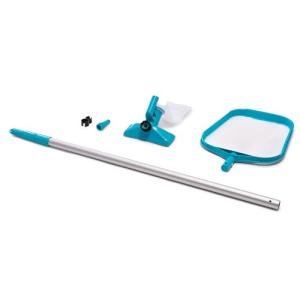
Most standard kits include the core hardware you need to physically clean your pool. A telescoping aluminum pole is the foundation — it extends to reach the far corners and deep ends of your pool without you having to stretch or lean over the edge awkwardly. Attached to that pole, you'll typically find:
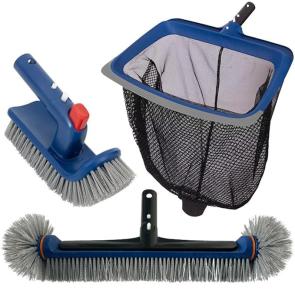
Skimmer nets are the first line of defense against surface debris. Leaves, bugs, grass clippings, sunscreen residue — all of it gets scooped out before it sinks to the bottom and becomes a bigger problem. A good skimmer net has a fine mesh that catches even the smallest particles without letting them slip back through.
Pool brushes are used to scrub the walls, floor, and steps of your pool. Algae loves to cling to surfaces, especially in corners and along the waterline. Regular brushing breaks it loose before it gets a foothold. The type of brush matters — softer nylon bristles are ideal for vinyl liners to avoid scratching, while stiffer bristles work better on plaster or concrete pools.
Vacuum heads and hoses let you pull dirt and debris off the pool floor. Manual vacuums connect to your existing filtration system and work by attaching to the skimmer inlet. They take a little practice to use efficiently, but once you get the hang of it, vacuuming the pool becomes a fairly quick weekend task. Many deluxe kits include a hose that's long enough — often 24 feet or more — to cover the full length of a standard backyard pool.
Water Testing Equipment
Keeping pool water chemically balanced is just as important as keeping it physically clean. Balanced water isn't just clear — it's actually safe to swim in and gentler on your skin, eyes, and pool equipment. Kits that include testing supplies usually contain:
Test strips are the quick-and-easy option. You dip a strip into the pool water, hold it there for a few seconds, and compare the color changes to a chart on the bottle. They test for chlorine levels, pH, alkalinity, and sometimes hardness and cyanuric acid levels. They're not the most precise instrument in the world, but for routine weekly checks, they're perfectly adequate and super convenient.
Liquid test kits are a step up in accuracy. They use reagent drops — a specific number of drops added to a small water sample — and the resulting color tells you your water chemistry readings. Many experienced pool owners prefer them for the extra precision, especially when they're troubleshooting a problem like cloudy water or algae growth.
Chemical Starter Packs
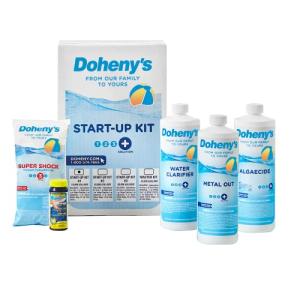
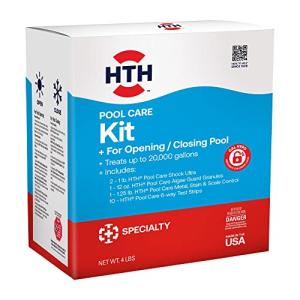
Some pool maintenance kits go beyond tools and include an initial supply of chemicals to get your water balanced from day one. These might include chlorine tablets or granules, pH adjusters (pH up and pH down), alkalinity increaser, and sometimes a clarifier or algaecide. Chemical kits are especially useful when you're opening the pool at the start of the season — getting the chemistry right after a long winter takes more product than a typical weekly top-off.
Types of Pool Maintenance Kits
Not every pool is the same, and not every kit is built the same way. Understanding the differences helps you pick the right one.
Basic Kits
A basic kit usually includes a skimmer net, a wall brush, a vacuum head, and a telescoping pole. These are ideal for smaller pools — think above-ground pools in the 12 to 15-foot range — and for people who are just getting started and want a solid set of fundamentals without overthinking it. Prices are generally affordable, and the tools hold up well for casual seasonal use.
Deluxe and Professional Kits
Deluxe kits add more reach, more accessories, and higher-quality construction. A longer telescoping pole — some extend to 110 inches or more — makes them suitable for larger in-ground pools where you need to reach the deep end without getting soaked. These kits often include vacuum hoses with extended length, more durable brush heads, and sometimes extras like a leaf rake with a deep-pocket bag for hauling out heavy leaf buildup. If you have a large pool or plan to use your kit heavily throughout the swim season, stepping up to a deluxe version is worth it.
Chemical Treatment Kits
These are entirely focused on water chemistry rather than physical cleaning. A good chemical kit will include everything you need to balance and sanitize your pool water, often organized by task — opening the pool, weekly maintenance, or closing for winter. Pool opening kits are particularly popular because balancing water after months of sitting dormant takes more than a single jug of chlorine. Shock treatments, algaecides, stain preventers, and metal removers all have their place in the startup process.
Seasonal Kits
Opening and closing a pool are two of the most involved maintenance tasks of the year, and seasonal kits are built around these specific moments. A pool opening kit gets your water balanced and sanitized after winter so you can start swimming as quickly as possible. A pool closing kit (also called a winterizing kit) includes chemicals that help protect your water and equipment through the cold months, reducing the amount of work needed come spring. Many pool owners invest in both, treating them as an annual ritual.
Spa and Hot Tub Kits
Spas and hot tubs have their own maintenance needs, and while the general principles are the same as a full-size pool, the scale and chemistry differ. Compact spa maintenance kits include smaller brushes, skimmer nets suited to tight spa walls, and chemical formulas calibrated for the lower water volume and higher temperatures typical of a hot tub. These kits are a smart purchase for spa owners who want everything purpose-built for their equipment rather than trying to adapt full-size pool tools.
How to Choose the Right Kit for Your Pool
Shopping for a pool maintenance kit isn't complicated once you know what to look for. Here are the most important things to consider.
Pool Size and Type
The size of your pool dictates how long your pole needs to be, how much hose length you need for vacuuming, and how many chemicals you'll go through each week. A small above-ground pool in the 12-foot range has very different needs than a 20,000-gallon in-ground pool. Your pool's surface material also matters — vinyl, fiberglass, plaster, and concrete all have different brush requirements to avoid damage.
What You Already Own
If you already have a telescoping pole from a previous kit, you don't necessarily need to buy a whole new one. Many replacement brush heads, vacuum heads, and skimmer nets are sold individually and are designed to fit standard pole diameters. Look for kits that include the components you actually need rather than paying for duplicates of tools you already have.
Kit Quality and Durability
Aluminum poles last significantly longer than plastic ones and hold up to repeated use without bending or cracking. Nylon mesh on skimmer nets should be tightly woven to catch fine debris without tearing after a few seasons. Brush bristles should be firmly attached and appropriate for your pool surface. When in doubt, check reviews from other pool owners — durability is one of the most commonly discussed topics and a reliable indicator of whether a kit will last one season or several.
Budget vs. Value
Basic kits are more affordable upfront but may require replacement sooner. Deluxe kits cost more initially but often prove to be better value over time because the tools hold up season after season. For chemical kits, buying a pre-packaged bundle is almost always cheaper than purchasing each chemical individually, especially at the start of the season when you're using larger quantities.
Tips for Getting the Most Out of Your Pool Maintenance Kit
Having the right tools is half the battle. Using them consistently is the other half. A few simple habits make a big difference.
Skim your pool at least two or three times a week. Debris that sits on the surface will sink, stain the liner, and make your water harder to keep clear. A quick five-minute skim session does more to maintain water quality than people usually expect.
Brush the walls and floor every week, paying extra attention to areas that get less circulation — corners, steps, and spots near the ladder are algae's favorite hiding places. Regular brushing keeps surfaces clean and your filter from being overwhelmed.
Test your water at least once a week during swim season. Chemical levels shift constantly based on rainfall, bather load, sunlight, and temperature. A simple test strip takes less than a minute and tells you immediately if anything needs adjusting before it becomes a visible problem.
Vacuum your pool at least once a week, or more often if you live somewhere with lots of trees or if your pool gets heavy use. Fine dirt and debris settle to the bottom quickly and can cloud your water if left too long.
Clean your kit tools too. Rinse brush heads, vacuum hoses, and skimmer nets after each use. Debris left in the mesh or hose can dry, harden, and affect performance over time, and keeping tools clean extends their life considerably.
A pool maintenance kit isn't glamorous, but it's the backbone of everything that makes a pool enjoyable. Clear water, clean surfaces, and balanced chemistry don't happen on their own — they're the result of regular effort with the right equipment. The good news is that with a solid kit in hand, that effort is straightforward and surprisingly quick to work into your weekly routine.
Browse our selection of pool maintenance kits to find the right fit for your pool, your schedule, and your budget. From compact above-ground options to full deluxe systems for larger in-ground pools, there's a kit here that will take your pool from maintenance headache to weekend highlight.