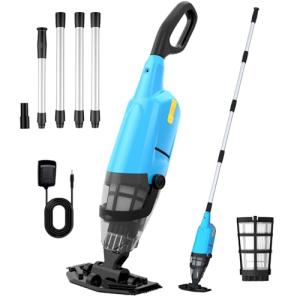
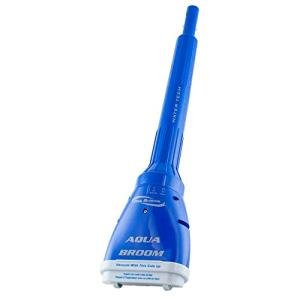
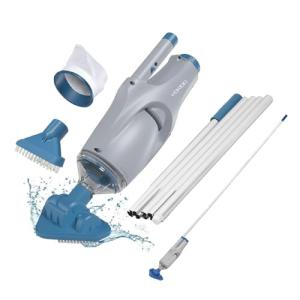
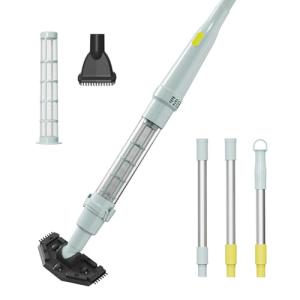
What Is a Handheld Pool Vacuum?
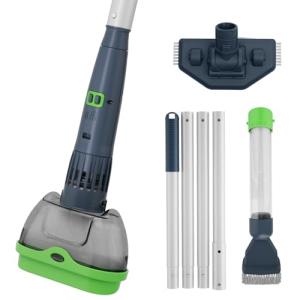
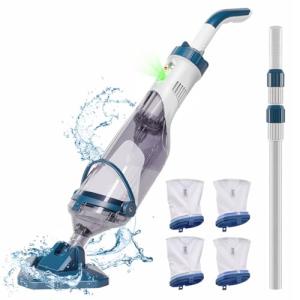
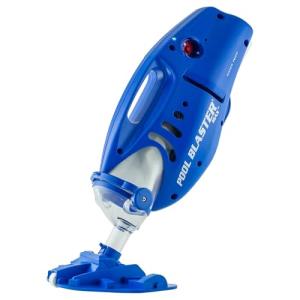
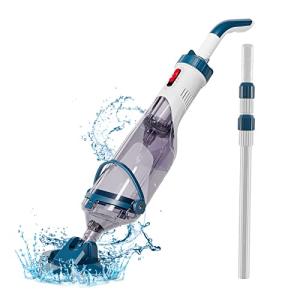
A handheld pool vacuum is exactly what it sounds like: a self-contained cleaning device small enough to hold in one hand while you work underwater. Unlike traditional pool vacuum systems that attach to your pool's filtration infrastructure, most handheld models are battery-powered and completely independent. You don't need a pump, a skimmer port, or a separate vacuum head and hose assembly. You just pick it up and go.
The basic mechanics are straightforward. An internal motor drives suction through a nozzle or intake port, pulling debris — sand, dirt, leaves, algae, insects, and anything else that's settled on the floor or walls — into an internal filter basket or bag. When you're done, you remove and empty the collection chamber, rinse it out, and your vacuum is ready for next time.
They come in two broad styles: battery-operated cordless models and manual suction models (sometimes called water-powered vacuums). Cordless electric units are far more popular and powerful. Manual suction models use a garden hose to generate water-pressure-driven suction and tend to be more affordable, but they're also less effective at thorough cleaning.
Why You Might Want One (Even If You Already Have a Pool Cleaner)
Plenty of pool owners already have an automatic pool cleaner — a robotic or suction-side unit that does the heavy lifting on a schedule. So why would you also want a handheld vacuum? The answer is simple: precision.
Automatic cleaners are great for general maintenance, but they miss spots. They can't navigate into tight corners, they don't always clean steps effectively, and they certainly won't help you quickly spot-clean after a windstorm drops a pile of leaves into your water. A handheld vacuum fills that gap. It's the pool cleaning equivalent of a handheld vacuum cleaner in your home — you still use your full-sized floor vacuum, but sometimes you just need something nimble for a quick job.
Handheld pool vacuums are also the go-to solution for:
- Smaller pools and above-ground pools where a full robotic cleaner might be overkill
- Hot tubs and spas where debris accumulates in hard-to-reach jets and seats
- Pool openings at the start of the season when you need to remove sludge and settled debris before the filtration system is fully up to speed
- Quick cleanups after parties or storms when you can't wait for an automated cycle
- Green pool recovery after an algae bloom, when scrubbing and vacuuming go hand in hand
Key Features to Look For
Shopping for a handheld pool vacuum can feel overwhelming if you don't know what separates a great model from a frustrating one. Here are the features that actually matter:
Battery Life and Charging Time
This is arguably the most important spec on any cordless handheld pool vacuum. Battery life on quality models ranges from about 45 minutes to over an hour on a single charge. For small pools or hot tubs, 45 minutes is generally fine. For anything larger, you'll want to look for units promising 60 minutes or more — or models with interchangeable battery packs so you can swap and keep going.
Pay attention to charging time, too. Some cheaper models take 6–8 hours to fully charge, which is inconvenient if you need the vacuum in a hurry. Better units charge in 2–4 hours, and a few premium models support fast charging.
Suction Power
Suction is measured in different ways by different manufacturers, which makes direct comparisons tricky. As a general rule of thumb, look for a motor in the range of 60–100 watts for solid performance. Units with multi-stage filtration or dual motors tend to provide stronger, more consistent suction.
Keep in mind that suction needs vary by debris type. Fine sand and silt require stronger suction and finer filtration than large leaves, which can actually be handled by weaker vacuums. If your pool sits under trees or is frequently loaded with leaves, prioritize a large debris intake and a roomy filter basket over raw suction numbers.
Filtration System
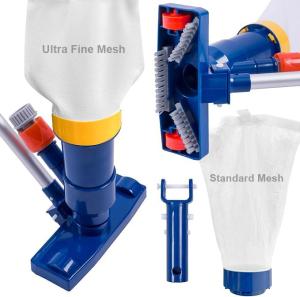
The filter is what keeps the debris in the vacuum rather than recirculating it back into your pool. Most models use one of two approaches: a mesh filter bag or a hard-shell filter basket. Hard filter baskets are generally easier to clean and more durable over time. Fine mesh filters are better at capturing tiny particles like algae or fine sand, but they clog more quickly and require more frequent rinsing.
Some models offer dual-stage filtration — a coarse pre-filter to catch large debris, and a finer inner filter for particles. This is worth paying extra for if you deal with a mix of debris types.
Nozzle and Attachment Variety
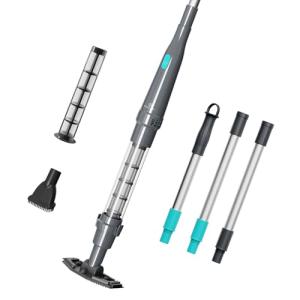
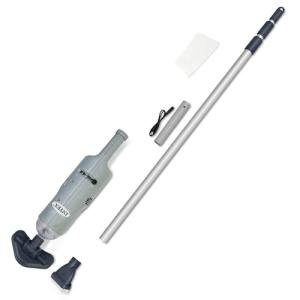
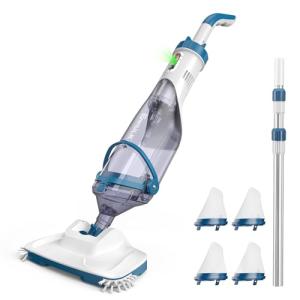
A good handheld pool vacuum isn't just one tool — it's a system. Most quality models come with multiple nozzle attachments to handle different surfaces and tasks:
- Wide-mouth floor nozzles for open flat surfaces
- Narrow crevice tools for corners, steps, and seams
- Brush nozzles for algae-prone walls and floor tiles
- Flat vacuum heads for fine debris on smooth surfaces
The more versatile the attachment set, the more value you'll get from a single unit.
Ease of Use and Ergonomics
You'll often be using this device while leaning over the pool edge or wading through the water, so ergonomics genuinely matter. Look for models with a comfortable, non-slip grip and a balanced weight distribution when the filter basket is full. Telescoping handles or extension poles are a major bonus — they let you reach the bottom of deep pools without getting your arm wet.
Also consider how easy the filter is to access and empty. Models that require tools or complex disassembly to clean the filter will get used less, which defeats the purpose.
Water Resistance and Build Quality
This one should be obvious, but it's worth saying: make sure any electrical model is fully rated for underwater submersion, not just splashproof. Look for an IPX8 waterproof rating, which confirms the unit is designed for continuous use fully submerged. Also check the materials — heavy-duty ABS plastic withstands pool chemicals far better than cheaper composites, and stainless steel nozzle components resist corrosion.
Understanding the Different Types
Battery-Powered Cordless Vacuums
These are the most popular and practical option for the majority of pool owners. Modern lithium-ion battery technology has made them genuinely powerful — the best cordless handheld vacuums produce suction that rivals plug-in units from just a decade ago. They work for virtually any pool type and size, and the freedom of no cords or hoses makes them a pleasure to use.
Water-Powered (Garden Hose) Vacuums
These budget-friendly alternatives use water pressure from a garden hose to generate suction. They send debris into a collection bag through venturi suction. They're cheaper upfront and have no batteries to worry about, but they require a hose connection and tend to be less effective on fine particles. They also add water to your pool while running, which can affect your chemical balance if used for extended sessions.
Rechargeable Handheld Models with Docking Stations
A step up from standard cordless models, these premium units come with dedicated charging and storage docks — similar to robotic vacuums for your home. They're more expensive, but the convenience of always having a charged unit ready to go is hard to argue with, especially for frequent pool users.
Tips for Getting the Best Results
Owning a great handheld pool vacuum is one thing — knowing how to use it effectively is another. A few practical habits make a real difference:
Vacuum before you brush, not after. It seems counterintuitive, but brushing the walls and floor first loosens algae and debris so it can be easily vacuumed up. If you vacuum and then brush, you'll just be stirring up everything you worked to remove.
Let your pool settle first after a storm. If heavy winds blow debris into your pool, give it 30–60 minutes before you vacuum. Debris stirred up in turbulent water is much harder to collect effectively. Once it settles to the bottom, you can remove it cleanly with one pass.
Empty the filter basket frequently. A clogged filter dramatically reduces suction. For heavy cleaning sessions, stop and rinse the filter every 10–15 minutes rather than pushing through with diminishing performance.
Work in slow, overlapping passes. Moving too quickly stirs debris back into suspension. Slow, deliberate passes — overlapping slightly like mowing a lawn — give the vacuum time to actually capture what's on the bottom.
Clean the vacuum after every use. Rinse all components with fresh water after each session to prevent mineral buildup and chemical degradation. Most filter baskets and nozzles are dishwasher-safe, though check your specific model's manual.
Who Should Buy a Handheld Pool Vacuum?
Honestly? Almost every pool owner can benefit from one. But they're an especially smart investment for a few specific situations:
If you have a smaller above-ground pool, a handheld vacuum is likely all you'll ever need for cleaning — no expensive robotic cleaner required. If you own a hot tub or spa, a compact handheld model designed for tight spaces will be your best friend for keeping the seats and footwells clean. If you're a new pool owner just building out your cleaning arsenal, a handheld vacuum is a great starting point before you invest in a full automatic system.
Even if you have a high-end robotic cleaner, keeping a quality handheld vacuum on hand gives you a fast, targeted tool for the spots your robot can't quite reach and for quick cleanups between automated cycles.
Handheld pool vacuums sit in a sweet spot between convenience and capability that most pool owners genuinely appreciate once they try one. They're not a replacement for a comprehensive pool maintenance routine — you still need proper filtration, regular chemical balancing, and periodic deep cleaning. But as a complement to those efforts, a well-chosen handheld vacuum saves time, reduces frustration, and helps you keep your water looking its best with minimal effort.
The technology has improved dramatically in recent years. Today's battery-powered models are quieter, more powerful, and longer-lasting than they were even five years ago. Prices have come down, too — you don't need to spend a fortune to get a genuinely effective device.
Whether you're skimming sand off the bottom after a backyard party, tackling algae spots along the waterline, or just keeping up with day-to-day debris between automated cleaning cycles, a good handheld pool vacuum turns a chore into something quick, simple, and almost satisfying. Your pool deserves clean water, and you deserve a tool that makes maintaining it feel less like work.