

![14Ft Round Pool Cover [2025 Upgraded Super Windproof] -Winter Pool Covers for Above Ground Framed Pools(Not for Steel Wall Pool), 500D One-Piece Tear Resistant Pool Cover with Quick Tightening Ratchet](https://cdn.freshstore.cloud/offer/images/22719/1653/c/14ft-round-pool-cover-2025-upgraded-super-windproof-winter-pool-covers-for-above-ground-framed-pools-not-for-steel-wall-pool-500d-one-piece-tear-resistant-pool-cover-with-quick-tightening-ratchet-small.jpg)
Why Pool Covers Matter More Than You Think
Most people buy a pool cover because they don't want to fish debris out of the water every morning. That's a perfectly reasonable reason. But when you start to understand the full picture, a pool cover starts looking less like an accessory and more like a necessity.
Water conservation is one of the biggest and most overlooked benefits. An uncovered pool can lose several inches of water every week through evaporation alone, depending on your climate and how much direct sun the pool gets. That adds up fast — both in terms of water volume and the chemicals you need to replace alongside it. A cover cuts evaporation dramatically, sometimes by as much as 95%, which means lower water bills and fewer chemical top-ups throughout the season.
Heat retention is another major factor. Heating a pool is expensive. If you're running a gas heater or a heat pump, a significant portion of that energy is escaping straight into the air every night. A pool cover acts as insulation, trapping the heat you've already paid for and reducing the time and energy needed to warm the water back up each day.
Then there's cleanliness. A covered pool stays cleaner with less effort. Leaves, insects, bird droppings, pollen, dust — a cover stops all of it from getting in. That means less time running the filtration system, less manual skimming, and lower overall chemical demand. Your water stays balanced longer, and your equipment works less hard.
Finally, and most importantly for many families: safety. Pool drowning is a leading cause of accidental death in young children, and a properly rated safety cover provides a genuine physical barrier between a child and the water. This alone is reason enough for many families to invest in the best cover they can afford.
The Main Types of Pool Covers
Not all pool covers are the same, and understanding the differences is the key to buying the right one.
Solar Pool Covers
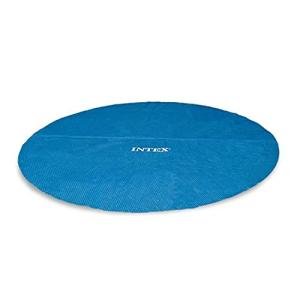
Solar covers, also called solar blankets, are typically made from a bubbly, bubble-wrap-like material that floats directly on the surface of the water. The air bubbles trap heat and transfer warmth from sunlight into the pool while simultaneously reducing evaporation.
These are among the most affordable options available and are popular with pool owners who want a practical, everyday cover for the swimming season. They're easy to put on and take off, especially when paired with a reel system. They won't win any awards for durability — UV exposure degrades them over time — but a well-maintained solar cover can last several years.
Solar covers are primarily a maintenance and heating tool. They are not safety covers, and they should never be relied upon to prevent a child from falling into the pool. The material will not support weight.
Safety Covers
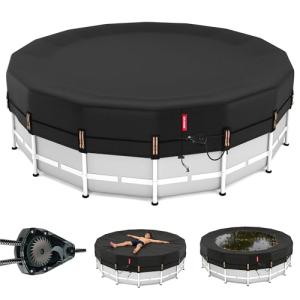
Safety covers are built for one primary purpose: to prevent accidental entry into the pool. These are solid or mesh covers that anchor directly to the pool deck using a system of straps and anchors embedded into the surrounding surface. When properly installed, a quality safety cover can support the weight of multiple adults or the accumulated weight of heavy snow — making them a genuine barrier rather than just a visual deterrent.
Mesh safety covers allow rainwater and meltwater to drain through naturally, so you don't end up with a heavy pool of standing water on top. They let some fine debris and algae-promoting light through, but the convenience factor is high and the structural integrity is excellent.
Solid safety covers provide a complete barrier against both water intrusion and light penetration. Because they block sunlight, they discourage algae growth significantly better than mesh options. The trade-off is that solid covers require a pump to remove standing water that accumulates on the surface.
Safety covers require professional measurement and installation in many cases, and the anchoring hardware is a permanent addition to your deck. The upfront cost is higher than other cover types, but the peace of mind — and the potential to save a life — is beyond calculation.
Winter Covers
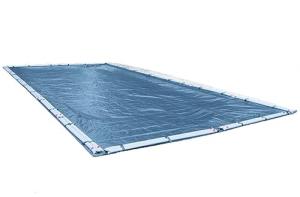
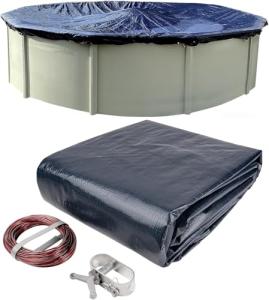
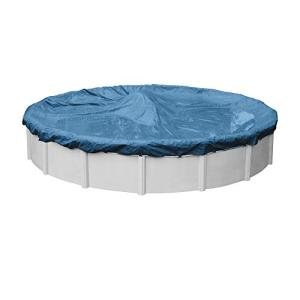
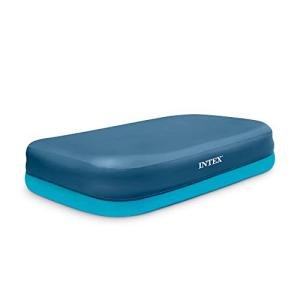
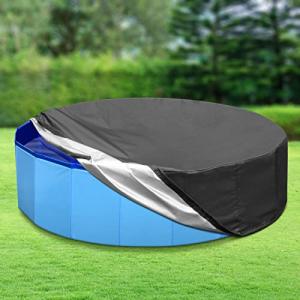
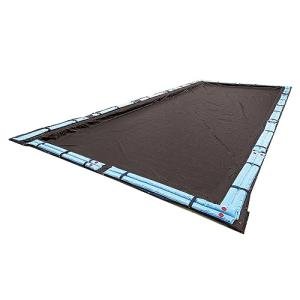
Winter covers are designed to protect your pool during the off-season when it's not in use. They're typically made from heavy-duty polyethylene or similar materials and are held in place using water bags, wall bags, or cable-and-winch systems around the pool perimeter.
These covers are very effective at keeping debris out and protecting pool surfaces and equipment during cold months. They're considerably more affordable than safety covers and a solid choice for pools in climates where the pool is completely closed for a significant portion of the year.
The downside: standard winter covers are not rated as safety covers. They sit on top of the water, meaning a child or pet who climbs or falls onto one risks becoming trapped beneath it — a serious danger. Families with young children should opt for a proper anchored safety cover rather than a standard winter cover, regardless of cost.
Automatic Pool Covers
Automatic covers are the premium option in the pool cover world. Motorised and often operated with the press of a button or a key switch, these covers roll across the pool surface automatically using a track system built into the pool deck or coping. They can open and close in under a minute and require almost no physical effort.
Many automatic covers are also safety-rated, giving you convenience and protection in one system. They excel at heat and chemical retention too, since covering the pool after every swim becomes effortless when it only takes thirty seconds.
The installation is complex and must be done during pool construction or as a major renovation. The cost is significantly higher than other cover types, but for the right pool and the right family, an automatic cover pays for itself in water, heat, and chemical savings over time — while delivering unmatched ease of use.
Key Features to Evaluate
When comparing pool covers, several specifications and features are worth looking at closely.
Material and UV Resistance
The material determines how long a cover will last and how well it performs. Look for UV-stabilised materials — covers that aren't UV-treated will degrade quickly when exposed to sunlight, becoming brittle and discoloured within a season or two. High-density polyethylene (HDPE) and reinforced woven fabrics are common in quality winter and safety covers. Solar covers should have multi-layered construction for better heat retention.
Weight Rating (For Safety Covers)
Safety covers should meet or exceed ASTM International standard F1346, which is the widely recognised benchmark for pool safety cover performance. This standard specifies minimum weight-bearing requirements and drainage performance. Any cover sold as a "safety cover" should explicitly reference compliance with this standard. If it doesn't, treat it with scepticism.
Sizing and Fit
A pool cover that doesn't fit properly won't perform the way it's supposed to. Most covers are available in standard sizes for rectangular pools, but many pools are irregular in shape — kidney, freeform, L-shaped, and so on. Measuring accurately and, where necessary, ordering a custom-cut or custom-fabricated cover is always worth the extra effort. A cover that's too small leaves water exposed; one that's too large is difficult to manage and may not anchor correctly.
Ease of Use
The best pool cover in the world won't help you if you find it so inconvenient that you stop using it. Consider how easy the cover is to deploy and remove, whether it requires a reel or other hardware, and how much physical effort it demands. If you're covering and uncovering the pool daily, that friction adds up. Automatic and semi-automatic options, while more expensive, dramatically improve compliance.
Warranty
A longer warranty period is generally a sign of a manufacturer's confidence in their product. Look for at least a 5-year warranty on safety covers and winter covers. Some premium safety covers carry 10 to 15-year warranties. Understand what's covered — fading, seam failure, and hardware defects should all be included.
Matching a Cover to Your Situation
The best pool cover for your neighbour isn't necessarily the best one for you. A few questions worth asking yourself:
Do you have young children or frequent visitors with young children? If yes, a properly anchored safety cover should be a non-negotiable. The incremental cost versus a standard winter cover is modest compared to the protection it provides.
Is your pool heated? If you run a heater or heat pump, a solar cover or automatic cover will dramatically reduce your energy costs during the swimming season. Even a basic solar blanket makes a meaningful difference.
How long is your off-season? If you close your pool for six months of the year, a robust winter cover or safety cover is a worthy investment. If you swim almost year-round, a solar cover or automatic cover will serve you better on a day-to-day basis.
What's your budget? Solar covers and standard winter covers are very affordable entry-level options. Safety covers represent a mid-range investment that pays off in protection and durability. Automatic covers are a premium purchase that delivers premium convenience.
Installation and Maintenance Tips
Getting the most out of your pool cover starts with correct installation. Anchor hardware for safety covers should be installed by a professional if you're not confident in your ability to set anchors correctly into your specific deck material. Improperly installed anchors compromise both the cover's holding strength and the integrity of your deck.
For solar covers, a reel system is almost always worth the additional cost. Rolling a large solar cover by hand is manageable once or twice, but quickly becomes tedious when you're doing it every day.
Keep covers clean. Debris left sitting on a cover adds weight, causes staining, and degrades materials faster. A leaf blower, pool cover pump, or simple broom makes quick work of surface maintenance.
Store covers properly during the season. If you remove a winter cover for the swimming season, rinse it thoroughly, allow it to dry completely, and store it in a cool, dry location out of direct sunlight. Folding a wet cover into storage is one of the fastest ways to shorten its lifespan.
Bringing It All Together
A pool cover isn't a glamorous purchase. It won't make your water bluer or your evenings more enjoyable the way a new lighting system might. But it will quietly and reliably protect your investment, reduce your running costs, and — in the case of a quality safety cover — potentially prevent a tragedy.
Take your time choosing the right type for your situation, pay attention to the quality markers, and don't let upfront cost be your only consideration. A cover that lasts a decade and performs well every season is a far better value than a cheap option you're replacing every two years.
Browse our full range of pool covers below, and don't hesitate to reach out if you need help finding the right fit for your pool.