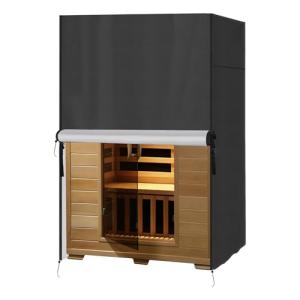
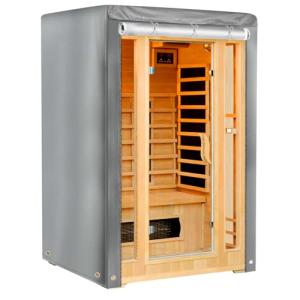
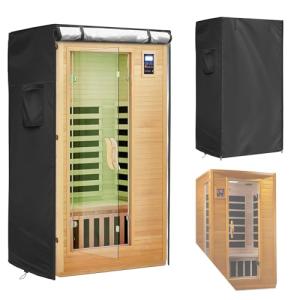
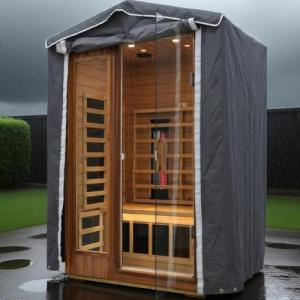
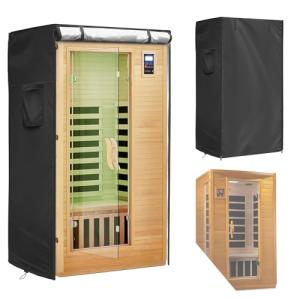
What Is a Sauna Cover, Exactly?
A sauna cover is a protective barrier designed to shield your sauna from the elements, retain heat, prevent debris accumulation, and extend the working life of your structure. Depending on the type of sauna you own, this might mean a fitted cover for your sauna heater, a weatherproof shell for an outdoor barrel sauna, or an insulating door curtain for an indoor unit.
The term "sauna cover" actually spans a fairly broad product category. Some covers are purely protective — keeping rain, snow, UV rays, and bird droppings off your outdoor barrel sauna during the weeks or months you're not using it. Others are thermally engineered, designed to reduce heat-up times and cut energy costs by preventing warmth from escaping through walls, roofs, or door gaps. And some serve double duty, combining weather resistance with meaningful thermal performance.
Understanding which type of cover you need — and what to look for when you're comparing options — is what this guide is all about.
Why Every Sauna Owner Needs a Cover
Let's be direct: if you own an outdoor sauna and you don't have a cover for it, you're shortening its lifespan and costing yourself money. Wood — even kiln-dried Nordic spruce or premium Canadian cedar — responds to moisture, temperature fluctuations, and prolonged UV exposure. Over time, unprotected timber will grey, crack, warp, and in extreme cases begin to rot. A cover prevents or significantly slows all of that.
For indoor sauna owners, the calculus is slightly different. You're not fighting rain or snow, but you may still benefit from covers designed to retain heat more efficiently between sessions or protect the heater itself from dust and accidental contact during idle periods.
Here's a practical breakdown of what a sauna cover actually does for you:
Extends the Life of Your Sauna: The single biggest benefit. A well-fitted cover acts as a barrier against the environmental stressors that degrade wood over time. This alone can add years — potentially decades — to the functional life of your investment.
Cuts Energy Consumption: A thermally efficient cover reduces the time your heater needs to run before your sauna reaches temperature. Depending on your current setup, this can translate to meaningful reductions in your electricity bill over the course of a year.
Keeps Your Sauna Clean: Leaves, debris, insects, and moisture all find their way into uncovered outdoor structures. A cover keeps the interior of your sauna clean and ready to use with minimal preparation.
Maintains Aesthetic Appeal: Sauna covers, particularly high-quality ones, help preserve the natural colour and texture of your timber. Wood that's been kept dry and shielded from UV rays looks dramatically better over time than unprotected wood.
Protects During Off-Season Storage: If you live somewhere with harsh winters or extended periods of non-use, a cover becomes essential rather than optional. It protects your structure during its most vulnerable periods — when it's sitting idle, unused, and exposed.
Types of Sauna Covers
Outdoor Barrel Sauna Covers
These are the most common type, designed specifically for the curved rooflines and cylindrical bodies of barrel saunas. A good barrel sauna cover wraps snugly around the exterior, typically using elasticated edges, adjustable straps, or fastening systems to keep it in place even in high winds.
Look for covers made from heavy-duty polyester or Oxford fabric with a PVC backing — materials that are genuinely waterproof rather than merely water-resistant. The distinction matters enormously when you're dealing with prolonged rain or heavy snowfall. Seam construction is also worth paying attention to: welded seams or double-stitched and taped seams will outlast cheaper single-stitch alternatives by a considerable margin.
Sizing is critical. A cover that's too small won't protect properly; one that's too large will flap, abrade against the wood, and potentially cause the very damage it's supposed to prevent. Most quality manufacturers offer covers in specific sizes to match their sauna dimensions, and some offer custom sizing for non-standard units.
Sauna Heater Covers and Guards
These smaller covers serve a different purpose: protecting the heater unit itself from accidental contact, dust accumulation, and in some cases splash from ladle use. If you have children or pets who access your sauna space, a heater guard is an important safety consideration as well as a protective one.
Heater covers are typically made from stainless steel mesh or powder-coated mild steel. The mesh design allows for airflow and heat dispersal while creating a physical barrier around the hot surfaces.
Thermal Blanket-Style Covers
For indoor saunas or saunas housed within outbuildings, thermal blanket covers can help reduce warm-up times by adding an extra layer of insulation over the structure. These are particularly useful for saunas with less-than-ideal wall insulation or in environments that get very cold overnight.
Door and Entrance Covers
Some sauna owners invest in insulated door covers or curtain-style barriers to reduce heat loss through the door. These can be particularly effective for saunas with older door seals or gaps around the frame, and they're relatively simple and inexpensive to install.
What to Look for When Buying a Sauna Cover
Material Quality
The fabric or material of your cover will determine how long it lasts and how well it performs. For outdoor covers, the minimum standard you should accept is 600D Oxford polyester with PVC coating. Premium covers use 900D or higher — the "D" refers to denier, a measure of fabric thickness and durability. Higher denier means a heavier, more robust cover.
For thermal covers and indoor applications, look at the insulation rating. Some manufacturers will quote an R-value (thermal resistance); others will describe materials used. Foam-core or fibre-fill inner layers offer better thermal performance than simple double-layer fabric.
UV Resistance
If your sauna lives outdoors and your cover does too, UV stabilisation in the fabric matters. Covers without adequate UV protection will begin to fade, become brittle, and eventually crack or tear within a couple of seasons in direct sunlight. Look for covers that explicitly reference UV resistance or UV stabilisation in their specifications.
Ventilation Design
Paradoxically, a well-designed outdoor cover should also allow for some ventilation. Completely sealed covers can trap moisture against the wood surface, encouraging the very rot and mould growth you're trying to prevent. Many quality covers incorporate ventilation panels or are designed with slight gaps to allow airflow while still repelling rain and debris from above.
Fit and Fastening System
A cover that doesn't stay put is a cover that's not protecting. Assess the fastening system carefully. Elasticated hems work well for simple shapes; adjustable straps and buckles are better for larger or less uniform structures; some premium covers use combination systems. Look at the quality of the hardware too — cheap plastic buckles will degrade and break; stainless steel or high-grade nylon hardware will last far longer.
Ease of Handling
Sauna covers can be surprisingly cumbersome. If you're putting your cover on and taking it off regularly — before and after each session, for example — you want something that one person can manage reasonably comfortably. If it's an annual storage cover that goes on in autumn and comes off in spring, weight and ease of handling is less critical.
Matching Your Cover to Your Sauna Type
Not all saunas are the same, and not all covers will suit all situations. Here's a quick guide to matching cover type to your specific setup:
Outdoor Barrel Sauna (Regular Use Year-Round): A fitted barrel cover in heavy-duty weatherproof fabric is the core requirement. Prioritise UV resistance, secure fastening, and ventilation design. You'll likely be removing and replacing it frequently, so ease of handling is worth considering.
Outdoor Barrel Sauna (Seasonal Use / Winter Storage): As above, but you can prioritise durability and weather resistance over convenience since the cover will be on for extended periods. A heavier, more robust option is justified here.
Outdoor Cabin or Room Sauna: The sauna structure itself provides the primary shell, but you may still want covers for the roof section, the heater, and potentially additional insulation panels for the walls. Think of it in layers.
Indoor Home Sauna (Prefab Unit): A heater guard is the most relevant product here. Thermal blanket covers may also be useful depending on how frequently you use your sauna and how long it takes to heat up.
Indoor Sauna Room (Built-In): Heater protection and door insulation are the primary focus. You're not dealing with weather, but heat efficiency and safety are still relevant.
Care and Maintenance of Your Sauna Cover
A cover is only as good as the condition it's kept in. The following practices will keep yours performing properly for as long as possible:
Store the cover dry whenever possible. If it's been wet, allow it to air-dry before folding and storing, especially if you're putting it away for a season. Trapped moisture in a stored cover will lead to mould and fabric breakdown.
Clean it periodically with a mild soap and water solution. Avoid harsh chemicals or pressure washing, which can damage coatings and seams. For mould spots, a diluted white vinegar solution is gentler than bleach and less likely to degrade the fabric.
Inspect the seams and fastening system at least once a season. Small tears or loose stitching can be repaired easily if caught early; left unattended, they become bigger problems.
During periods when the cover is in use, check occasionally that it's positioned correctly and that no pooling of water is occurring on the surface, which can stress seams and add unnecessary weight.
A Note on Value
Sauna covers occupy a wide price range, from budget options that will need replacing within a season or two, to premium products built to last a decade or more. The calculus here is reasonably simple: compare the cost of a good cover against the cost of refinishing, repairing, or replacing timber that's been exposed without protection, and the investment almost always looks sensible.
That said, the most expensive option isn't always necessary. For a sauna used primarily in milder climates with relatively short winters, a mid-range cover from a reputable manufacturer will likely serve you well for many years. For saunas in harsh climates, or for owners who want to minimise maintenance hassle over the long term, investing in a premium cover upfront is usually worth every penny.
Sauna covers are one of those product categories where function is everything. You're not buying an experience or an aesthetic — you're buying protection, longevity, and efficiency. The right cover, properly fitted and reasonably maintained, will pay for itself many times over across the lifespan of your sauna.
Browse our full range of sauna covers below, filtered by sauna type, size, and intended use. If you're unsure which cover suits your specific setup, our team is available to help you find the right match.