What a Bath Ventilation Fan Actually Does
A bath ventilation fan pulls warm, humid air out of your bathroom and pushes it outside through ductwork. It sounds simple, and in many ways it is — but the consequences of not having one, or having one that's too underpowered for your space, can be surprisingly costly.
Without adequate ventilation, moisture from showers and baths has nowhere to go. It settles on walls, ceilings, mirrors, and inside cabinets. Over time, this creates the perfect conditions for mold and mildew growth, which is not only unsightly but can be a genuine health concern — especially for people with allergies or respiratory issues. Persistent moisture also causes paint to peel, wallpaper to bubble, wood to warp, and metal fixtures to rust prematurely.
A properly sized and installed ventilation fan solves all of this by continuously cycling air out of the room, keeping humidity levels under control and your bathroom fresh.
Understanding CFM: Getting the Right Size Fan
The single most important number to understand when buying a bath ventilation fan is the CFM rating — which stands for cubic feet per minute. This tells you how much air the fan can move in a given minute, and getting this number right for your bathroom is critical.
The standard rule of thumb, endorsed by the Home Ventilating Institute, is 1 CFM per square foot of floor space. So a 60 square foot bathroom needs at least a 60 CFM fan. A 100 square foot bathroom needs at least 100 CFM. For smaller bathrooms under 50 square feet, a minimum of 50 CFM is recommended regardless of exact size.
If your bathroom is larger or has multiple fixtures, you'll want to size up. A useful approach for bigger spaces is to add 50 CFM for each toilet, shower, or bathtub in the room. If you have a jetted soaking tub, that alone calls for an extra 100 CFM. The goal is to make sure you have enough power to actually clear the air — an underpowered fan just redistributes humidity rather than removing it.
Most residential fans range from 50 to 110 CFM, which covers the vast majority of home bathrooms. Larger master bathrooms or spa-style baths may require fans rated well above that.
How Loud Is Too Loud? Understanding Sones
Noise level is a big deal for a lot of people, and it's measured in a unit called sones. Here's a practical way to think about the scale:
- 4.0 sones — about as loud as a normal television
- 3.0 sones — comparable to a busy office
- 1.0 sone — roughly the hum of a refrigerator
- 0.5 sones — close to the sound of rustling leaves
For most people, anything at or below 1.0 sone qualifies as a genuinely quiet fan — one you won't mind leaving on for an extended time. Fans rated above 3.0 sones can be pretty intrusive, and some older fans push 4.0 or higher, which is why replacing them often feels like a dramatic quality-of-life improvement.
Modern DC motor technology has made quiet fans much more accessible at reasonable prices. Premium models from brands like Panasonic are often rated as low as 0.3 sones, which is essentially silent in normal use. If a peaceful, spa-like bathroom environment matters to you, the sone rating deserves just as much attention as the CFM.
Types of Bath Ventilation Fans
Not all bath fans are built the same way, and the type you choose can affect performance, noise level, and ease of installation.
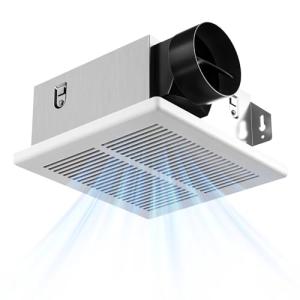
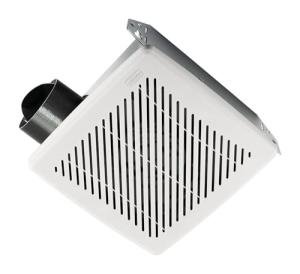
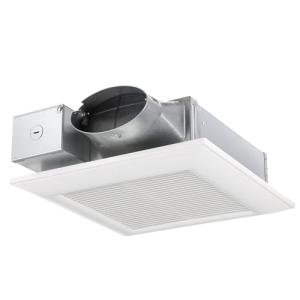
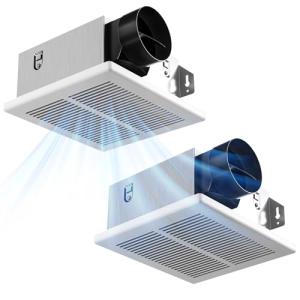
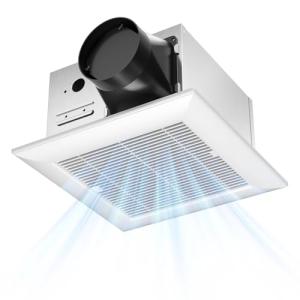
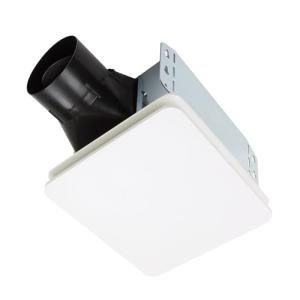
Standard ceiling-mounted fans are by far the most common type. They install directly in the ceiling, connect to ductwork running through the attic or wall, and vent air outside. They're straightforward, widely available, and come in a huge range of styles and feature sets.
Wall-mounted fans are an alternative for bathrooms where ceiling installation isn't practical, such as rooms without attic access or with unusually thick ceiling construction. These vent through an exterior wall and can be just as effective as ceiling models.
Inline fans are installed inside the attic or crawl space, connected to the ductwork rather than sitting directly in the bathroom ceiling. Because the motor is physically separated from the room, inline fans tend to be significantly quieter. They're a great option when very low noise is a priority, or when you need to vent multiple rooms through a single unit. The trade-off is a somewhat more complex installation.
Key Features Worth Knowing About
Today's bath ventilation fans are a far cry from the noisy, bare-bones boxes of decades past. Manufacturers have added a surprisingly wide range of useful features, and understanding them helps you decide what's actually useful for your home versus what's just nice to have.
Built-In Lighting
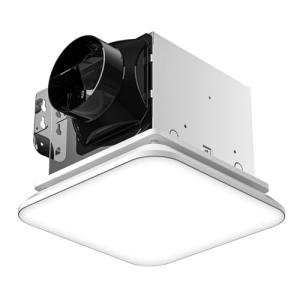
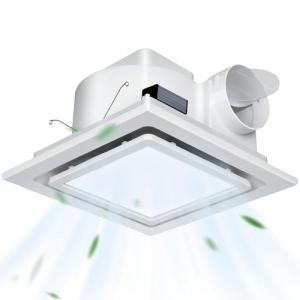
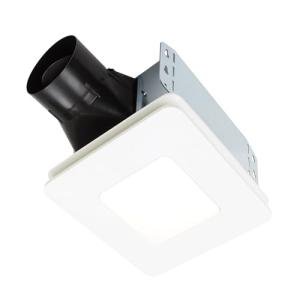
Combination fan-light fixtures are enormously popular, and for good reason. They consolidate two ceiling fixtures into one, simplify wiring (especially in renovations), and make installation more practical in smaller bathrooms where ceiling space is limited. You can find these with LED, incandescent, or fluorescent bulbs — LED being by far the most energy-efficient choice. Some models also include a built-in night light, which provides a soft glow for middle-of-the-night bathroom visits without blasting you with full overhead lighting.
Humidity Sensors
A humidity-sensing fan monitors the moisture level in the air and turns itself on automatically when it spikes — after a shower, for example — and shuts off once humidity drops back to a normal level. This is one of the most genuinely useful smart features available, because it means the fan always runs when it should and doesn't waste energy when it doesn't need to. It's also a great option for households where people frequently forget to turn the fan on.
Motion Sensors
Motion-activated fans turn on when someone enters the bathroom and off after they leave. These are particularly handy in shared or guest bathrooms, and some models combine motion and humidity sensing for a fully hands-free experience.
Timers
Timer-equipped fans (or fans connected to a wall timer) can be set to run for a predetermined period after you leave — typically anywhere from 15 to 60 minutes. This matters because simply running the fan during a shower isn't always enough; air ventilation experts recommend letting the fan run for at least 20 minutes after showering to fully clear humidity from the room. A built-in timer takes the guesswork out of that.
Built-In Heaters
Fans with integrated heating elements or heat lamps add a welcome burst of warmth to the bathroom, particularly useful in cold climates or in the morning when a cold bathroom floor is the last thing you want after stepping out of a hot shower. These combination units do require a dedicated electrical circuit in most cases, so it's worth checking with an electrician before purchasing.
Bluetooth Speakers
Some higher-end models incorporate Bluetooth speakers directly into the fan unit, letting you stream music or podcasts while you get ready. Sound quality varies widely across models, so if audio quality matters to you, it's worth reading specific reviews before buying one primarily for this feature. That said, for casual listening, many users find ceiling-mounted Bluetooth speakers surprisingly capable.
Energy Efficiency and ENERGY STAR Certification
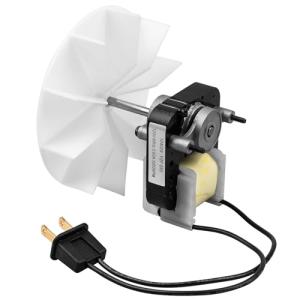
If energy efficiency is a priority for you — and given long-term utility costs, it probably should be — look for fans with ENERGY STAR certification. These products have met strict criteria set by the Environmental Protection Agency for efficiency and performance, including improved motor design and better blade engineering. They deliver strong ventilation while using less electricity and operating more quietly than non-certified models.
ENERGY STAR-certified fans also often qualify for utility rebates or tax incentives depending on your location, so it's worth checking local programs when you're shopping.
Installation Considerations
A bath ventilation fan is only as good as its installation. A few things to keep in mind:
Always vent outside. Fans should exhaust air to the exterior of your home — through the roof, a soffit, or an exterior wall. Venting into the attic is a common mistake that simply moves the moisture problem rather than solving it, and can lead to serious mold issues in the attic space over time.
Match your duct size. Ductwork diameter affects airflow efficiency and noise. Mismatched duct sizing can cause the fan to underperform even if it's rated highly on its own. When replacing an older unit, try to match the duct connector size.
Consider "no-cut" replacement fans. If you're replacing an existing fan, some models are designed specifically for easy retrofitting — they drop into the existing ceiling opening without requiring additional drywall work, which can save significant time and effort.
Electrical requirements matter. Fans with lights, heaters, and other built-in features draw more power. High-CFM motors also consume more electricity. Before purchasing a feature-rich combination unit, make sure your existing circuit can handle the load — or budget for an electrician to add a dedicated circuit if needed.
Choosing the Right Fan for Your Space
Pulling it all together, here's a simple framework for making your decision:
Start with the size of your bathroom and calculate the minimum CFM you need. Then think about noise tolerance — if quiet operation is important, prioritize fans rated below 1.0 sone. From there, consider which features would genuinely improve your daily routine: lighting combination, humidity sensing, a built-in timer, or added warmth. Finally, look for ENERGY STAR certification to ensure long-term efficiency.
Whether you're replacing a rattling 20-year-old unit or specifying fans for a brand-new build, today's bath ventilation fans offer a genuinely impressive range of performance and features at every price point. The right choice for your bathroom doesn't just protect the room from moisture damage — it makes the whole space feel cleaner, fresher, and better every single day.