Types of Bathroom Mirrors
Understanding what's out there is the first step. The bathroom mirror market covers a surprisingly wide range of styles and functions, and knowing the differences helps you zero in on what actually suits your space.
Standard Wall Mirrors
These are your classic bathroom mirrors — a reflective glass panel mounted directly on the wall above the vanity. They come in every shape imaginable: rectangular, square, round, oval, arched, and more abstract organic silhouettes that have become increasingly popular in recent years. Standard wall mirrors are versatile, easy to install, and the most budget-friendly option in the category.
Framed Mirrors
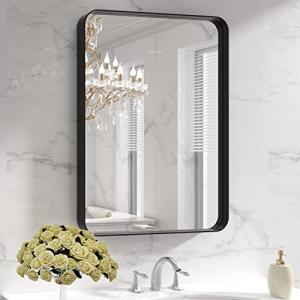
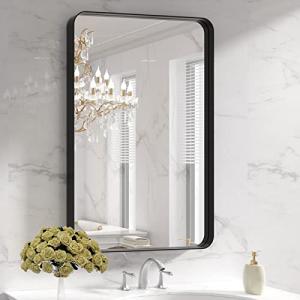
A framed mirror adds a layer of design intention to your bathroom. The frame acts like a picture frame — it draws attention, anchors the vanity area, and gives you an opportunity to introduce a specific material, color, or finish into the room. Popular frame materials include brushed metal (great for modern and industrial looks), natural wood (perfect for warmer or farmhouse-inspired spaces), brass and gold tones (for that luxurious, elevated feel), and resin or composite materials that can achieve just about any aesthetic.
Framed mirrors work especially well when you want the mirror to feel like a deliberate design choice rather than just a utility item. They're also a smart option when you're trying to tie together different materials already present in the bathroom — matching your mirror frame to your faucet finish or towel bar, for example, creates a cohesive, pulled-together look.
Frameless Mirrors
Frameless mirrors have become a go-to for anyone drawn to clean, contemporary interiors. Without a border interrupting the glass, these mirrors tend to feel lighter and more open — they almost seem to float on the wall. In a small bathroom, this visual openness can genuinely make the space feel bigger and less cluttered.
Frameless designs work beautifully alongside minimalist vanities, floating cabinetry, and hidden-strip lighting. The edges are typically polished or beveled for a finished look, and some frameless mirrors are mounted with subtle standoff hardware that creates a shadow gap behind the glass — a detail that looks effortlessly refined.
LED and Backlit Mirrors
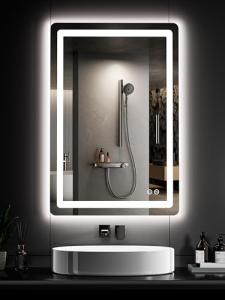
LED mirrors have moved from a luxury upgrade to an everyday essential in modern bathroom design. These mirrors have integrated LED strips built either behind the glass (backlit) or around the perimeter (front-lit), producing a soft, even glow that dramatically improves the quality of light in the bathroom.
The practical benefits are significant. Overhead bathroom lighting tends to cast shadows downward across your face — not ideal for applying makeup, shaving, or skincare. The light from an LED mirror comes from the same plane as your face, which means far fewer unflattering shadows and a more accurate view of your complexion. Many LED mirrors offer adjustable color temperature, letting you switch between cooler light for morning routines and warmer, dimmer light for relaxing evening baths. High-quality versions also feature a high Color Rendering Index (CRI), meaning the light accurately represents skin tones — so what you see in the mirror actually matches how you'll look outside.
Beyond function, backlit mirrors add a beautiful ambient quality to any bathroom. That soft halo of light behind the glass creates a spa-like atmosphere that feels genuinely luxurious.
Smart Mirrors
Smart mirrors take the LED concept further, adding technology features that integrate with your daily routine. Depending on the model, you might find touch controls and gesture sensors, built-in Bluetooth speakers, anti-fog heating elements (so the mirror clears instantly after a steamy shower), USB charging ports, voice assistant compatibility, and even display screens that can show the time, weather, or your calendar while you get ready.
Smart mirrors were once found only in high-end hotel bathrooms and luxury renovations. That's no longer the case. The technology has become far more accessible, and these mirrors now appear across a wide range of price points.
Medicine Cabinet Mirrors
Medicine cabinet mirrors solve one of the most common bathroom problems: storage. These mirrors have a cabinet built directly into the wall behind the glass, providing hidden storage for medications, toiletries, and grooming essentials. Modern medicine cabinets have come a long way from the clunky, dated designs of the past — today's versions feature slim profiles, interior lighting, soft-close hinges, and even integrated electrical outlets.
They're particularly valuable in small bathrooms where counter space is at a premium. A medicine cabinet mirror eliminates the need for a separate storage unit while keeping surfaces clear and uncluttered.
Shapes and What They Say About Your Space
Shape is one of the most expressive decisions you'll make when choosing a bathroom mirror, and it has a real impact on how the room feels.
Rectangular mirrors are the workhorse of bathroom design — structured, versatile, and equally at home in traditional and modern spaces. They provide generous reflective surface, work well above double vanities, and create a sense of height when oriented vertically.
Round and oval mirrors have surged in popularity because they do something genuinely useful in a bathroom: they soften the space. Bathrooms are full of hard, angular surfaces — tile grout lines, cabinet edges, sharp countertops. A round mirror introduces a curve that breaks up that rigidity and creates a calmer, more organic atmosphere. Oval mirrors work similarly but elongate the wall, which can be useful in rooms with low ceilings.
Arched mirrors have become one of the defining shapes in contemporary interior design. The gentle curve at the top evokes architectural detail and brings a quiet elegance that feels fresh without being trendy in a fleeting way.
Irregular and sculptural shapes — asymmetrical outlines, fluid organic forms, scalloped edges — represent the more adventurous end of the spectrum. These mirrors function more like wall art than purely functional fixtures, and in the right space, they make a genuinely striking impression.
How to Size a Bathroom Mirror
Getting the size right is one of the most important practical decisions you'll make, and there's a simple framework that works well for most bathrooms.
As a general rule, your mirror should be slightly narrower than your vanity — typically sitting about one to two inches inside the vanity width on each side. This creates a balanced, proportional look without the mirror feeling like it's overrunning the space. If you have a single vanity in the 24–36 inch range, a compact round or rectangular mirror keeps things tidy. For wider vanities in the 48–72 inch range, consider a single generous mirror or two smaller mirrors side by side, particularly if there are two sinks.
Mounting height matters too. The center of the mirror should ideally sit at eye level for the primary users of the space. In shared bathrooms used by adults and children, a taller mirror ensures everyone can use it comfortably without crouching or stretching.
Frames, Finishes, and Materials
The materials you choose for a bathroom mirror have practical implications as well as aesthetic ones. Bathrooms are humid environments, and not every material handles moisture equally well.
Metal frames — particularly stainless steel, aluminum, and powder-coated iron — are among the most durable choices for bathroom use. They won't warp, swell, or deteriorate from humidity. Popular finishes include matte black (crisp and contemporary), brushed nickel (timeless and versatile), brushed gold or champagne bronze (warm and sophisticated), and polished chrome (classic and reflective).
Wood frames bring warmth and natural texture, but solid wood needs to be properly sealed or treated for bathroom use to prevent moisture damage over time. Engineered wood or teak (which is naturally moisture-resistant) are smarter choices for high-humidity bathrooms.
For the mirror glass itself, look for high-quality flat glass with a copper-free silver backing. This construction resists edge degradation and maintains clarity over many years. Cheap mirrors can distort slightly or develop dark spots along the edges over time — a quality mirror should give you a true, undistorted reflection for the long haul.
Matching Your Mirror to Your Bathroom Style
A mirror doesn't exist in isolation — it should feel like it belongs in the room. Here's a quick way to think about style compatibility:
If your bathroom is modern or minimalist, lean into frameless designs, backlit LED mirrors, or geometric shapes with simple hardware. Clean lines and restraint are key.
For a traditional or transitional bathroom, a framed mirror in an oil-rubbed bronze, polished nickel, or natural wood finish reinforces the warmth and detail already present in the space.
Farmhouse and rustic bathrooms respond well to distressed wood frames, simple iron finishes, and unpretentious shapes — nothing too sleek or polished.
Eclectic and maximalist spaces are where sculptural shapes, bold frame materials, and artistic silhouettes shine. These are the rooms where an unusual mirror becomes the most talked-about detail.
Practical Things to Consider Before You Buy
Before you finalize your choice, it helps to think through a few practical details.
Lighting situation: If your bathroom is naturally dark or relies on a single overhead light, an LED mirror can genuinely improve your experience in the space. It's one of the highest-impact upgrades available at any price point.
Wall space above the vanity: Measure carefully, accounting for any outlets, switches, or plumbing access panels that might affect where you can mount the mirror.
Anti-fog: If long showers are part of your routine, an anti-fog mirror (either a dedicated defogging model or an LED mirror with a built-in heating pad) is worth the extra investment. It's one of those features that sounds minor until you have it — then you can't imagine going back.
Installation: Most standard wall mirrors are straightforward DIY installs. LED mirrors require an electrical connection, which may involve running power to the wall if there's no existing outlet nearby. Factor this into your planning if you're working with a budget.
A Mirror Worth Choosing
The bathroom mirror category has genuinely evolved into something exciting. Whether you're drawn to the elegance of a simple frameless design, the high-tech appeal of a backlit smart mirror, or the artistic personality of a sculptural arched frame, there's more choice — and more quality — available today than ever before.
Take your time with this decision. Measure your space, think about how you actually use your bathroom, and choose a mirror that serves your daily life well while looking exactly the way you want your bathroom to look. It's one of the easier upgrades you can make, and one of the most visible.