Understanding the Main Types of Bathroom Sinks
There are more types of bathroom sinks than most people realize, and each one has a distinct personality. Here's a breakdown of what's available and where each style actually makes sense.
Drop-In Sinks (Top-Mount)
Drop-in sinks are the most common type you'll find in homes. The basin sits inside a hole cut into the countertop, with the rim resting visibly on top of the surface. They're popular for good reason — they're compatible with almost any countertop material, relatively easy to install, and come in every shape and size imaginable.
The main downside is that the rim creates a ledge where water, soap, and grime can collect over time. Regular wiping keeps it clean, but it's an extra step that undermount users don't have to worry about. If you're renovating without replacing the countertop, drop-in is usually your most practical and budget-friendly option.
Undermount Sinks
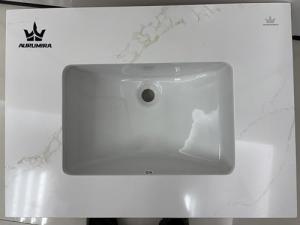
Undermount sinks are fixed below the countertop, so the edge of the counter material is what you see around the basin rather than a visible sink rim. The result is a cleaner, more seamless look that also happens to be easier to wipe down — water and crumbs brush directly into the sink without getting caught on a ridge.
The trade-off is that undermounting requires a solid-surface countertop like stone or quartz to create a proper waterproof seal. Laminate countertops won't work. Installation costs are also a bit higher. But for a primary bathroom where you want a polished, modern finish, undermount is hard to beat.
Vessel Sinks
Vessel sinks sit fully on top of the counter or vanity, like a bowl placed on a shelf. They're the most design-forward option in this category — when someone walks into a bathroom and immediately notices the sink, it's almost always a vessel. They come in round, rectangular, square, and even freeform organic shapes, and in materials ranging from ceramic and glass to stone, copper, and resin.
Because vessel sinks sit so high, they require taller faucets (usually wall-mount or a tall single-hole faucet) and a slightly lower vanity to keep the overall height comfortable to use. They're stunning in guest bathrooms or powder rooms where the visual impact matters. In a busy family bathroom, the exposed basin can be harder to keep looking pristine.
Pedestal Sinks
A pedestal sink is exactly what it sounds like: a basin mounted on a freestanding column that hides the drain pipe. There's no vanity cabinet underneath, no counter space to speak of — just the sink in its most minimal form.
Pedestal sinks are particularly well-suited to small bathrooms and powder rooms where freeing up visual floor space matters. They have a timeless, classic look that works in traditional homes but also in stripped-back modern ones. The main sacrifice is storage. If you need somewhere to keep toiletries, towels, or cleaning supplies, a pedestal sink forces you to find that storage elsewhere in the room.
Wall-Mount Sinks
Wall-mount sinks attach directly to the wall with no pedestal or cabinet below. The plumbing is either left exposed (which can look intentional and industrial if done well) or concealed behind a small shroud. The area beneath is completely open, which makes these sinks an excellent choice for small bathrooms — open floor space reads as larger, and the flexibility underneath lets you add a shelf, a small stool, or just leave it clear for a clean look.
Wall-mount sinks are also the go-to option for accessible and ADA-compliant bathrooms, since the height can be set precisely and there's room for knee clearance beneath.
Integrated and Vanity-Top Sinks
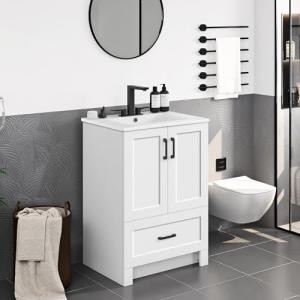
Many off-the-shelf vanity units come with a sink already molded as part of the countertop — a single piece of porcelain, acrylic, or solid surface where the basin flows directly into the surrounding counter. There are no seams, no rim, and very little to clean around. These are extremely practical for family bathrooms precisely because of that ease of maintenance.
The downside is less counter space, since the integrated slope takes up surface area that a separate sink wouldn't. Custom sizes are possible but cost more.
Trough Sinks
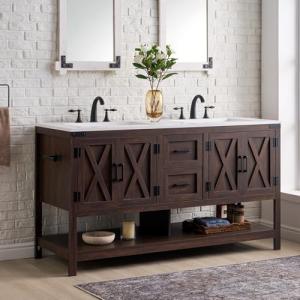
Trough sinks are long, rectangular basins — often spanning the full length of the vanity — originally borrowed from commercial and hospitality design. In a residential setting, they can serve two people washing up at the same time with separate faucets draining into the same basin. They've moved solidly into mainstream home design over the past few years, especially in primary bathrooms with wide double vanities.
Choosing the Right Material
The material your sink is made from affects durability, ease of cleaning, weight, and how it ages over time. Here's what to know about the most common options.
Ceramic and Porcelain are still the most widely used materials, and for good reason. They're durable, easy to clean, hold up well to cleaning products, and come in every style. White remains the classic choice, but you'll also find them in matte black, soft grey, and a range of other finishes. Porcelain tends to have a denser, harder surface than standard ceramic.
Vitreous China is essentially a type of porcelain coated with a glassy enamel that's fired at very high temperatures. It's the material behind that bright, almost reflective white on high-quality traditional sinks. Extremely easy to clean, resistant to staining, and durable when treated well — though it can chip if something heavy is dropped on it.
Cast Iron with Enamel is heavy — very heavy — but it's one of the most durable sink materials available. The thick cast iron base is coated in porcelain enamel that resists scratching and staining. Many cast iron sinks from decades ago are still in perfect condition today.
Natural Stone (marble, granite, travertine, limestone) is used primarily for vessel or countertop sinks where the weight can be properly supported. Stone sinks are genuinely beautiful and unique — no two look exactly alike — but they require more maintenance than ceramic. Most natural stone needs periodic sealing to prevent staining, and acidic products can etch softer stones like marble.
Glass makes a striking vessel sink. Modern glass sinks are made from tempered or frosted glass that's stronger than it looks, though they can show water spots and fingerprints more easily than other materials. They work best in bathrooms that don't see heavy daily use.
Copper has natural antimicrobial properties and develops a living patina over time that many people find beautiful. It's most at home in rustic, farmhouse, or eclectic bathrooms. Copper does require specific care — avoid harsh chemicals that can strip the finish.
Concrete and Resin are increasingly popular for their raw, tactile quality. Concrete sinks look incredible in industrial and modern bathrooms and can be custom-made to almost any shape or size. They're heavier than most alternatives and should be sealed carefully. Resin blends offer a similar aesthetic at lower weight.
Sizing Your Sink Correctly
Getting the size right matters more than people expect. A sink that's too small feels frustrating in daily use. One that's too large can overwhelm a compact bathroom or leave no counter space on either side.
As a general starting point, most standard bathroom sinks fall somewhere between 16 and 24 inches wide and 12 to 22 inches front to back, with a basin depth of around 5 to 8 inches. But that range covers a huge variety of actual sizes, so always measure your specific vanity or wall space before shopping.
For small bathrooms and powder rooms, compact wall-mount or corner sinks in the 16–18 inch range keep things proportional. For primary bathrooms where two people share the space, consider a wider single trough sink or a double-sink vanity — anything in the 48-inch-plus range gives both people enough room to move without bumping elbows.
Basin depth is often overlooked. A deeper basin (7–8 inches) is much more practical for actual washing — filling a basin for soaking, washing a toddler's hands, or just splashing water without it going everywhere. Shallower basins like washplane or vessel styles look sleek but prioritize form over function.
Faucet Holes and Configurations
Before buying any sink, check how many faucet holes it has — or whether it has any at all.
A single-hole sink is drilled for one faucet that combines hot and cold in a single unit. A centerset sink has three holes spaced 4 inches apart, fitting most standard two-handle faucets. A widespread configuration has three separate holes spaced 8 inches apart, giving you more flexibility with faucet style and a more open look on the counter.
Some sinks come undrilled, which gives you maximum flexibility if you're planning a wall-mount faucet or want to drill holes in your countertop instead. Just make sure your choice matches the faucet you have in mind — fixing a mismatch after installation is expensive.
What to Think About Before You Buy
Once you've narrowed down the style, here are the practical questions worth asking:
How is this bathroom actually used? A guest powder room gets very different traffic than a primary bathroom shared by a family with kids. Vessel sinks are beautiful in low-traffic settings; integrated or undermount sinks handle daily family use better.
How much counter space do you need? Pedestal and wall-mount sinks give you zero. Integrated vanity tops give you some but not a lot. If your morning routine involves skincare products, an electric toothbrush, and a hair dryer, you need real counter space.
What's your countertop material? Undermount sinks only work with solid-surface countertops. If you're keeping existing laminate, a drop-in is almost certainly your best option.
What's your cleaning tolerance? The honest answer for most people is: not high. Undermount and integrated sinks are the easiest to keep clean. Vessel sinks and pedestal sinks can look stunning but need regular attention to look their best.
What's the room's style direction? A hammered copper vessel sink and a sleek matte white undermount ceramic are both excellent sinks — but they belong in very different bathrooms. Let the overall design of the space guide the material and form, not just your preference for the sink in isolation.
Current Trends Worth Knowing
Bathroom sink design in 2025 and beyond is moving toward softer forms, darker finishes, and more textured materials. Matte black and brushed bronze have replaced chrome as the go-to finish in contemporary bathrooms. Earth-toned concrete and stone-look composite materials are increasingly popular for anyone who wants something that feels genuinely different from the standard white basin.
Organic shapes — sinks with gentle curves and irregular outlines inspired by natural forms — are becoming more common, particularly in higher-end renovations. Trough sinks continue to move from hotel bathrooms into homes. And for small spaces, the wall-mount sink is having a genuine moment: designers are pairing curved basins with hidden plumbing and small floating shelves underneath to make compact bathrooms feel both functional and considered.
A bathroom sink is a long-term commitment. Most quality sinks will outlast the countertops they sit in, the faucets attached to them, and possibly even your time in the house. Getting the right one is worth the extra hour of research.
Match the style to the room. Match the material to your lifestyle. Get the size right for your space. And don't forget to check the faucet configuration before you order anything. Do those four things, and you'll end up with a sink that works as hard as it looks good.