
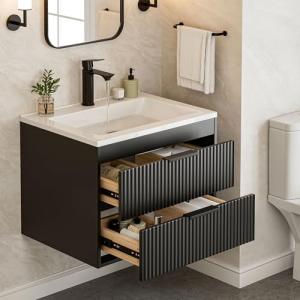
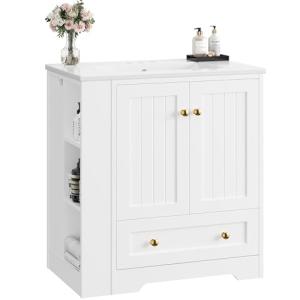
What Is a Bathroom Vanity Set?
A bathroom vanity set is more than just a cabinet under a sink. A complete set typically includes the vanity cabinet itself, a countertop, an integrated or drop-in sink basin, and often a matching mirror. Some sets come with faucets and hardware included; others leave that to you so you can customize the finish to your preference.
Think of it as the anchor of your bathroom. Everything else — the tile, the lighting, the accessories — tends to take its visual cues from the vanity. Choose well here, and the rest of the room falls into place.
Types of Bathroom Vanity Sets
Freestanding Vanities
Freestanding vanities sit directly on the floor and are by far the most common style. They're sturdy, offer generous cabinet space, and come in everything from sleek modern profiles to ornate traditional furniture-style designs. If you're renovating a hall bath or a primary ensuite and want maximum storage without any installation complications, a freestanding vanity is a reliable choice.
Furniture-style freestanding vanities — ones that look like they belong in a bedroom rather than a bathroom — have been particularly popular lately. They tend to have turned legs, decorative molding, and warm wood finishes that make the bathroom feel less clinical and more like a real room.
Floating (Wall-Mounted) Vanities
Floating vanities are mounted directly to the wall, with the floor left completely open underneath. That might sound like a small detail, but it makes a huge visual difference. The open floor space makes any bathroom feel bigger and airier, and it's genuinely easier to clean underneath. No more hunting down that dropped earring.
Wall-mounted vanities work especially well in smaller bathrooms and powder rooms where every inch counts. They're also the go-to choice for contemporary, minimalist, and Japandi-inspired interiors where clean lines and a sense of openness are the whole point. Many floating vanity sets come with LED strip lighting underneath, which adds a soft ambient glow that looks every bit as good as it photographs.
One thing to keep in mind: floating vanities need to be anchored into wall studs, so installation is a bit more involved than setting a cabinet on the floor. If your walls aren't in great shape or you're renting, this style may not be practical.
Single Sink Vanity Sets
Single sink sets are ideal for smaller bathrooms, guest baths, and powder rooms. They typically range from about 24 inches wide up to 48 inches, giving you a functional sink area along with cabinet storage on one or both sides. If you're the only person using the bathroom regularly, or if the space simply doesn't allow for more, a well-chosen single vanity can look just as elegant and intentional as anything larger.
Double Sink Vanity Sets
Double sink vanity sets — generally starting at 60 inches wide — are a game-changer for shared bathrooms. No more jockeying for mirror space in the morning. Each person gets their own sink, their own counter space, and ideally their own set of drawers. For couples and families, this is less of a luxury and more of a sanity saver.
Double vanities also bring a sense of visual symmetry and weight to larger bathrooms that a single vanity just can't achieve. When paired with matching mirrors and coordinated lighting, they create that spa-like, hotel bathroom feel that so many people are going for right now.
Styles and Finishes — Finding Your Aesthetic
Modern and Minimalist
If you love clean lines, handleless drawers, and a palette of whites, grays, and matte blacks, the modern minimalist vanity is made for you. These sets prioritize simplicity — no fuss, no ornamentation, just solid construction and clever proportions. Matte finishes are particularly popular here, and matte black hardware has become a standout choice for people who want a subtle edge without going bold.
Traditional and Classic
Traditional vanity sets lean into detail: raised panel cabinet doors, decorative feet, brushed nickel or oil-rubbed bronze hardware, and often a marble or quartz countertop with some veining. If your home has character — crown molding, hardwood floors, warm tones — a traditional vanity will feel right at home rather than out of place.
White and off-white remain the most popular colors in this category, but richly painted cabinets in navy, sage green, and deep forest tones are making a strong move. These colors bring personality and warmth without straying too far from classic sensibility.
Natural Wood and Organic Finishes
Wood-toned vanities have had a serious moment recently, and it's not hard to see why. Warm finishes in white oak, walnut, and ash bring a grounded, spa-like calm to the bathroom that bright white cabinets simply can't replicate. Pair them with a stone countertop, matte fixtures, and a round mirror, and you've got something that feels genuinely considered.
These finishes work beautifully with biophilic design — the growing trend of bringing natural textures and materials into interior spaces. If your bathroom currently feels cold or sterile, swapping in a wood-tone vanity set is one of the fastest ways to fix that.
Transitional Style
Not everyone wants to commit fully to modern or traditional. Transitional vanity sets blend elements from both — simple cabinet lines with classic hardware, or a shaker-style door in a contemporary color. If you're ever unsure which direction to go, transitional is usually the safe bet. It works in most home styles, ages well, and doesn't paint you into a corner if you redecorate other parts of the house.
Countertop Materials — What's Worth It?
The countertop is one of the most important parts of your vanity set, both functionally and aesthetically. Here's how the main options compare:
Quartz is the most popular choice for good reason. It's non-porous, highly resistant to stains and scratches, and requires virtually no maintenance beyond wiping it down. It comes in hundreds of colors and patterns, including options that mimic marble convincingly. For busy bathrooms or households with kids, quartz is hard to beat.
Marble is undeniably beautiful and brings a luxury feel that nothing else quite replicates. The catch is that it's porous, which means it can stain from toothpaste, makeup, and standing water if not sealed regularly. It's a great choice for a lower-traffic bathroom where you're willing to put in a bit more care.
Solid surface materials like Corian offer a seamless, integrated look — especially appealing when the sink is molded directly from the countertop material. They're budget-friendlier than stone and easy to repair if scratched. They don't have the visual weight of marble or quartz, but in a minimalist setting, that seamless look is exactly the point.
Ceramic and porcelain tops are durable and affordable, and they work particularly well in classic or traditional vanity sets. They can chip if hit hard, but for most everyday use, they hold up well and clean easily.
Storage — The Part Everyone Underestimates
Here's where most people go wrong: they fall in love with how a vanity looks and don't think carefully enough about whether it actually works for their life. Storage matters enormously, especially in a bathroom used by more than one person.
Think about what you actually need to store. Tall cabinets work well for items like hairdryers and curling irons. Deep drawers are great for folded towels and bulk supplies. Shallow top drawers are ideal for everyday items you want to grab quickly — toothpaste, cotton pads, the things you reach for every single day.
Look for vanity sets that include soft-close hinges and drawer glides. It's one of those features that sounds like a small upgrade but makes the whole thing feel noticeably more quality every time you open a drawer. Built-in drawer organizers and pull-out shelves are worth paying for if you can find them.
Some newer vanity sets also include hidden power outlets inside a drawer — a clever solution for keeping your charging devices and hair tools organized without cords cluttering your countertop.
Mirrors and Lighting — The Finishing Touch That Makes the Whole Set
Most bathroom vanity sets come with a mirror, and it's worth paying attention to what's included or what's recommended to pair with it. A mirror that's too small for the vanity looks awkward. One that's too large can overwhelm the space. As a general rule, the mirror should be slightly narrower than the vanity width, with the bottom sitting roughly at eye level or slightly below.
Backlit LED mirrors have moved well beyond trend status — they're now practically standard for any bathroom that takes design seriously. The light is flattering, even, and reduces the shadows you get from overhead-only lighting. Some mirrors include anti-fog features, touch dimming, and color temperature controls. If you spend real time at the mirror in the morning, these aren't frivolous features. They genuinely improve the experience.
For double vanity sets, matching mirrors side by side create a cohesive, intentional look. Some designers are now experimenting with a single large mirror spanning the full width of a double vanity — a cleaner, more modern take that works especially well in contemporary bathrooms.
Sizing Guide — Getting the Fit Right
Measure twice, order once. It sounds obvious, but bathroom vanity returns are one of the most common home improvement headaches, and they almost always come down to measurements.
Before you browse, know your wall width and the clear floor space in front of where the vanity will sit. You need at least 21 inches of clear space in front of the vanity for comfortable use; 30 inches is even better. Don't forget to account for door swings — both the bathroom door itself and the vanity cabinet doors.
Vanity depths typically run between 18 and 22 inches. In a tight space, going shallower (18 inches) can make a real difference to how crowded the room feels. Standard vanity height is around 32 inches, though many newer sets come in "comfort height" versions at 34–36 inches, which feel better for taller users and are easier on the back.
What to Look for in a Quality Vanity Set
Not all vanity sets are made equal, and the price range is wide for good reason. Here are the things that separate a vanity that lasts fifteen years from one that starts sagging in three:
Solid wood or plywood construction in the cabinet box beats particleboard every time, especially in a humid environment. Moisture resistance matters more in a bathroom than almost anywhere else in the house.
Soft-close hardware throughout — drawers and doors — is a sign of quality construction and makes daily use noticeably more pleasant.
Dovetail joinery in drawer boxes is a classic marker of quality cabinetry and will outlast stapled or glued construction considerably.
A sturdy, well-fitted countertop with clean seams and a tight fit around the sink. A poorly fitted countertop is where water infiltrates and damage starts.
Consistent finish with no blotchiness, visible grain filler, or hardware that feels flimsy. The finish is what you see and touch every day, so it's worth scrutinizing before you buy.
Invest Where It Counts
A bathroom vanity set is one of those purchases where quality really does pay off over time. You use it every single day. You see it every time you walk into the room. And if you're thinking about resale value, bathrooms consistently rank among the top rooms that buyers scrutinize most closely.
Take your time with this decision. Measure your space carefully, think honestly about your storage needs, consider who shares the bathroom with you, and choose a style that you'll still love in ten years. The right vanity set won't just function well — it'll genuinely make your bathroom a better place to be.