The Four Main Types of Bathtub Faucets
Not all bathtub faucets are the same, and more importantly, they're not interchangeable. The type you need depends almost entirely on your tub's design and your bathroom's plumbing setup.
Freestanding (Floor-Mounted) Faucets
Freestanding faucets are the showstoppers of the bathtub world. They rise up from the floor beside the tub, with exposed supply lines running beneath the finished floor. Because they don't attach to the tub itself, they work beautifully with freestanding and clawfoot tubs that don't have pre-drilled holes in the rim.
The visual impact is hard to beat — a tall, elegant column of metal arching over the tub edge has a distinctly spa-like, sculptural quality. The trade-off is installation complexity. You'll need underfloor access to run supply lines, and if your bathroom sits on a concrete slab, you'll want to consult a plumber before committing. But for a truly dramatic freestanding tub setup, nothing else quite compares.
Wall-Mounted Faucets
Wall-mounted faucets attach directly to the wall beside or above the tub, with all the plumbing concealed inside the wall cavity. This is one of the most practical and popular choices, particularly for alcove tubs where a wall is naturally close by. Because the supply lines run behind the wall, there's nothing exposed on the tub deck — the whole setup looks clean and uncluttered.
One important measurement to check before buying: the spout needs to be long enough to actually reach over the tub edge and into the basin. Most wall-mount faucets include coupler extensions to help with this, but it's worth confirming before you purchase. The good news is that wall-mounted faucets often work out to be the most economical option, since they tap directly into existing wall supply lines without needing additional water line runs.
Deck-Mounted Faucets
Deck-mounted faucets install directly onto the rim of the bathtub — the "deck" — through pre-drilled holes in the tub itself. These are extremely common on drop-in tubs and built-in alcove designs. The look is integrated and tidy: just the spout, handles, and sometimes a hand shower visible above the rim, with everything else tucked underneath.
Before purchasing a deck-mount faucet, measure the center-to-center distance between your tub's pre-drilled holes. This measurement varies by tub, and buying a faucet that doesn't match means modifications you probably don't want. Also consider spout reach if your faucet will be mounted on an outside deck surround rather than on the tub rim itself — you'll need enough reach to direct water squarely into the basin.
Tub Wall-Mount Faucets
Slightly different from standard wall-mounted faucets, tub wall-mount faucets attach through holes drilled into the wall of the bathtub itself rather than the surrounding bathroom wall. The standard hole spacing is 3-3/8" center-to-center, though older tubs can vary widely. This style is especially common on vintage clawfoot tubs and certain freestanding models that come pre-drilled from the manufacturer.
These faucets typically feature either a small downward spout for filling or a high-rise gooseneck design for a more elegant look. They require water lines running from below the floor, so underfloor access matters here too.
Inside the Faucet — Valve Types Explained
The visible parts of a bathtub faucet tell you about style. The valve inside tells you about performance. There are four common valve types, each with its own feel and long-term behavior.
Compression valves are the oldest design, using rubber washers that press together to stop the flow of water. They're reliable and easy to repair, but they require more force to operate and the washers wear out over time, leading to the classic dripping faucet.
Ball valves use a rotating metal or plastic ball with channels that align to control flow and temperature. They're single-handle designs that allow smooth, intuitive mixing of hot and cold. They contain more moving parts than cartridge valves, which can mean more potential wear points over time.
Cartridge valves are among the most popular choices today. A cartridge moves up and down or side to side inside the housing to control flow and temperature. They feel smooth and precise, require minimal maintenance, and when they eventually do need repair, the cartridge simply slides out and a new one slides in. Easy to identify by their consistent, resistance-free movement.
Ceramic disc valves use two ceramic discs that rotate against each other. Ceramic is extremely hard and resistant to wear, making these valves exceptionally durable — they're often found in higher-end faucets. They tend to have a stiff, quarter-turn operation and handle hard water particularly well.
Handle Configurations
Beyond the valve mechanism, faucets vary by how many handles they include and how those handles work.
Single-handle faucets control both temperature and flow with one lever or knob. They're intuitive, fast to operate, and work well in minimal bathroom designs. Twist one way for more hot, the other for more cold — everything in one place.
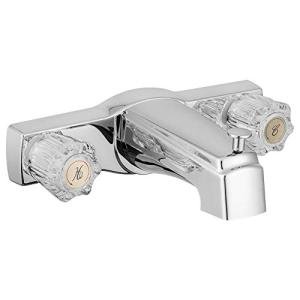
Two-handle faucets have separate controls for hot and cold. Many people find them more precise for dialing in an exact temperature. They also tend to look more traditional and formal, which suits certain bathroom styles perfectly.
Three-handle faucets add a third control — typically a diverter for switching between the tub spout and a showerhead in combo setups.
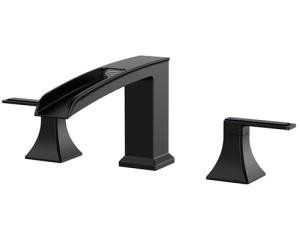
Roman faucets deserve a special mention here. These are a popular deck-mounted style featuring a wide, arched spout flanked by separate hot and cold handles on either side. They have a classic, symmetrical look that pairs naturally with drop-in soaking tubs and traditional bathroom aesthetics.
Finishes — What Actually Lasts
The finish of your bathtub faucet does two jobs: it defines the look, and it determines how the faucet holds up to water, steam, and daily handling. Here's what you're actually working with.
Chrome is the classic choice. It's bright, reflective, easy to wipe clean, and matches almost any bathroom hardware. Quality chrome finishes are resistant to corrosion and hold up well over time. The main complaint is fingerprints — they show up easily on high-gloss surfaces.
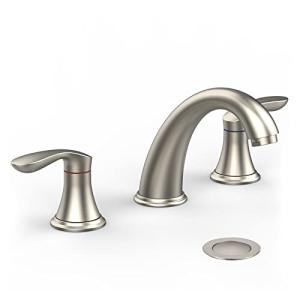
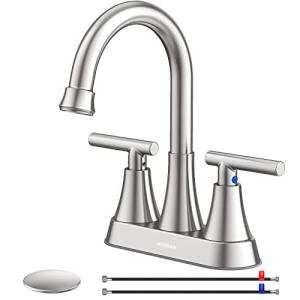
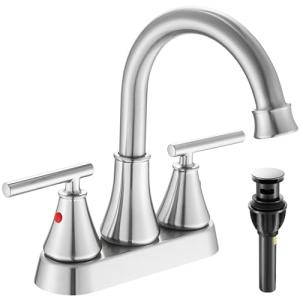
Brushed nickel has become enormously popular because it splits the difference beautifully: warm and sophisticated, yet far more forgiving of water spots and fingerprints than polished chrome. It coordinates well with both cool and warm color palettes.
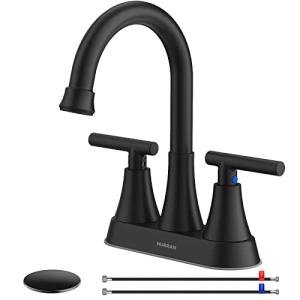
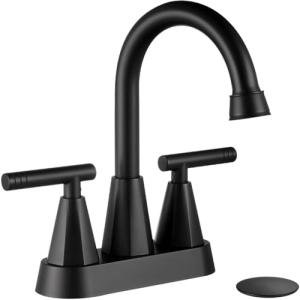
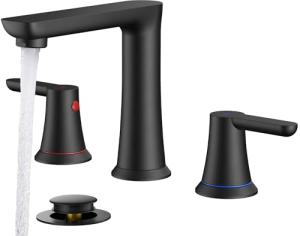
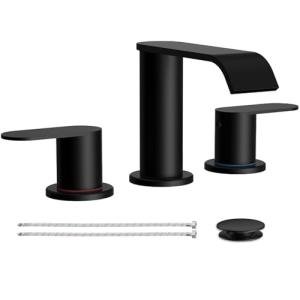
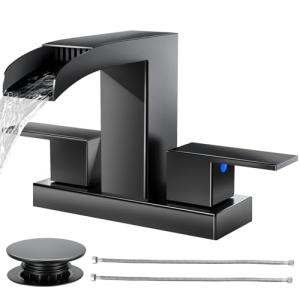
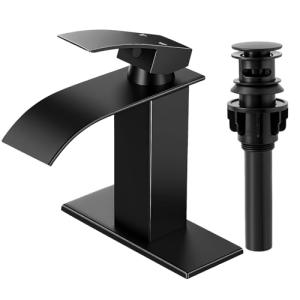
Matte black is the standout trend of recent years, and for good reason. It's bold, modern, and graphic — it makes a statement against white tubs and light tile. It's also quite good at hiding water spots. Just be sure to use gentle cleaners, as abrasive products can damage the matte finish.
Oil-rubbed bronze brings depth and warmth with its textured, dark surface. It suits vintage, rustic, and transitional bathrooms particularly well. The finish has a handcrafted quality that ages gracefully.
Polished brass and brushed gold are having a real moment right now — these warm-toned metallic finishes add richness and a distinctly elevated feel. They work especially well in bathrooms designed around natural materials like stone and wood.
A practical note: whatever finish you choose, try to match it across all the hardware in the bathroom. Mixing a brushed nickel faucet with chrome towel bars and brass cabinet pulls creates a disjointed look that's hard to overlook once you notice it.
Features Worth Paying Attention To
Once you've nailed down the type, valve, and finish, a handful of extra features can meaningfully improve day-to-day use.
Thermostatic temperature control is arguably the most useful upgrade available. Instead of manually balancing hot and cold each time you draw a bath, a thermostatic valve memorizes your preferred temperature and delivers it consistently from the moment you turn on the tap. It also protects against sudden temperature spikes if someone flushes a toilet or runs water elsewhere in the house — a genuinely valuable safety feature for households with children or elderly family members.
Hand showers add real flexibility. A removable sprayer on a hose makes rinsing easier, helps with cleaning the tub, and is invaluable if you bathe kids or pets. Most faucets can accommodate a hand shower attachment, and many higher-end options include one as standard.
Water flow rate (GPM) matters more than people expect, especially with large soaking tubs. A faucet flowing at 4 gallons per minute fills a standard 60-gallon soaking tub in about 15 minutes. Drop to 2 GPM and you're waiting twice as long. Check the GPM rating before purchasing, particularly if you're working with a large, deep tub.
Diverters are essential in tub-shower combos. The diverter redirects water flow from the tub spout up to the showerhead and back again. Some are built into the spout (you pull up a small knob), while others are separate handles. If you use your tub as a shower too, this is a non-negotiable feature.
Matching Your Faucet to Your Tub
The simplest framework: let your tub type guide your faucet type.
Freestanding and clawfoot tubs without pre-drilled holes are best served by freestanding floor-mounted faucets, or by wall-mounted faucets if there's a nearby wall. Drop-in and built-in tubs typically use deck-mounted or Roman-style faucets through pre-drilled rim holes. Alcove tubs — the three-wall enclosed type common in most homes — generally work best with wall-mounted faucets, which keep the tub deck clear and use the existing in-wall plumbing efficiently.
When in doubt about plumbing compatibility or installation requirements, loop in a licensed plumber before you purchase. Swapping a faucet type after the fact often means opening walls or floors — far more disruptive (and expensive) than a quick consultation beforehand.
What to Look For in Quality Construction
Not all faucets are built equal. When comparing options, look for solid brass or stainless steel bodies rather than zinc alloy or plastic internals — brass resists corrosion exceptionally well and holds up through years of daily use. Ceramic disc valves or quality cartridge valves are signs of a well-built fixture. Check for a manufacturer warranty: reputable brands typically back their faucets with lifetime or limited lifetime coverage, which tells you something about how confident they are in their own product.
Weight is often a useful proxy: a heavier faucet typically means more solid metal construction, while a surprisingly lightweight one may contain more plastic internally than the price tag suggests.
A bathtub faucet is one of those fixtures you interact with every single day, so it's worth choosing carefully. The right one fits your tub's configuration, works reliably with your plumbing, complements the rest of your bathroom hardware, and holds up to years of use without constant maintenance. Whether you're drawn to the architectural drama of a freestanding floor-mount or the clean practicality of a wall-mounted fixture, understanding the differences means you'll end up with something that genuinely works — not just something that looked good in a photo.