What Are Bathtub Sliding Doors?
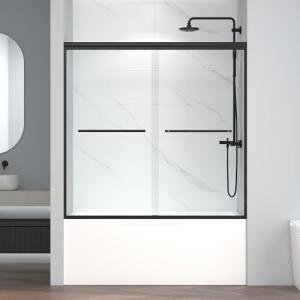
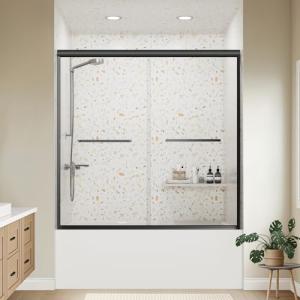
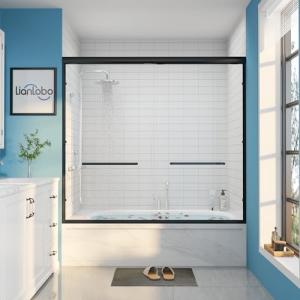
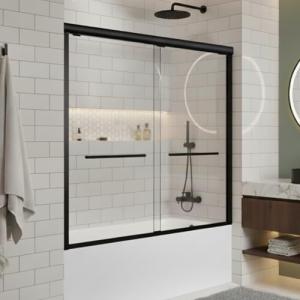
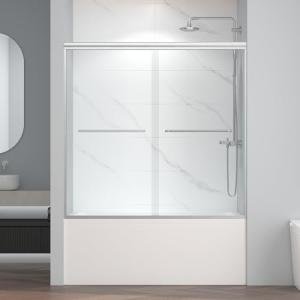
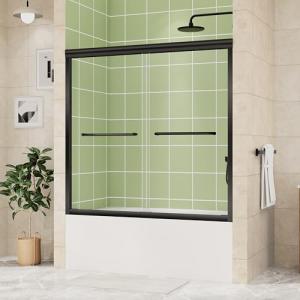
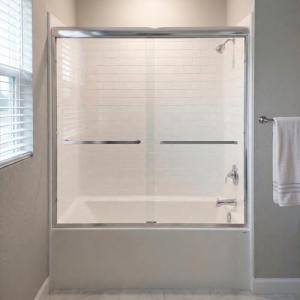
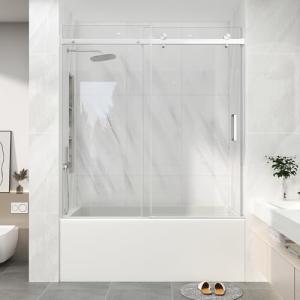
Bathtub sliding doors — sometimes called bypass doors in the industry — are glass panels mounted on a horizontal track that runs along the top and bottom of your tub opening. Instead of swinging outward like a hinged door, the panels glide along the track, overlapping slightly as they pass each other. Most configurations feature two panels, though some larger or more premium setups use three.
The concept is straightforward, but the execution ranges from basic and budget-friendly to genuinely architectural. Whether you're outfitting a compact guest bath or redesigning a master suite, there's a sliding door built for your situation.
Why Choose a Sliding Door Over a Curtain or Hinged Option?
Space Is the First Win
The single biggest practical argument for sliding doors is that they need zero clearance to open. A hinged or pivot door has to swing somewhere — and in a small bathroom, that somewhere is often awkward. It swings toward the toilet, toward the vanity, or forces you to step backwards to avoid getting bumped. Sliding doors eliminate that problem entirely. They stay within the footprint of the tub, which is why they're particularly popular in narrow bathrooms and tub-shower combos where every square foot counts.
They Just Look Better
Let's be direct: a glass sliding door looks significantly better than a shower curtain. The clean lines, the transparency, the way light moves through the bathroom — it's a visible upgrade the moment you walk in. Even a modest framed sliding door replaces the dated or faded curtain aesthetic with something that reads as intentional and contemporary. Go frameless, and the whole space transforms.
Water Stays Where It Belongs
Sliding doors also solve a very real functional problem: water containment. Shower curtains billow, gap at the edges, and let water creep onto the floor. Glass doors with proper seals and bottom guides keep water inside the tub consistently. This matters both for safety (wet floors and bare feet are a genuinely risky combination) and for the long-term health of your flooring and grout.
Easier to Clean Than You'd Expect
Many people assume glass is hard to maintain, but the reality is the opposite when you compare it honestly to a shower curtain. Glass wipes clean quickly with a basic glass cleaner, and many newer doors come with factory-applied water-resistant coatings that cause water to bead and roll off rather than sit and leave mineral deposits. No weekly machine washes, no mildew smell, no replacing a curtain liner every few months.
The Three Frame Styles: Framed, Semi-Frameless, and Frameless
This is the most important decision you'll make when choosing a bathtub sliding door, and it affects both aesthetics and budget significantly.
Framed Sliding Doors
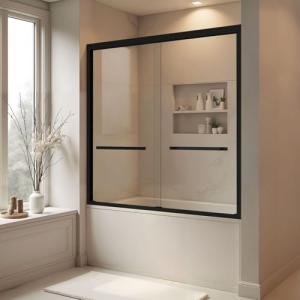
Framed doors have a metal border that runs along the full perimeter of the glass panels — top, bottom, and sides. The frame provides structural support, which means the glass itself can be thinner and less expensive. This makes framed doors the most budget-friendly option, and they're well-suited to traditional or classic bathroom aesthetics. They're also typically the easiest to install and provide the tightest water seal of the three styles, since the frame creates a consistent barrier on all edges.
The tradeoff is visual. The metal frame is visible and substantial, and in a small bathroom it can make the space feel a little heavier. Framed doors are an excellent practical choice, but they don't deliver the airy, spa-like quality that higher-end styles achieve.
Semi-Frameless Sliding Doors
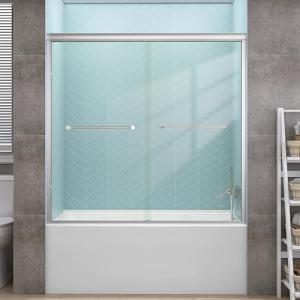
Semi-frameless doors sit in the middle ground — literally and aesthetically. They typically have a frame along the top and a bottom track for stability, but the sides of the glass panels are open or minimally finished. This gives the door a cleaner, more open look without the cost of going fully frameless. The glass is usually thicker than what you'd find in a fully framed door.
For most homeowners working with a mid-range budget and a modern bathroom, semi-frameless is the sweet spot. You get a noticeably sleeker appearance without paying the premium that frameless glass demands.
Frameless Sliding Doors
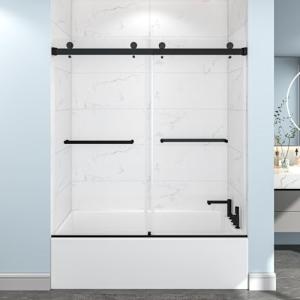
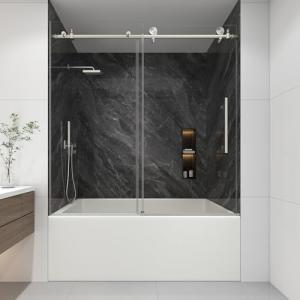
Frameless doors are the top tier. The only metal present is at the functional points — the rollers, guides, and handles. The glass panels themselves are exposed on all edges, which means the glass needs to be substantially thicker (typically 3/8 inch to 1/2 inch tempered glass) to support itself without a frame. This adds to the cost, but also to the experience. Frameless doors feel premium because they are premium. They let the most light through, they're the easiest to wipe down (no frame channels to trap soap scum), and they provide that clean, minimalist aesthetic that photographs well and ages gracefully in any design context.
Glass Options: What Goes Behind the Frame
Once you've settled on a frame style, you'll choose your glass. This is partly about privacy and partly about the overall look of your bathroom.
Clear glass is the most popular by a wide margin. It keeps the bathroom feeling open and bright, lets you see your tile work, and suits both modern and traditional aesthetics. The main maintenance note is that water spots and soap residue are more visible on clear glass, so regular wiping pays off.
Frosted or obscure glass provides privacy while still letting light through. It's a smart choice if the bathroom is shared or if you simply prefer the softer, more diffused look. Frosted panels tend to hide water spots better between cleanings.
Patterned glass — rain glass, bamboo patterns, linear textures — adds a decorative element and provides privacy. These work well in bathrooms with a more distinctive or eclectic style.
All glass used in bathtub sliding doors should be tempered safety glass. Tempered glass is heat-treated to be significantly stronger than standard glass, and if it does break, it shatters into small, rounded pieces rather than sharp shards. This is not a feature to compromise on — always confirm tempered glass before purchasing.
Hardware Finishes: The Detail That Ties the Bathroom Together
Sliding door hardware — the rollers, handles, tracks, and any visible frame elements — comes in a range of finishes. The most common are:
Chrome is the classic and the most affordable. It's clean, bright, and matches the majority of bathroom faucets and fixtures already in homes. It can show water spots but wipes clean easily.
Brushed nickel has a warmer, slightly muted tone that looks sophisticated and hides fingerprints and water marks better than polished chrome. It pairs naturally with transitional and contemporary bathroom designs.
Matte black has become a strong trend in bathroom design over the last several years. It's bold, distinctly modern, and pairs beautifully with white subway tile, natural stone, and minimalist fixtures. Matte black hardware on a frameless door is a genuinely striking combination.
Oil-rubbed bronze and gold finishes are less common but available for bathrooms with warmer color palettes or more traditional or maximalist design sensibilities.
Whatever finish you choose, try to match it to your existing faucet and towel hardware. Consistent metal finishes throughout a bathroom create a cohesive, intentional look that makes the whole space feel more designed.
Sizing and Measuring Your Tub Opening
Most standard bathtubs have an opening of around 60 inches wide, and most sliding doors are designed with this in mind. However, measurements matter a great deal in practice, and getting them wrong means a door that either doesn't fit or requires significant trimming.
Measure the width of your tub opening at the top, middle, and bottom — walls aren't always perfectly parallel, and small variations can affect fit. Measure the height from the tub deck to the ceiling or the point where you want the door to terminate. Most manufacturers list a range of adjustment, typically a few inches in either direction, so check that your measurements fall within the product's stated range.
Also consider the tub surround material. Some sliding door systems are designed for tile surrounds, others accommodate fiberglass or acrylic enclosures, and some handle both with the addition of side jambs. Verify compatibility before purchasing.
What to Budget: A Realistic Price Breakdown
Sliding doors span a wide price range, and understanding what you're getting at each tier helps you spend wisely.
At the lower end — roughly $150 to $250 — you'll find framed or semi-framed doors in standard chrome finishes with basic tempered glass. These are solid, functional choices that represent a real upgrade from a curtain without requiring a major financial commitment.
In the mid-range, from $250 to $400, you get noticeably better build quality, more attractive hardware finishes like brushed nickel or matte black, and some semi-frameless options with thicker glass. This is where most homeowners who want a visible design upgrade without going all-in will find the best value.
Above $400, and particularly above $600, you're in frameless territory. This tier features heavy-duty tempered glass, precision-engineered roller systems that glide with satisfying smoothness, premium finish options, and often factory-applied water-resistant coatings. For a bathroom that gets daily heavy use or where design is a real priority, the investment is justified.
Installation: What to Know Before You Start
Bathtub sliding doors are a manageable DIY project for confident home improvers, but there are a few honest caveats. You're working with glass panels in a wet environment, which means precision matters more than usual. The track must be level. The side jambs (if present) must be plumb. Sealing must be thorough to prevent water from seeping behind the surround.
Frameless doors and heavier glass installations are generally best left to a professional. The glass panels are heavy, alignment is critical, and small installation errors tend to compound into bigger problems over time. If you're replacing a simple framed door in a standard tub opening, however, most manufacturers provide clear instructions and the process is manageable in a few hours.
Not all sliding doors allow both panels to move — some configurations use one fixed panel and one sliding panel. If you have a preference for accessing either side of the tub (especially useful in households where multiple people use the tub regularly), look specifically for models where both panels are operational.
Some doors include built-in towel bars on the panels, which is a practical feature that eliminates the need for a separate towel ring nearby.
If you're in a hard water area, a door with a factory water-resistant coating is worth the slightly higher price. The coating causes water to shed rather than sit on the glass, which dramatically reduces the frequency of deep cleaning and keeps the door looking new much longer.
Bathtub sliding doors aren't a complicated purchase, but they are a meaningful one. Done right, they're something you'll genuinely appreciate every day — a small but satisfying piece of your home that works well, looks good, and requires almost no thought once it's in place.