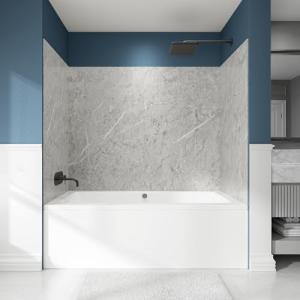
Why the Right Surround Makes Such a Difference
A lot of homeowners discover too late that not all surrounds are created equal. Some look fantastic in the showroom but turn into a maintenance nightmare once they're installed. Others are incredibly practical but feel cold or generic in a space you actually want to enjoy.
The difference usually comes down to a few key factors: the material it's made from, whether it has grout lines that collect soap scum and mildew, how it handles moisture over time, and how realistic it is for your skill level or budget to install and maintain.
There's also the question of longevity. A surround that starts peeling, yellowing, or cracking within a few years isn't just an eyesore — it's a leak waiting to happen. Investing a little more upfront in a quality, non-porous material can save you a significant amount of money and headaches down the road.
Types of Bathtub Surround Materials
Acrylic
Acrylic has become the go-to material for bathtub surrounds, and it's not hard to see why. It's factory-molded, arrives ready to install, and holds up remarkably well to the daily wear of a busy bathroom. The surface is smooth and non-porous, which means water, soap, and grime sit on top rather than soaking in. A quick wipe-down is usually all it takes to keep it looking clean.
Acrylic is also resistant to chips, cracks, and stains, and it tends to hold its color well over time — something that can't always be said for cheaper alternatives. It's available in a wide range of colors and finishes, including options that convincingly mimic the look of marble, travertine, granite, and subway tile. For most homeowners, acrylic offers the best overall balance of durability, ease of maintenance, attractive appearance, and reasonable cost.
One more practical perk: because acrylic panels are prefabricated, installation is relatively fast. Many projects can be completed in a single day.
Fiberglass
Fiberglass is often the most budget-friendly option on the shelf, and for a quick bathroom refresh on a tight timeline, it gets the job done. Like acrylic, it comes in prefabricated panels without grout lines, making it straightforward to clean and install.
The honest tradeoff is durability. Fiberglass is thinner and less resistant to impact than acrylic, and it can be prone to scratching. It's also vulnerable to UV light — over time, the surface can dull, chalk, or develop a yellow tint that no amount of scrubbing will fix. If chips or cracks develop, moisture can find its way into the wall, creating conditions where mold will thrive.
Fiberglass is worth considering for a rental property, a guest bathroom that sees light use, or a situation where budget is the primary concern. For a primary bathroom that will be used daily for years, most people end up wishing they'd stepped up to acrylic.
Ceramic and Porcelain Tile
Tile is the classic choice, and its staying power in bathroom design is well-earned. The level of customization it offers is unmatched — virtually any color, size, pattern, or texture is possible. You can create something that looks like it belongs in a high-end boutique hotel or something warm and handcrafted that feels uniquely personal.
Ceramic tile is relatively affordable and, when properly installed, is genuinely durable. Porcelain takes things a step further — it's denser, harder, and even more resistant to moisture and wear, making it a particularly good choice in high-traffic bathrooms.
The biggest catch with tile is the grout. Grout lines are porous, and no matter how diligently you clean, they will eventually trap soap scum, mildew, and staining. Regular resealing helps, but it adds to your maintenance load. Tile installation also requires more skill and time than prefabricated panels, and professional installation — especially with proper waterproofing underneath — can add significantly to the overall cost. When it's done right, though, a tiled surround can last for decades and adds real value to a home.
Solid Surface
Solid surface panels represent a newer category that's been gaining popularity quickly, and for good reason. These panels are dense, non-porous, and completely grout-free. They come in large format sheets that can be installed with minimal seams, creating a sleek, seamless look that's become synonymous with modern bathroom design.
Solid surface is highly resistant to stains, mildew, and scratches, and most surfaces can be lightly sanded if damage does occur — something you can't say for tile or acrylic. The visual range is impressive too, with options that closely replicate natural stone, wood grain, and concrete.
The tradeoff is cost. Solid surface panels typically sit at the higher end of the price range, and installation requires precision. But for homeowners who want the look of natural stone without the porosity and upkeep, solid surface hits a sweet spot that's hard to beat.
Cultured Marble
Cultured marble is an engineered material made from crushed limestone mixed with resin, then finished with a gel coat. It has a smooth, glossy appearance that evokes real marble at a fraction of the price and weight. It's non-porous, resistant to mold and mildew, and relatively easy to clean.
Cultured marble surrounds are typically custom-fabricated to fit your specific tub dimensions, which makes for a clean, fitted look. The main things to watch for are the gel coat surface — it can scratch if abrasive cleaners are used — and the color range, which tends to be more limited than tile or solid surface options.
Natural Stone
Natural stone — marble, granite, travertine, slate — is the most visually stunning option available, and no manufactured material quite captures its depth and variation. Each slab is genuinely one of a kind.
That beauty comes with real responsibilities. Natural stone is porous and must be sealed regularly to prevent water absorption, staining from soaps and shampoos, and mold growth. It's also heavy, expensive, and requires professional installation. For a luxury master bathroom where aesthetics are the top priority and maintenance is not a concern, natural stone delivers something no other material can match. For most everyday bathrooms, the practical downsides make it a harder sell.
Prefabricated Kits vs. Custom Installation
When you shop for bathtub surrounds, you'll generally find two routes: prefabricated kits and custom installations.
Prefabricated kits come with pre-cut, pre-measured panels — typically a three-piece set consisting of a back panel and two side panels. They're designed to fit standard tub dimensions, making them approachable for confident DIYers. Most glue directly to the existing wall or backer board, meaning you don't need to gut the room to install them. They're the fastest and most affordable option, and for many bathrooms, they look perfectly great.
Custom installations — whether tile, stone, or custom-cut solid surface — are tailored to your exact space and allow for far more design flexibility. They require more skill, more time, and typically professional involvement, particularly when it comes to waterproofing the substrate correctly. When done well, a custom surround is virtually undetectable as anything other than a permanent, built-in feature of the room.
Sizing: What You Need to Know Before You Buy
Getting the dimensions right before purchasing is non-negotiable. Start by measuring the full width and depth of your tub alcove, then measure from the top of the tub rim to the ceiling. Most standard alcove tubs are 60 inches wide, but depths and heights vary.
The minimum recommended height for a tub surround is 72 inches, and if the space also functions as a shower, the surround should extend at least three inches above the showerhead rough-in. Going all the way to the ceiling is an option but works best in bathrooms with good ventilation — otherwise, trapped steam can become a problem over time.
For tile installations, a common rule of thumb is to add 10–15% to your square footage calculation to account for cuts, waste, and the occasional broken tile.
Installation: DIY or Professional?
The honest answer is that it depends on the material and your experience level.
Prefabricated acrylic and fiberglass surrounds are genuinely manageable weekend projects for someone comfortable with basic home improvement tasks. The process involves cleaning and prepping the wall surface, applying adhesive, pressing panels into place, and sealing the seams and edges with caulk. Following the manufacturer's instructions carefully and allowing adhesive to cure fully — usually at least 24 hours before use — is essential.
Tile, stone, and solid surface installations are a different story. These require knowledge of waterproofing systems, precise cutting, proper substrate preparation, and in some cases, structural considerations for heavier materials. For anything beyond a simple prefab kit, professional installation is strongly worth the investment to avoid leaks or failures that could lead to far greater costs down the line.
What to Expect to Spend
Budgets for bathtub walls and surrounds range widely depending on material choice and whether you hire a professional.
Prefabricated acrylic or fiberglass kits sit at the most accessible end of the range — typically a few hundred dollars for the materials alone. Mid-range options like solid surface panels or higher-end prefab kits will cost more. Custom tile, natural stone, or cultured marble installations at the higher end of the market, especially with professional labor, can run into the thousands.
A good way to think about it: the material cost is only part of the equation. Factor in installation, any necessary substrate or waterproofing work, and the long-term maintenance demands of whatever material you choose. A slightly higher upfront investment in a durable, low-maintenance material often pays for itself within a few years simply by eliminating the time, cost, and frustration of ongoing repairs.
Choosing What's Right for Your Bathroom
There's no single right answer — the best bathtub surround is the one that fits how you actually live. A family bathroom that gets heavy use every day calls for something tough, easy to wipe down, and forgiving of the odd scuff. A master bath retreat for two might be the place to invest in something more luxurious.
Think honestly about how much time you're willing to spend on cleaning and maintenance. If scrubbing grout lines on a Saturday morning is not how you want to spend your time, lean toward non-porous, grout-free options. If design versatility is your top priority and you're willing to maintain it, tile opens up a creative world that prefab panels simply can't match.
Whatever direction you go, the investment is worth making thoughtfully. A well-chosen, properly installed bathtub surround protects your walls for decades, makes daily cleaning a whole lot easier, and turns one of the most-used spaces in your home into somewhere you actually want to be.