Why Water Chemistry Actually Matters
Water looks like water. So why does it need so much attention?
The answer comes down to balance. Pool water is in a constant state of flux. Sunlight breaks down sanitizers. Rain dilutes your chemicals and shifts your pH. Swimmers introduce oils, lotions, sweat, and other organic matter that feeds bacteria and algae. Without intervention, even a freshly filled pool can turn cloudy, green, or worse — a breeding ground for harmful microorganisms — within just a few days.
Properly balanced pool water isn't just about aesthetics, though a sparkling pool is certainly a nice bonus. It's also about safety. Improperly treated water can harbor pathogens that cause ear infections, skin rashes, and gastrointestinal illness. And on the equipment side, water that's too acidic eats away at metal components, plaster, and pool liners, while water that's too alkaline causes scaling that clogs filters and reduces pump efficiency.
The good news? Keeping your water balanced is straightforward once you know the key numbers to watch.
The Core Parameters You Need to Understand
pH — The Foundation of Everything
pH is the measure of how acidic or basic your water is, on a scale from 0 to 14. For pool water, the ideal range sits between 7.2 and 7.6. Inside that sweet spot, sanitizers work at peak efficiency, swimmers are comfortable, and your pool equipment is protected.
When pH drifts too low (below 7.2), the water becomes corrosive. Swimmers may experience stinging eyes and irritated skin. Metal fixtures corrode. Vinyl liners weaken. When pH climbs too high (above 7.8), chlorine loses its effectiveness — sometimes by as much as 90% — and cloudy water, scaling, and algae growth become increasingly likely.
pH adjusters — commonly sold as pH Increaser (sodium carbonate) and pH Decreaser (sodium bisulfate or muriatic acid) — are the most frequently used pool chemicals in most owners' routines.
Total Alkalinity — The Buffer That Holds It All Together
Think of total alkalinity as pH's stabilizing partner. It measures the water's ability to resist sudden pH changes. When alkalinity is within the recommended range of 80 to 120 parts per million (ppm), your pH stays stable and is much easier to manage.
Low alkalinity means your pH will bounce around wildly, making it difficult to keep anything balanced. High alkalinity locks pH in place so stubbornly that adjusting it becomes frustrating and chemical-intensive. Alkalinity Increaser (sodium bicarbonate) brings low readings up; pH Decreaser and muriatic acid can be used to bring alkalinity down.
Sanitizer Levels — Your First Line of Defense
Chlorine is the most widely used pool sanitizer in the world, and for good reason. It's effective, affordable, and well-understood. Free chlorine (the active, working form) should be maintained between 1 and 3 ppm in most residential pools.
Chlorine comes in several forms to suit different preferences and pool setups. Trichlor tablets are slow-dissolving and convenient for use in floating feeders or automatic chlorinators. Dichlor granules dissolve quickly and are great for spot treatments or above-ground pools. Liquid chlorine (sodium hypochlorite) offers fast-acting results without raising cyanuric acid levels, making it popular for pools that already have high stabilizer levels. Cal-hypo shock is one of the strongest available forms, ideal for superchlorination treatments.
For pool owners looking for alternatives to traditional chlorine, bromine is a popular choice — particularly for hot tubs and indoor pools, where it handles high temperatures and pH swings better than chlorine. Salt chlorine generators have also grown in popularity; they use dissolved salt and an electrolytic cell to produce chlorine continuously, reducing the need for manual dosing.
Cyanuric Acid — Protecting Your Chlorine from the Sun
Chlorine degrades rapidly under ultraviolet light. Without protection, outdoor pools can lose their entire chlorine supply in a matter of hours on a sunny day. Cyanuric acid (CYA), often called chlorine stabilizer or conditioner, bonds with chlorine and shields it from UV degradation.
Ideal CYA levels run between 30 and 50 ppm for most pools. Trichlor and dichlor tablets naturally raise CYA over time since they contain it as part of their formula — which is why pools using these products can eventually develop CYA levels that are too high, reducing chlorine effectiveness even when chlorine readings appear normal. When that happens, a partial water drain and refill is usually the most practical solution.
Calcium Hardness — Protecting Your Pool Structure
Calcium hardness refers to the concentration of dissolved calcium in your water. The target range is typically 200 to 400 ppm. Water with too little calcium is "hungry" — it will leach calcium from plaster, concrete, and grout to satisfy itself, leading to etching and surface damage. Water with too much calcium is prone to scaling and cloudiness.
Calcium Hardness Increaser (calcium chloride) raises levels when they're too low. Reducing excess calcium usually requires diluting the pool with fresh water.
Shocking Your Pool — When and Why
Even with a consistent chlorine routine, organic compounds accumulate in pool water over time. Sunscreen residue, body oils, sweat, and other contaminants combine with chlorine to form chloramines — compounds that are far less effective as sanitizers than free chlorine and are responsible for that sharp, eye-irritating "chlorine smell" that people often associate with over-treated pools. Paradoxically, that smell is usually a sign that the pool needs more chlorine, not less.
Shocking — the process of adding a large dose of oxidizer to break down chloramines and restore free chlorine levels — should be a regular part of your pool maintenance. Most pools benefit from a weekly or biweekly shock, and always after heavy use, a rainstorm, or an algae outbreak.
Chlorine-based shocks like calcium hypochlorite (cal-hypo) are the workhorse option: powerful, fast-acting, and affordable. Non-chlorine shock (potassium monopersulfate) oxidizes contaminants without raising chlorine levels, making it a good choice for pools where you want swimmers back in the water quickly — typically within 15 minutes rather than the 8-hour wait that follows a chlorine shock.
Algae Treatment and Prevention
Algae is every pool owner's nemesis. It can transform a clear, blue pool into a murky swamp in less than 48 hours under the right conditions — warm water, sunlight, and low sanitizer levels create a perfect environment for rapid growth.
The three most common types are green algae (the most common and easiest to treat), yellow/mustard algae (more stubborn and chlorine-resistant), and black algae (the most difficult, capable of embedding itself deep into plaster and concrete surfaces).
Algaecides are preventive and supplemental treatments designed to keep algae from taking hold or to assist in clearing an active outbreak. Copper-based algaecides are broad-spectrum and effective but can stain pool surfaces if used incorrectly. Quaternary ammonium (quat) algaecides are gentler and reduce surface tension, making the water less hospitable to algae. Polyquat formulations are considered the gold standard for most residential pools — non-staining, non-foaming, and effective across a wide range of algae types.
Prevention is far easier than treatment. Maintaining proper sanitizer levels, shocking regularly, and adding a maintenance dose of algaecide weekly — especially in midsummer when water temperatures peak — will keep algae issues to a minimum.
Pool Testing Kits — Know Your Numbers
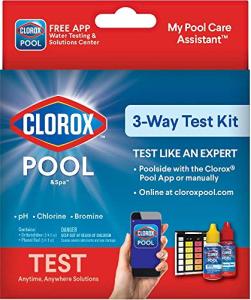
No matter how many chemicals you have on hand, you're working blind without accurate water testing. A reliable testing routine is the single most important habit you can build as a pool owner.
Test Strips
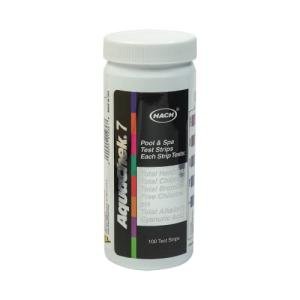
Test strips are the quickest and most convenient option for routine checks. Dip a strip in your pool water, hold it still for a few seconds, and compare the color-coded pads to the chart on the bottle. Good quality strips can test for free chlorine, pH, total alkalinity, cyanuric acid, and calcium hardness simultaneously in under a minute.
They're not the most precise tool available, but for day-to-day monitoring, they do the job. Look for multi-parameter strips from reputable brands, and always keep them stored in a cool, dry place — heat and humidity degrade the reagents and lead to inaccurate readings.
Liquid Drop Test Kits
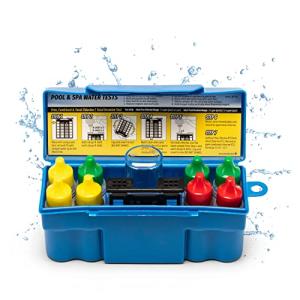
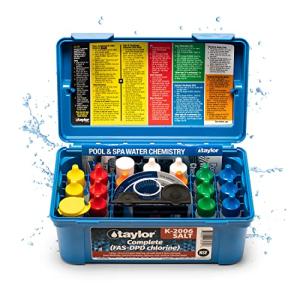
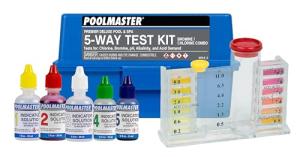
For greater accuracy, liquid drop test kits use reagent drops added to water samples to produce color changes that can be compared against a reference scale. The most common format — the FAS-DPD test for chlorine and the phenol red test for pH — delivers readings accurate enough for precise chemical adjustments.
These kits take a few minutes longer than strips but are the preferred choice among serious pool owners and pool service professionals. A quality kit will test for all the essential parameters and include enough reagent for dozens of tests per season.
Digital Testers
Digital testing devices take the subjectivity out of color-matching. Photometric testers measure the actual light absorbance of reagent-treated water samples and translate that into precise numerical readings. While more expensive upfront, they're fast, accurate, and easy to use — especially helpful for pool owners who struggle to distinguish subtle color differences under different lighting conditions.
Professional Water Analysis
Most pool supply retailers offer free water analysis for in-store samples. Bringing a water sample to your local store every four to six weeks is a great way to cross-check your home testing results and catch any imbalances that gradual changes might make harder to notice day-to-day.
Building a Routine That Works
Consistency is everything in pool care. A pool that's checked and adjusted twice a week stays balanced far more easily than one that's ignored for two weeks and then hit with a chemical correction blitz.
A practical weekly routine looks something like this: test your water at least twice a week and adjust pH and alkalinity as needed; check your chlorine levels daily during peak swimming season; shock the pool every week or two; clean your filter regularly; and add a preventive algaecide dose every seven to ten days.
When pool season winds down, a proper winterization treatment — including a closing algaecide, a phosphate remover, and an appropriate chlorine level — sets you up for an easy opening in the spring.
Finding the Right Products for Your Pool
Every pool is a little different. The size, surface material, local water chemistry, sun exposure, and how heavily the pool gets used all influence which products you'll reach for most often. The best approach is to start with a complete water test, understand your baseline, and build your chemical lineup from there.
Browse our full selection of pool sanitizers, balancers, shock treatments, algaecides, and testing kits to find exactly what your pool needs. Whether you're opening for the season, troubleshooting a problem, or just keeping up with your weekly routine, you'll find trusted brands and every product type covered — so you can spend less time worrying about water chemistry and more time enjoying the pool.