What Actually Makes a Clawfoot Tub a "Clawfoot"?
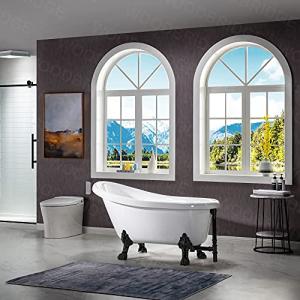
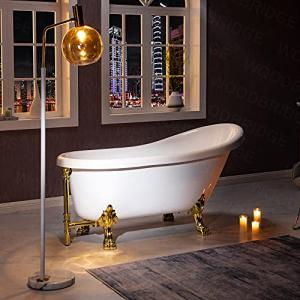
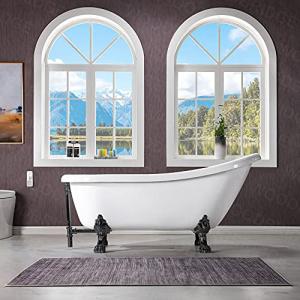
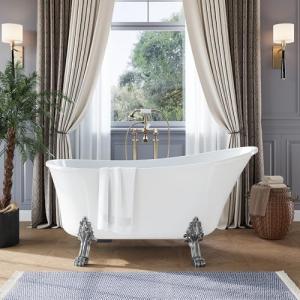
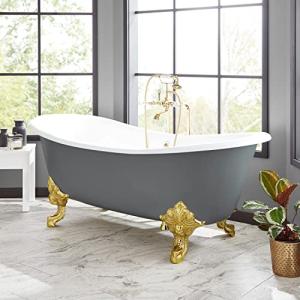
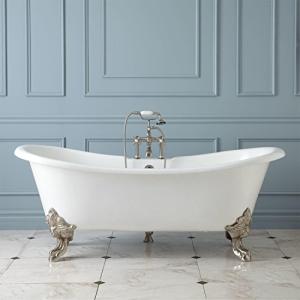
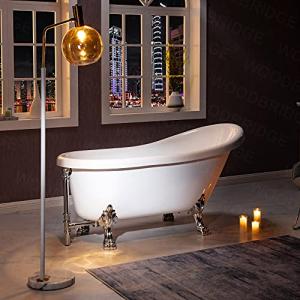
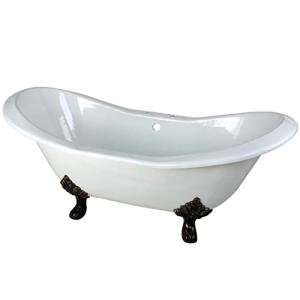
The name is pretty self-explanatory once you see one. A clawfoot tub is a freestanding bathtub elevated on four decorative legs, with each foot traditionally shaped like an animal's claw gripping a ball. That signature silhouette — tub floating above the floor on sculpted feet — is what sets them apart from every other bathtub style.
Unlike built-in tubs, clawfoot tubs are finished on all sides. You see them from every angle, which means the exterior matters just as much as the interior. The tub stands alone, unenclosed by walls or tile surrounds, turning the fixture itself into a design centerpiece rather than just a functional item tucked into a corner.
Styles to Know Before You Shop
Not all clawfoot tubs are the same shape, and the style you choose will significantly affect both how the tub looks and how it feels to use.
Classic Roll Rim
This is the original. A classic roll rim tub has a flat, relatively uniform rim that gently rolls over at the edge. The faucet sits at one end, the drain at the other. It's the tub you picture when someone says "clawfoot." Works beautifully in traditional, Victorian, and historic home settings, but the clean lines also hold up well in transitional spaces.
Single Slipper
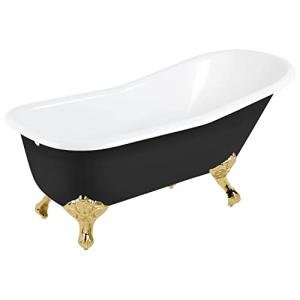
The single slipper style raises one end of the tub significantly higher than the other — like a gentle slope designed for reclining. That high end gives your back and neck real support while you soak, which makes a noticeable difference during longer baths. The faucet typically mounts at the lower end. If you're a solo bather who wants maximum comfort, this is the style worth looking at first.
Double Slipper
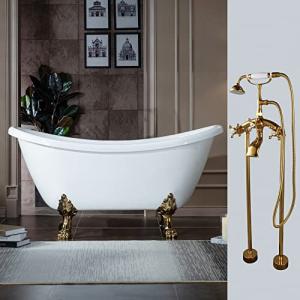
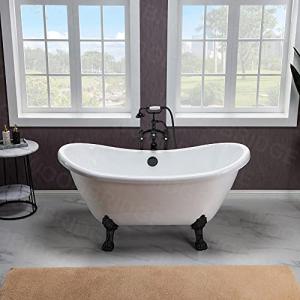
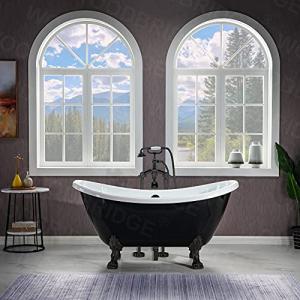
Both ends are raised on a double slipper tub, creating a symmetrical silhouette that looks spectacular from any angle. The drain sits in the center, and faucets mount on the side. It's the most dramatic-looking option and works particularly well positioned as a focal point in the middle of a large bathroom. It can also comfortably fit two bathers — one at each end.
Double-Ended
A double-ended tub has matching rounded lips at both ends without the raised slipper profile. The center drain and side-mounted faucet mean you can recline from either direction with equal comfort. This is a more relaxed, versatile option — it fits into a wider range of bathroom layouts and feels a bit less formal than the slipper styles.
Choosing Your Material — This Decision Matters More Than You'd Think
Material choice affects weight, heat retention, durability, cost, and how the tub looks over time. Here's an honest breakdown of your main options.
Cast Iron
Cast iron is the traditional choice, and for good reason. The manufacturing process involves pouring molten iron into a mold and then coating the interior with a layer of porcelain enamel. The result is dense, incredibly durable, and — this is the one people love — it holds heat beautifully. Once a cast iron tub is filled with hot water, it will stay warm for a long time.
The downsides are real though. Empty cast iron tubs typically weigh somewhere between 300 and 500 pounds. Fill one with 50 gallons of water, add a person, and you're putting serious weight on your floor. If you're on an upper floor or have an older home, you'll likely need a structural evaluation before installation. Cast iron tubs are also the most expensive option, and they require consistent care — dry after each use and avoid anything abrasive that could chip the enamel.
That said, a well-maintained cast iron clawfoot tub can last generations. Many of the original antique tubs from the 1880s and 1890s are still being refinished and put back into service today.
Acrylic
Acrylic has become the most popular material for clawfoot tubs, and the gap between acrylic and cast iron has narrowed considerably in recent years. Modern acrylic tubs are vacuum-formed over a fiberglass or resin frame, finished smoothly, and reinforced for durability.
The main advantages are weight and cost. A quality acrylic tub typically weighs under 100 pounds, which means you can install it on upper floors without structural concerns and move it without needing a crew. They're also more affordable — often significantly so — and available in a wider range of colors and finishes.
Acrylic does scratch more easily than cast iron enamel, and it doesn't retain heat quite as long. But for the vast majority of daily bathers, acrylic is a perfectly capable material that looks great and lasts for decades with reasonable care. Avoid abrasive scrubbers and harsh chemical cleaners, and it'll stay looking sharp.
Copper
Copper clawfoot tubs are the boutique choice — genuinely stunning, warm in color, and utterly unique. Copper has natural antimicrobial properties and, like cast iron, holds heat well. Over time, a copper tub develops a natural patina that deepens its character.
They're not for everyone. Copper tubs are expensive, require more specific maintenance (no bleach, no harsh cleaners), and have a very particular aesthetic that works beautifully in rustic, industrial, or earthy design schemes but may feel out of place elsewhere.
The Feet — Small Detail, Big Impact
The feet are where clawfoot tubs get their name, and they're where a lot of the personality lives. The style of foot you choose sets the tone for the whole look of the tub.
Ball & Claw is the most recognizable — a rounded ball gripped by an animal's claw. It's quintessentially Victorian and the default choice for traditional or period-appropriate bathrooms.
Lion Paw feet are larger, more sculptural, and genuinely majestic. They make a bold statement and work well in bathrooms with a maximalist or historically inspired design.
Imperial feet are more ornate and detailed, sitting somewhere between elegant and dramatic. They tend to complement formal, European-influenced interiors.
Modern feet are clean, straight, and minimal — designed for homeowners who love the silhouette of a clawfoot tub but want it to sit comfortably in a contemporary space.
Monarch and Shaughnessy styles are specialty options with distinctive profiles — worth exploring if you want something less commonly seen.
Feet also come in different finishes: chrome, brushed nickel, oil-rubbed bronze, matte black, polished brass, and more. Matching the feet finish to your faucet and other hardware creates a cohesive, pulled-together look.
Sizing — Getting the Fit Right
Clawfoot tubs typically range from about 45 inches on the compact end to 72 inches or more for oversized models. The most common range for a comfortable single bather is 54 to 67 inches.
Before falling in love with a specific model, measure your bathroom — not just where the tub will sit, but every doorway and hallway the tub needs to pass through to get there. These are heavy, bulky pieces of furniture, and more than a few homeowners have had to crane a tub through a window when it wouldn't fit through the front door.
Leave at least two to three feet of clear space around the tub once installed. Part of what makes a clawfoot tub beautiful is that you can see it from multiple angles — cramming it against a wall or into a tight corner defeats the purpose.
Soaking depth ranges from about 14 to 21 inches depending on the model. If deep immersion is a priority, pay attention to the interior depth spec, not just the overall tub length.
Practical Considerations Before You Buy
Floor support. This is especially important for cast iron. Get a contractor to assess whether your floor can handle the combined weight of the tub, water, and person before you commit.
Plumbing. Clawfoot tubs are freestanding, which means the supply lines and drain are exposed. This is actually part of the aesthetic — a set of polished faucet risers and a visible drain adds to the vintage look — but it does mean your plumbing will be more involved than with a built-in tub. Work with a plumber who has experience with freestanding fixtures.
Adding a shower. Many clawfoot tubs can be converted to function as showers using a freestanding shower ring and curtain, or a wall-mounted setup. It's a popular modification that adds practicality without compromising the look.
Water use. Clawfoot tubs are deeper than most standard tubs, which means they use more water — typically 40 to 60 gallons per fill. Factor that into your water heater capacity if you're planning on long, frequent soaks.
Are Clawfoot Tubs Worth It?
Honestly? For the right person in the right home, yes — they absolutely are. A clawfoot tub doesn't just function as a place to bathe; it transforms a room. Research from Zillow suggests that farmhouse-style features including clawfoot tubs can increase both home sale prices and time-to-sale. Beyond resale, the daily experience of walking into a bathroom anchored by a beautiful freestanding tub is something built-in alcove tubs simply can't match.
They're not the practical choice for every situation. If you're renovating a small bathroom, have limited floor load capacity, prioritize quick showers over soaking, or have mobility concerns, a clawfoot tub may create more challenges than it solves. But if you have the space, the budget, and a genuine appreciation for the way great design can elevate everyday life — a clawfoot bathtub is hard to beat.
Quick Reference: Clawfoot Tub Comparison
| Cast Iron | Acrylic | Copper | |
|---|---|---|---|
| Weight | 300–500 lbs | Under 100 lbs | ~250 lbs |
| Heat Retention | Excellent | Good | Very Good |
| Durability | Exceptional | Good | Good |
| Price Range | High | Affordable–Mid | High |
| Maintenance | Moderate | Low | Moderate |
| Best For | Traditional, long-term | Any style, upper floors | Rustic, statement baths |
Whether you're drawn to the historical romance of a Victorian cast iron slipper tub or the clean lines of a modern acrylic double-ender, the clawfoot category has something that will make your bathroom feel genuinely special. Take your time, measure carefully, and don't underestimate the difference the right foot style and finish can make. This is one purchase you'll be looking at every single day.