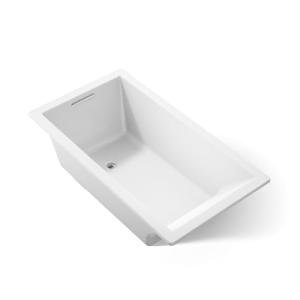
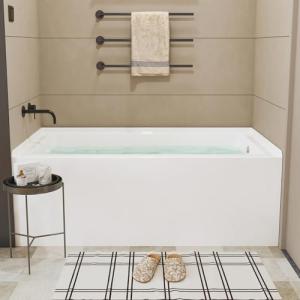
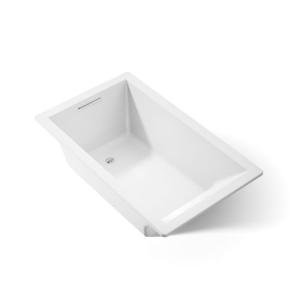
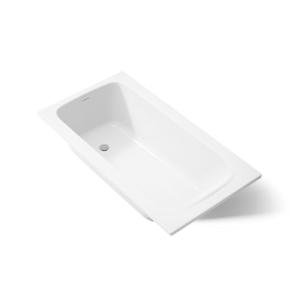
What Is a Drop-In Bathtub?
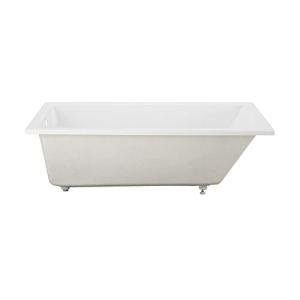
The name describes the installation method perfectly. A drop-in tub is essentially a tub shell — finished on the inside, but with no finished exterior panels or apron. It gets "dropped" into a custom-built platform or deck that your contractor constructs as part of the installation. The deck surrounds and supports the rim of the tub, while the tub itself rests on the floor beneath it.
What you see when the job is done is a beautifully recessed basin sitting flush within its surround, with a wide, flat rim running around the edge. The exterior of the tub disappears entirely behind whatever material you've chosen for the deck — ceramic tile, natural stone, porcelain, wood, concrete. That's where the magic of drop-in tubs really lives: in the surround you build around them.
This is fundamentally different from an alcove tub, which is a self-contained unit that fits between three walls with a finished front panel. It's also different from a freestanding tub, which sits completely unattached with its finished exterior fully visible. Drop-in tubs occupy a middle ground — they're built-in, custom, and designed to feel like a permanent architectural feature of the room.
Why Choose a Drop-In Tub?
People choose drop-in bathtubs for a handful of compelling reasons, and each one tends to reinforce the others.
Total Design Flexibility
No other tub style gives you as much freedom to define the look of your bathroom. Because the surround is built to your specifications, you choose every detail — the height of the deck, the material, the finish, the color, the texture. You can go sleek and minimalist with large-format porcelain tiles and a clean white basin. You can go warm and organic with natural travertine or wood accents. You can go bold with dark marble and a contrasting tub interior. The tub itself is almost secondary to the design system you build around it.
This makes drop-in tubs a natural fit for custom bathroom renovations, where the goal is a cohesive, designed-from-scratch look rather than a collection of separate fixtures that happen to share a room.
The Rim as Functional Space
One of the most underrated features of a drop-in tub is the wide, flat rim that runs around the perimeter. In a standard alcove or freestanding tub, there's often nowhere to rest a book, a glass, a candle, or your shampoo bottles without balancing them precariously on the tub edge. A drop-in tub, set into a proper deck, gives you a generous ledge on all sides. It becomes storage, a staging area, a place to rest your arms during a long soak. Small thing in theory — genuinely appreciated every single time you use it.
Deeper Soaking
Because drop-in tubs are installed into a raised platform rather than flush with the floor, there's more room for the tub basin to extend downward. Many drop-in models offer notably greater interior depth than standard alcove tubs — and deeper water means a better soak. Your body is more fully immersed, the water stays warmer longer, and the whole experience feels more intentional.
Heat Retention
The enclosed deck surrounding a drop-in tub acts as natural insulation. With the exterior of the tub enclosed on all sides by the platform, heat dissipates more slowly than it does from a freestanding tub sitting exposed in open air. If you're someone who likes long, unhurried baths — the kind where you read a chapter or two before even thinking about getting out — this matters more than you might expect.
Durability and Longevity
A drop-in tub, properly installed, is as permanent a fixture as anything else in your home. The combination of a well-built deck and a quality tub basin creates an assembly that's genuinely built to last decades. There's no exposed exterior to scuff, no visible panels to crack or discolor. The surface you interact with is just the interior of the tub, which is easy to maintain regardless of material.
Drop-In vs. Undermount: What's the Difference?
These two installation styles are closely related and often confused. Both use a custom-built deck. The difference is where the rim sits.
A drop-in tub has a rim that rests on top of the deck surface — it's visible above the platform, creating a slight lip. This rim provides a convenient ledge and makes installation more forgiving, since there's less need for a perfectly precise cutout.
An undermount tub, by contrast, is installed with the rim sitting below the deck surface. The deck material — stone, tile, or solid surface — extends right to the edge of the tub opening with no visible rim. The result is a cleaner, more seamless look that's popular in contemporary and minimalist bathroom designs.
If you want a tidier, more seamless aesthetic and don't mind a slightly more complex installation, go undermount. If you want the practical benefits of a visible rim — that ledge space, the slightly simpler install — a drop-in is the better choice.
Drop-In Tub Shapes and Sizes
Drop-in tubs come in a wider variety of shapes and sizes than most other tub types, simply because the surrounding deck can be built to accommodate almost any configuration.
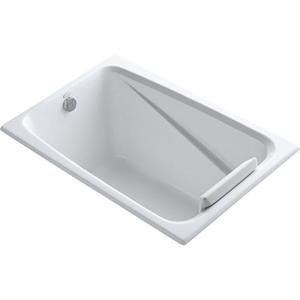
Rectangular is the most common and versatile shape — clean lines, easy to build a deck around, and available in a wide range of lengths from compact 54-inch models up to generous 72-inch soaking tubs.
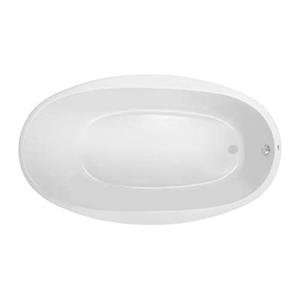
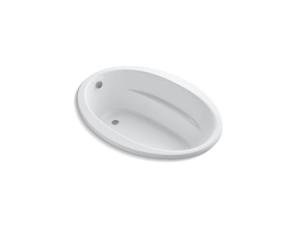
Oval shapes soften the look considerably and are popular in more traditional or transitional bathrooms. The curved interior is ergonomically comfortable and lends an organic feel to the space.
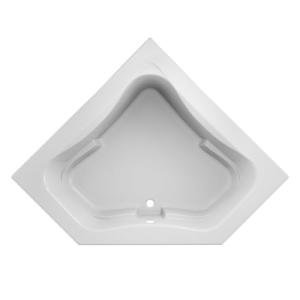
Corner drop-in tubs are triangular or angled in shape, designed to tuck into a corner of the room. They tend to be larger than standard models — many can comfortably accommodate two people — and the surrounding deck can be built at any height, sometimes creating an almost throne-like effect.
Oval or round drop-in tubs are less common but make a strong visual statement when paired with the right surround. They're particularly effective in larger bathrooms where the tub is the clear focal point of the design.
Standard sizes for drop-in tubs follow the same general dimensions as other bathtub types — 60 inches long by 30 to 32 inches wide is the most common. But because the surrounding deck can be scaled independently, a relatively modest tub basin can sit within a much larger platform, giving the overall installation a grander presence than the tub dimensions alone would suggest.
Materials: Choosing the Right Tub Shell
The deck material you choose is a design decision. The material the tub basin itself is made from is a performance decision. Here's what to know about each option.
Acrylic
Acrylic is the most widely used material for drop-in tubs, and it earns that position fairly. It's lightweight, which simplifies installation and reduces structural demands on the deck and floor. It's warm to the touch — you won't get that initial cold shock when you settle in. It's non-porous, which means it resists staining and cleans easily with a soft cloth and mild cleaner. And it's available in a huge range of shapes, sizes, and colors.
Acrylic can scratch if you use abrasive cleaners or rough materials, but minor scratches can often be buffed out — a forgiving quality that cast iron definitely doesn't share. For most homeowners in most situations, acrylic is the right call.
Cast Iron with Enamel
Cast iron drop-in tubs are heavy, beautiful, and almost indestructible. The enamel-coated surface is glass-hard, highly resistant to staining, and extremely easy to clean. Heat retention is exceptional — cast iron holds warmth longer than any other common tub material. These tubs feel substantial in a way that no other material quite replicates.
The downsides are significant. Cast iron tubs are very heavy — a large cast iron drop-in can weigh several hundred pounds before water or a person is added. Floor reinforcement is often required. Installation is more complex. And the cost is higher. But for someone building a long-term home with a serious bathroom and no budget constraints, cast iron is a legitimate choice.
Composite and Solid Surface
Composite and solid-surface materials represent a growing middle ground — premium feel and aesthetic, better heat retention than acrylic, available in a wider range of colors and finishes including matte surfaces that have become increasingly popular. These materials are heavier than acrylic but lighter than cast iron, and the consistent color throughout the material means chips and scratches are far less visible. The price is typically higher than acrylic, but the results often justify it in high-end renovations.
Fiberglass
Fiberglass is the entry-level option — lightweight and affordable, but not as durable as acrylic and prone to dulling and surface wear over time. It's a reasonable choice for a rental property, a secondary bathroom, or a project with strict budget constraints. For a primary bathroom that you plan to live with for years, it's worth stretching the budget to acrylic at minimum.
Installation: What to Expect
Installing a drop-in tub is more involved than dropping in an alcove tub, and that's worth understanding before you commit. The process involves several stages.
First, a wooden frame or platform needs to be built to support the tub and define the shape of the deck. This structure needs to be sturdy enough to support the weight of the tub, a full load of water, and at least one person — in total, this can exceed 1,000 pounds for larger models.
Next, the platform is waterproofed and finished with your chosen surface material. This is where a skilled tile setter or stone fabricator earns their fee — the quality of this work determines how the finished installation looks and how long it lasts.
The tub is then lowered into the opening in the deck, secured to the platform rim, and connected to the plumbing. If your tub includes jets or any electrical features, those connections are made at this stage as well.
Most manufacturers and contractors strongly recommend building an access panel into the deck — a small removable section that allows a plumber to reach the drain and supply connections without tearing apart the entire surround. This is a small addition that can save a significant amount of time and money down the road.
Professional installation is essentially non-negotiable for drop-in tubs. This is not a DIY-friendly project unless you have serious construction experience.
Features Worth Adding
A drop-in tub installation is a major project, and while you're already building, it's worth considering add-ons that will enhance the experience long-term.
Jets — Many drop-in tub models are available with water jet or air jet systems, turning a standard soaking tub into a hydrotherapy experience. Since the pump and plumbing infrastructure are already being built into the platform, adding jets at this stage is far easier and less expensive than retrofitting later.
Deck-mounted faucets — The wide rim or surrounding deck of a drop-in tub makes it ideal for deck-mounted Roman tub fillers — those sculptural faucets that arch over the edge of the tub rather than mounting to a wall. They look exceptional and function beautifully.
Integrated storage niches — The platform itself can incorporate built-in shelving or storage niches for toiletries, towels, or candles. These are built during the framing and tile work stage and add negligible cost for a noticeable improvement in everyday usability.
Chromotherapy lighting — LED lighting integrated into the tub basin creates a subtle color-changing effect during use. Combined with a well-designed surround and proper ambient lighting in the bathroom, the effect is genuinely spa-like.
Inline water heater — Keeps the water at your preferred temperature throughout the bath. For people who like long soaks, this eliminates the perpetual frustration of the water going cold halfway through.
How Much Do Drop-In Bathtubs Cost?
The tub basin itself is often the most affordable component of a drop-in installation. Basic acrylic drop-in tub shells start around $300 to $900. Mid-range models with better depth, more refined ergonomics, and better construction quality run from $900 to $2,500. Premium models in cast iron, composite materials, or with built-in jet systems can reach $3,000 to $6,000 or more.
The surrounding deck and installation labor are typically the larger expense. A complete drop-in tub installation including framing, waterproofing, tile work, and plumbing can range from $1,500 to $5,000 or more depending on your location, the complexity of the deck design, and the materials you choose for the surround. Natural stone costs more than ceramic tile. A large wraparound deck costs more than a simple rectangular platform.
The total investment for a finished drop-in tub installation in a master bathroom typically falls somewhere between $2,500 and $8,000, covering everything from the tub itself to the finished deck.
Is a Drop-In Tub Right for You?
A drop-in bathtub makes the most sense when you have a bathroom renovation underway, enough floor space to accommodate a platform without the room feeling cramped, and a desire for a built-in, custom look that a freestanding tub simply can't deliver.
It's an especially good choice if you want control over every design detail of your bathroom, if you value the practical benefits of a wide ledge and a deeper soak, and if you're planning to stay in your home long enough to truly enjoy what you've built.
Browse our full collection of drop-in bathtubs below — sorted by size, material, shape, and features — to find the model that belongs in your bathroom.