Why Heat Your Pool at All?
Most unheated pools in temperate climates are only truly comfortable for swimming about three to four months out of the year. Even in warmer regions, water temperatures can drop fast once summer fades, leaving you with a beautiful pool you can't really use.
A pool heater solves that problem. It lets you set a target temperature — typically somewhere between 78°F and 84°F for recreational swimming — and maintain it automatically. You stop checking the thermometer and hoping for hot weather. You just swim when you want.
Beyond comfort, there are real practical reasons to heat a pool. Heated water is better for children and elderly swimmers whose bodies are more sensitive to temperature swings. It supports muscle recovery for athletes. And if you've invested in a high-end pool, keeping it heated means you're actually using it — making the whole thing worth what you paid.
The Main Types of Pool Heaters
Not all pool heaters are created equal. There are three primary technologies on the market, and choosing between them comes down to your climate, how often you swim, your upfront budget, and your long-term energy costs.
Gas Pool Heaters
Gas pool heaters — whether natural gas or propane — are the most popular type in the United States, and for good reason. They heat pool water fast. We're talking a degree or two per hour for a standard residential pool. If you want your pool at 82°F by 3 PM and it's currently sitting at 68°F in the morning, a gas heater is your best bet.
They work by burning gas to produce heat, which gets transferred to pool water as it passes through a copper heat exchanger. The process is straightforward and reliable. Gas heaters also perform just as well in cold weather as they do in warm weather, which sets them apart from other technologies.
The tradeoff is operating cost. Natural gas and propane aren't cheap, and if you're running your heater constantly throughout a long swim season, those bills add up. Gas heaters are particularly cost-effective for pools that are heated occasionally — a weekend warrior pool, a vacation rental, or a party setup — rather than pools that need to be warm every single day.
Brands like Hayward, Pentair, and Raypak make highly regarded gas models that are well-built and serviceable. Most have digital controls, efficient combustion chambers, and relatively straightforward maintenance requirements.
Heat Pump Pool Heaters
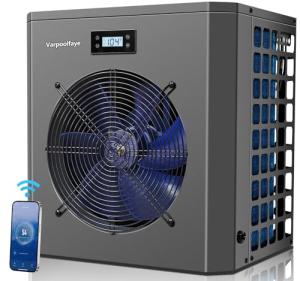
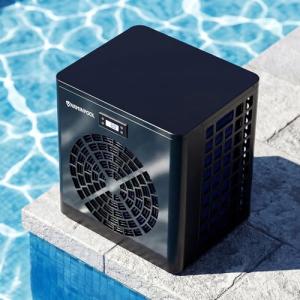
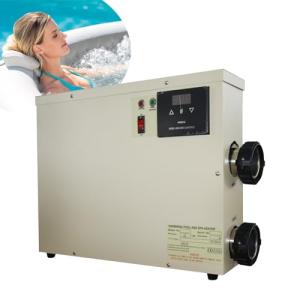
Heat pump pool heaters are the long-game choice. They don't generate heat through combustion — instead, they move heat from the surrounding air into your pool water, using electricity to run the process. Because they're moving heat rather than creating it, they're dramatically more efficient than gas heaters on a per-BTU basis.
The efficiency metric here is called COP — coefficient of performance. A decent heat pump might have a COP of 5 or 6, meaning for every unit of electricity consumed, you get five or six units of heat in return. A gas heater, by contrast, tops out around 95% efficiency. That's a significant gap in operating cost, especially if you're heating your pool daily or keeping it warm all season.
The major caveat: heat pumps need warm air to work efficiently. Most models start losing effectiveness below about 50°F ambient air temperature, and they simply won't run in freezing conditions. In warm climates like Florida, Southern California, or the Gulf Coast, this isn't a problem. In cooler regions, it limits how far you can extend your season in either direction.
Heat pumps also cost more upfront than gas heaters, and they heat water more slowly. If your pool has dropped 15 degrees overnight and you want it swim-ready in two hours, a heat pump isn't the right tool. But if you're maintaining a consistent temperature over time, they're outstanding.
Brands like Hayward, AquaCal, and Pentair lead this category with models that include inverter-driven compressors, titanium heat exchangers for saltwater compatibility, and smart controls that integrate with pool automation systems.
Solar Pool Heaters
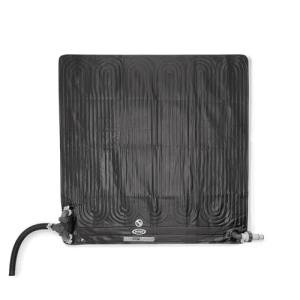
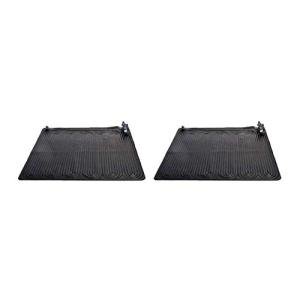
Solar pool heaters are in a class of their own. They use solar collectors — typically mounted on your roof or a nearby south-facing structure — to capture the sun's energy and heat pool water as it circulates through the panels. When everything works right, the fuel source is completely free.
Operating costs are essentially zero once the system is installed. That makes solar the most economical option over the long term by a wide margin. In sunny climates, a properly sized solar system can keep your pool comfortable for eight or nine months a year without any ongoing expense.
The limitations are meaningful, though. Solar heaters are dependent on sunshine and ambient temperatures, so they don't work well in cloudy climates or during cold shoulder seasons. They're not going to heat your pool on a February morning in the Midwest. They also have the highest installation complexity of any type — you need adequate roof space, the right orientation, and a competent installer. Upfront costs vary widely.
That said, in the right setting — sunny climate, pool used primarily during spring through fall, homeowner with a suitable roof — solar is hard to beat on total cost of ownership.
Key Features to Look For
Once you've decided on a heater type, there are several features worth evaluating carefully.
BTU Output and Sizing
BTU stands for British Thermal Unit, and it's the standard measure of how much heat a pool heater produces per hour. The right BTU rating for your pool depends on pool size, your target temperature, your local climate, and whether you use a pool cover.
Undersizing a heater means it will struggle to reach or maintain your desired temperature. Oversizing wastes money on equipment you don't need. A general rule of thumb: for every 1,000 gallons of pool water, you'll want roughly 10,000 BTU to raise temperature by 10°F in a few hours. More precise sizing calculators are available from most manufacturers.
Energy Efficiency Ratings
For gas heaters, look at thermal efficiency ratings — the percentage of fuel energy actually converted to heat. Modern units typically run 83–95% efficient; anything under 80% is outdated technology.
For heat pumps, compare COP ratings across models. Even a difference of 1.0 in COP can translate to hundreds of dollars saved annually.
For solar, the relevant metric is panel collector efficiency and total panel square footage — both affect how quickly and reliably the system heats your pool.
Controls and Automation
Pool heaters today commonly include digital touchpad controls with clear temperature displays, programmable on/off schedules, and diagnostic readouts that help you troubleshoot issues. Higher-end models integrate with whole-pool automation platforms from brands like Hayward OmniLogic or Pentair IntelliTouch, letting you control water temperature from your smartphone.
This matters more than it might seem. Being able to schedule your heater to warm the pool before you arrive — whether from work or from across the country — is a genuinely useful feature.
Build Quality and Durability
Pool heaters live in harsh environments: moisture, pool chemicals, UV exposure, and temperature swings. For gas heaters, the heat exchanger is the most critical component — copper is standard and performs well, though some premium models use polymer heat exchangers that resist chemical corrosion better. For heat pumps, a titanium heat exchanger is essentially mandatory if you have a saltwater pool; salt is highly corrosive to lesser materials.
Check warranty terms carefully. A good gas heater should carry at least a 1–2 year full warranty and a longer heat exchanger warranty. Heat pumps typically carry 2–5 year warranties on major components.
Installation Requirements
Gas heaters require a gas line (or propane tank access), proper venting, and in most cases a licensed gas technician for installation. Many municipalities require permits.
Heat pumps need 240V electrical service and adequate clearance for airflow — they intake and exhaust large volumes of air and can't be boxed in.
Solar systems need roof space, structural assessment, and plumbing to connect panels to your pool's filtration circuit.
All of these are manageable, but it's worth knowing the requirements before you buy.
Operating Costs: What to Actually Expect
Let's talk real numbers, because this is where a lot of buying decisions get made.
For a typical 15,000-gallon in-ground pool, rough monthly heating costs during swim season break down like this: a gas heater running several hours per day can cost $150–$400 per month depending on local gas prices and usage patterns. A heat pump in the same scenario typically runs $50–$150 per month in electricity. A solar heater, once installed, costs almost nothing to operate.
These are ballpark figures — actual costs vary significantly by climate, desired water temperature, use of pool covers, and local utility rates. But the pattern is consistent: solar wins on operating cost, heat pumps are a strong middle ground, and gas is the most expensive to run but the most powerful and flexible.
Choosing the Right Heater for Your Situation
Here's a simplified decision framework:
If you live in a warm, sunny climate and want year-round low operating costs, solar is worth serious consideration — especially if you have suitable roof space and plan to stay in the home long-term.
If you live in a warm-to-moderate climate and want reliable daily heating without high fuel bills, a heat pump is probably your best overall choice. The upfront investment pays back in operating savings over time.
If you want fast, powerful heat — for occasional use, cold climates, or maximum flexibility — a gas heater is the most capable option. It's also the right choice when ambient air temperatures are frequently too cold for a heat pump to operate effectively.
Some homeowners install a combination: a heat pump for regular use and a gas heater as backup for cold snaps or quick heating demands. It's a flexible setup that handles any condition.
A pool heater is one of those investments that makes your whole backyard work better. The right heater means you're not waiting for summer. You're not canceling a swim because the temperature dropped overnight. You're just swimming — on your schedule, in the temperature you want.
Take the time to match the heater type to your climate and usage habits, size it correctly for your pool, and buy from a reputable brand with good warranty support. Do that, and you'll have reliable, comfortable water for years to come.
Browse our full selection of gas heaters, heat pump pool heaters, and solar pool heating systems below — or use our pool heater sizing tool to find the right model for your specific pool.