What Are Pool Hoses and Why Do They Matter?
Pool hoses are flexible tubes that connect the various parts of your pool's filtration, cleaning, and circulation systems. They carry water between your pump and filter, power your automatic or manual vacuums, connect skimmers and return jets, and keep the whole system moving in one continuous loop.
Without a reliable hose, water can't flow properly. That means your filter can't do its job, your vacuum won't have enough suction, and debris starts building up in places you don't want it. A cracked or poorly fitted hose can also introduce air into the system, which causes your pump to lose prime — one of the most frustrating pool maintenance problems you can run into.
The good news is that pool hoses are relatively inexpensive and straightforward to replace. The key is knowing which type you need, what size fits your equipment, and what material will hold up in your specific conditions.
Types of Pool Hoses
Not all pool hoses are the same. There are several distinct types, each designed for a specific job. Mixing them up is one of the most common mistakes pool owners make.
Vacuum Hoses
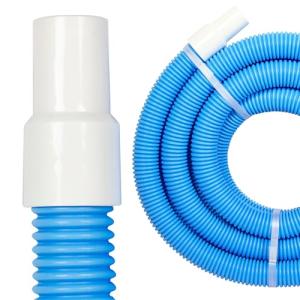
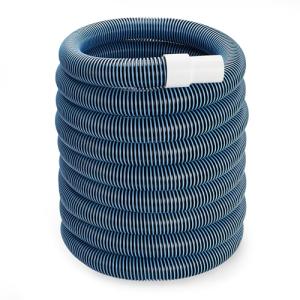
Vacuum hoses are what most people picture when they think of a pool hose. These are the long, flexible tubes you attach to a manual vacuum head to clean the floor and walls of your pool. They typically come in 1.5-inch diameter (the most common size for residential pools) and are sold in lengths ranging from around 18 feet up to 50 feet or more, depending on the size of your pool.
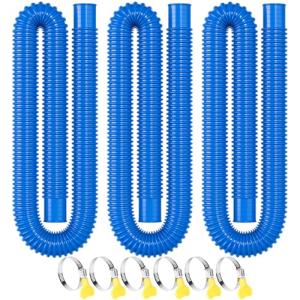
Good vacuum hoses need to be flexible enough to maneuver around obstacles like ladders and steps, but stiff enough to maintain suction without collapsing. Look for hoses with ribbed or corrugated construction — those ridges aren't just for looks. They allow the hose to bend and flex without kinking or pinching, which is crucial for maintaining consistent suction while you're vacuuming.
Filter Hoses
Filter hoses connect your pool pump to your filter tank. These hoses operate under pressure, so they need to be more robust than vacuum hoses. They're typically shorter in length but need to withstand continuous water flow and occasional pressure spikes. Heavy-duty reinforced construction is important here — a filter hose that fails under pressure can spray water everywhere and potentially damage your pump.
Backwash Hoses
A backwash hose connects to the waste port on your filter and is used when you're cleaning out the filter media (sand or DE). During backwashing, water flows backward through the filter to flush out accumulated debris, and the backwash hose directs that dirty water away from your pool area. These hoses are usually flat and roll up compactly when not in use, which makes them easy to store.
Because backwash hoses only run periodically rather than continuously, they don't need to be quite as heavy-duty as filter hoses — but they do need to be long enough to discharge water well away from your pool, yard drains, or any area where the runoff could cause problems.
Above-Ground Pool Connection Hoses
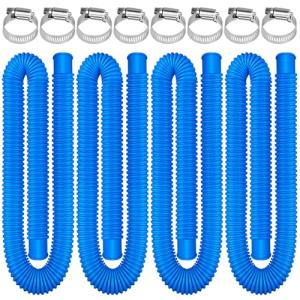
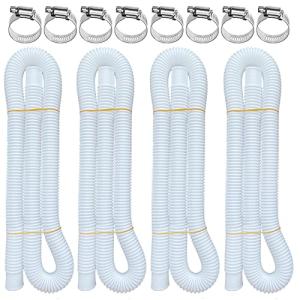
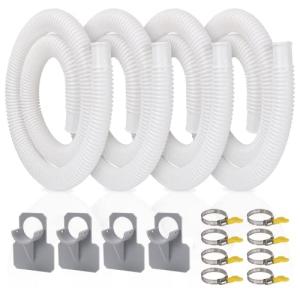
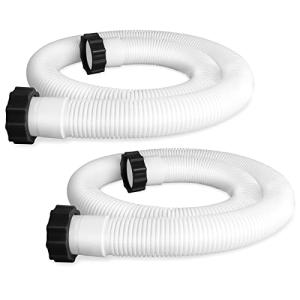
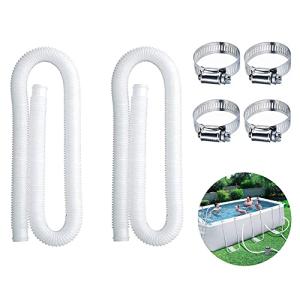
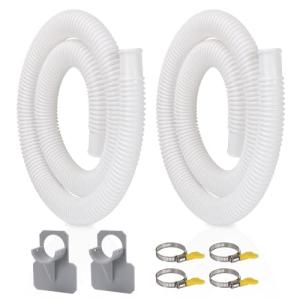
If you have an above-ground pool with a skimmer and return fitting, you'll use shorter, specially sized hoses to connect these fittings to your pump and filter. These are often sold in sets with the necessary fittings and clamps included. Getting the right fit here is critical — a loose connection is the number one cause of air leaks in above-ground pool systems.
Choosing the Right Size
Sizing is arguably the most important factor when buying a pool hose. An undersized hose restricts flow and puts extra strain on your pump motor. An oversized hose can reduce suction velocity, making your vacuum less effective.
The diameter of your hose should match the diameter of the fittings on your equipment. Most residential pools use 1.5-inch fittings, though some larger or older systems use 1.25-inch or 2-inch fittings. Check the specs on your pump, filter, and vacuum head before ordering. If you're not sure, measure the inside diameter of the fitting itself — that's what matters for a proper seal.
Length is a bit more forgiving. For vacuum hoses, a good rule of thumb is to choose a hose that's at least one and a half times the longest dimension of your pool. So if your pool is 30 feet long, a 45-foot hose gives you enough length to reach every corner without straining the hose or constantly repositioning the skimmer plate. Longer is generally better than shorter, since you can always move in smaller sections — but excessively long hoses can slightly reduce suction, so don't go overboard.
Materials: What to Look For
Pool hoses are made from several different materials, and each has its pros and cons.
PVC (Polyvinyl Chloride)
Most standard pool hoses are made from PVC. It's affordable, lightweight, and resists the chemical environment of pool water pretty well. Standard PVC hoses work fine for most applications, but cheaper versions can become brittle over time — especially if they're exposed to UV sunlight or to temperatures that drop below freezing.
Reinforced PVC
For filter hoses and any application where the hose is under constant pressure, look for reinforced PVC with a woven or braided interior layer. This reinforcement keeps the hose from expanding, bursting, or kinking under pressure. It's worth the small additional cost, especially for filter connections where a blowout would be a real headache.
Thermoplastic Rubber (TPR) and Flexible Composites
Some premium vacuum hoses are made from thermoplastic rubber or flexible composite materials. These tend to be more resistant to kinking, more comfortable to handle, and more durable over a longer lifespan. If you vacuum your pool frequently — say, more than once a week — the upgrade to a TPR hose can be worth it. They stay flexible even in cold water and don't develop the stiffness and cracking that standard PVC hoses sometimes get after a few seasons.
Key Features to Consider
Beyond material and size, here are the specific features that separate a good pool hose from a frustrating one:
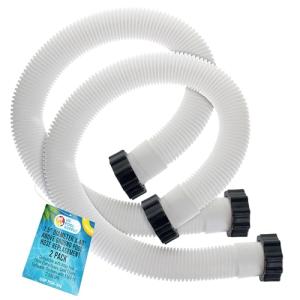
Swivel cuffs make a big difference when you're vacuuming. A swivel fitting at the connection point between hose sections lets the hose rotate freely instead of twisting and tangling as you move around the pool. If you've ever fought with a tangled vacuum hose mid-clean, you'll appreciate this feature immediately.
UV resistance is important for any hose that spends time in direct sunlight. Pool decks are often fully exposed, and UV degradation is one of the main reasons hoses crack and become brittle. Look for hoses that are specifically labeled as UV-stabilized or UV-resistant.
Cuff compatibility matters more than people realize. Not all hose cuffs fit all equipment. Before buying a new hose, check whether it uses standard butterfly cuffs, swivel cuffs, or threaded fittings, and make sure they're compatible with your vacuum head, skimmer, and any other components you'll be connecting.
Corrugated vs. smooth bore — corrugated hoses (with the ridged exterior) are more flexible and kink-resistant, which is why they're preferred for vacuum applications. Smooth-bore hoses are better for pressure applications where flow rate matters most.
Installing and Connecting Pool Hoses
Most pool hose connections are designed to be tool-free. Vacuum hoses snap together with their cuff fittings, and you connect them to the skimmer by inserting a vacuum plate (sometimes called a skimmer plate or vacuum disk) into your skimmer basket. The suction from the pump does the rest.
For filter and pump connections, you'll typically use hose clamps — simple screw-tightened rings that compress the hose onto a barbed fitting. Tighten these snugly but don't overdo it, as overtightening can crack the hose or deform the fitting.
When connecting multiple hose sections for vacuuming, make sure each joint is firmly seated. Any gap in the connection will introduce air, reducing suction. If you notice that your vacuum seems to be losing suction mid-session, work your way back along the hose checking each connection point — that's almost always where the problem is.
Maintenance and Care
Taking care of your pool hoses extends their life significantly. A few simple habits can add years to even a basic PVC hose:
Rinse them after use. Chlorinated water left sitting in a coiled hose can degrade the material over time. After vacuuming, drag the hose out of the pool and let it drain completely before storing.
Store them out of direct sunlight. UV is the enemy of most plastics. A simple hose reel or a shaded storage area makes a real difference in how long your hose lasts.
Don't leave them in freezing water. If you live in a climate with cold winters, drain and store your hoses before the water temperature drops close to freezing. Water expands when it freezes, and a hose full of ice can crack or split.
Inspect connections regularly. The cuff ends are the most vulnerable point on most vacuum hoses. Check them periodically for cracking, splitting, or looseness, and replace individual sections if needed — you usually don't need to replace the entire hose.
How Many Sections Do You Need?
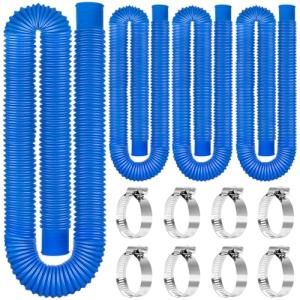
Standard vacuum hose sections are typically 10 feet long. For a 15×30-foot above-ground pool, four sections (40 feet) is usually plenty. For a large inground pool, five or six sections might be needed to cover the deep end comfortably.
When in doubt, buy one extra section. Running short while you're mid-vacuum is annoying, and extra sections can always be used as replacements when individual cuffs crack.
Compatibility With Automatic Pool Cleaners
If you use a suction-side automatic cleaner (like a Hayward Navigator or Pentair Kreepy Krauly), the hose that comes with the cleaner is specifically designed for that unit — the diameter, flexibility, and weight are calibrated to work with the cleaner's internal mechanisms. These hoses shouldn't be swapped out for generic vacuum hoses, as incompatible hoses can cause the cleaner to move erratically or stop working altogether.
Pressure-side cleaners and robotic cleaners have their own hose and cable systems, which are also specific to the model. Always use manufacturer-recommended replacements for automatic cleaner hoses.
When to Replace Your Pool Hose
Most pool hoses last three to five years under normal conditions. Signs that it's time for a replacement include:
- Visible cracks or splits, especially near the cuff ends
- Loss of flexibility — if the hose feels stiff and doesn't bend smoothly, it's becoming brittle
- Persistent loss of suction even when all connections are tight
- Discoloration or cloudiness in the hose material
Replacing a worn hose before it fully fails is much less frustrating than dealing with a mid-season breakdown.
Pool hoses aren't glamorous, but they're essential. The right hose — properly sized, made from good material, and well-maintained — makes the difference between a pool that's easy to keep clean and one that's a constant source of frustration. Take the time to match your hose to your equipment, invest in UV-resistant materials if your pool is in full sun, and store everything properly at the end of the season. Your pump will thank you, your pool will stay cleaner, and you'll spend more time swimming and less time troubleshooting.