What Is a Pool Ladder, Really?
At its most basic, a pool ladder is a structure that allows swimmers to safely enter and exit the water. Simple enough. But once you start shopping, you quickly discover there are a dozen different types, each designed for a specific situation.
Some ladders straddle the pool wall, with steps descending into the water on one side and a short section of handrails on the pool deck on the other. Others are built into the pool shell itself, forming a permanent staircase in the shallow end. Some are freestanding units designed to hook over the top rail of above-ground pools. Others are specifically engineered for deep water entries, sports pools, or ADA-accessible use.
The "right" pool ladder depends entirely on your specific pool, your household's needs, and how much traffic that entry point is going to see.
Types of Pool Ladders
In-Ground Pool Ladders
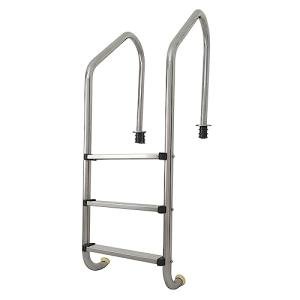
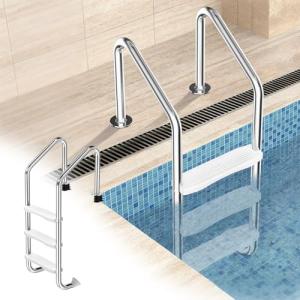
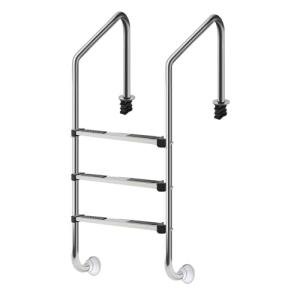
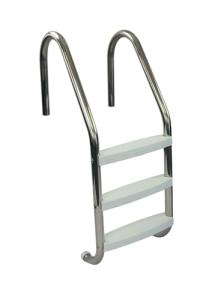
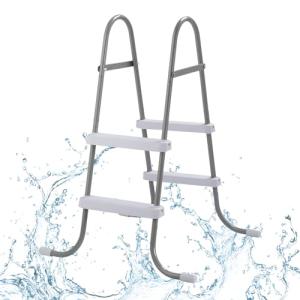
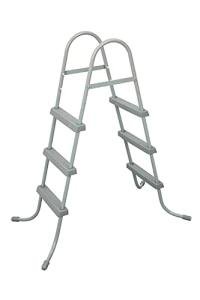
In-ground pool ladders are the classic A-frame style you've likely seen countless times — two vertical side rails with horizontal steps between them, designed to anchor directly into the pool deck using flanges or anchor sockets. They typically straddle the pool wall, so the bottom steps sit submerged in the water while the top portion rises above the deck.
These ladders are engineered for stability. The flanges bolt or lock into pre-installed anchor cups in the pool deck, preventing any wobbling or shifting even when multiple people are using the ladder in quick succession. Most in-ground ladder models include three or four steps, with the lowest step submerged about two feet below the water surface.
In-ground pool ladders come in a range of materials — brushed stainless steel is by far the most popular because it resists corrosion from pool chemicals, looks sharp, and holds up for decades with minimal maintenance. You'll also find resin and polymer options that cost less and resist fading, though they may not handle heavy use quite as well over the long haul.
Above-Ground Pool Ladders
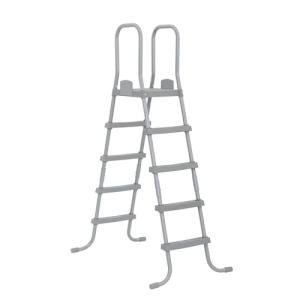
Above-ground pools present a unique challenge: the pool wall rises several feet off the ground, which means you need a ladder that can bridge that gap from the exterior ground level to the interior water level. Above-ground pool ladders are essentially two ladders in one — an outside ladder that lets you climb up to deck height, and an inside ladder that descends into the water.
These A-frame or "wedding cake" style units typically hook over the top rail of the pool and rest against both the inside and outside walls. Better models include locking mechanisms that prevent the ladder from sliding along the rail, as well as removable or foldable exterior sections that can be stored away or lifted up when not in use — an important safety feature for families with young children.
Pay attention to the weight capacity and step height when shopping for above-ground ladders. The steps should be comfortable to use, wide enough for adult feet, and made from a non-slip material. Some above-ground ladders include textured or ribbed stepping surfaces, which make a big difference when you're climbing out with wet feet.
Pool Step Ladders and Entry Systems
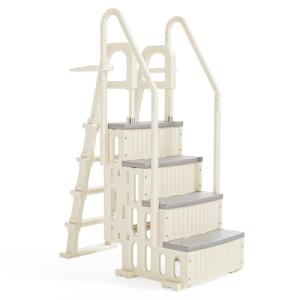
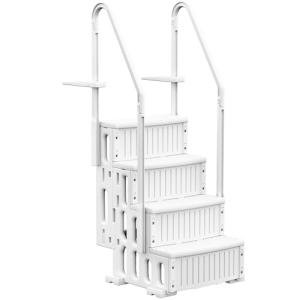
For pools with wider access points or households where traditional ladders feel difficult to navigate, pool step systems offer a more gradual, comfortable entry. These systems look more like a staircase than a traditional ladder — they have wider, deeper steps and wraparound handrails that give users something solid to hold on both sides.
Pool step entry systems are especially popular in family pools, pools frequented by older swimmers, and any installation where accessibility matters. Many of these systems are available as retrofit options that anchor into existing pool decks, though some require more significant installation.
Spa and Hot Tub Ladders
Spa ladders are purpose-built for the elevated sides of above-ground spas and hot tubs. They're generally shorter than full pool ladders, with a simple two- or three-step design and non-slip surfaces. The materials tend to be resin or treated aluminum that can handle the heat and chemical exposure common in spa environments.
Don't try to repurpose a pool ladder for spa use — the geometry and height requirements are different, and stability can become an issue if the ladder isn't matched to the specific dimensions of your spa.
Commercial and Competition Pool Ladders
Commercial pools — those in gyms, hotels, aquatic centers, and competitive facilities — require ladders built to a higher standard. These ladders see enormous volumes of traffic and must comply with local health and safety codes, ADA accessibility requirements, and sometimes competition-specific regulations.
Commercial pool ladders tend to feature wider steps, heavier-gauge materials, more robust anchoring systems, and more deliberate non-slip engineering throughout. They're not cheap, but they're built for the long haul.
Materials Matter More Than You Think
Stainless Steel
Type 304 and Type 316 stainless steel are the gold standard for pool ladders. The difference between them matters: Type 316 contains molybdenum, which gives it significantly better resistance to chloride corrosion — the kind of pitting and rust caused by pool chemicals. If your pool is saltwater or if you run higher chlorine levels, opt for 316 stainless steel without hesitation.
Stainless steel ladders look clean and modern, clean up easily, and maintain structural integrity for decades. They do cost more upfront, but the math works out over time.
Resin and Polymer
Resin ladders are lightweight, won't rust, and tend to cost less than stainless options. They're a solid choice for above-ground pools and lighter-use applications. The downside is that resin can become brittle over time with UV exposure, and the steps may flex slightly underfoot — not dangerous in most cases, but it doesn't inspire the same confidence as stepping onto steel.
Look for UV-stabilized resin if your ladder will be in direct sunlight for most of the day.
Aluminum
Aluminum ladders offer a middle ground — lighter than steel but more rigid than resin. They're popular in commercial settings and for above-ground pool applications. Anodized or powder-coated aluminum resists corrosion reasonably well, though it's generally not as durable in saltwater environments as 316 stainless.
Key Features to Look For
Non-Slip Steps
This is non-negotiable. Every pool ladder step should feature a non-slip surface — whether that's a textured pattern molded into the step, a ribbed design, or an applied non-skid coating. Wet feet on smooth steps is a recipe for an accident. When comparing ladders, run your finger across the step surface: you should feel texture.
Handrail Height and Grip
Handrails should rise high enough above the pool deck to give swimmers a secure grip when they're transitioning from the water to a standing position. Most quality ladders position the top of the handrail around 28 to 36 inches above the deck surface. The rails themselves should have a comfortable diameter — not too thin, not too thick — and should be smooth enough to grip without sharp edges.
Weight Capacity
Check the rated weight capacity before you buy, and don't cut it close. Most residential pool ladders are rated for 300 to 400 pounds, which covers most users comfortably. If your household includes heavier adults, or if your ladder will see commercial-level use, look for models rated at 500 pounds or more. Higher weight ratings usually indicate heavier-gauge materials and more robust construction throughout.
Anchoring System
How the ladder anchors to your pool deck matters a great deal for stability. Flanged anchor systems that bolt into permanent anchor cups provide the most secure installation. Slip-in systems are easier to remove but can shift under load. For permanent installations, a flanged system is always the better choice.
Pool Wall Compatibility
Above-ground pool ladders need to match your pool wall height. Most are designed for pools with walls between 48 and 54 inches, or 52 to 60 inches — measure your pool wall before ordering. Some ladders are adjustable within a range; others are fixed. Getting the wrong size means the exterior and interior sections won't align correctly, which creates both a stability problem and a tripping hazard.
Safety Considerations
Pool ladder safety isn't complicated, but it deserves real attention — especially in households with children.
Lockable exterior sections are one of the most important features for families with young kids. When the outer ladder section is folded up or removed, it becomes much harder for unsupervised children to climb in. Not a substitute for proper pool fencing and covers, but an important layer of protection.
Regular inspection is essential. Check your ladder seasonally — and especially at the start of each swim season — for loose bolts, cracked welds, corroded metal, or worn non-slip surfaces. A ladder that passes a visual inspection should also be physically tested: load it with your weight and feel for any wobble or flex that wasn't there before.
Installation matters. A high-quality ladder installed sloppily is more dangerous than a mid-range ladder installed correctly. Follow manufacturer specifications, use the correct hardware, and make sure anchor cups are fully secured in the pool deck. If you're unsure about installation, hire a pool professional.
Sizing Your Pool Ladder
Getting the sizing right ensures both safety and comfort. For in-ground ladders, measure the distance from your pool deck to the bottom step position — most ladders are sized in step counts (2-step, 3-step, 4-step) that correspond to pool depth ranges. Deeper pools need longer ladders so the bottom step is accessible from the water.
For above-ground ladders, the key measurement is your pool wall height. Measure from the ground to the top of your pool's top rail. This is the number you're matching to the ladder's rated height range.
Installation and Maintenance Tips
Pool ladders generally aren't difficult to install, but taking shortcuts tends to catch up with you. Use stainless steel or other corrosion-resistant hardware throughout — never substitute regular steel bolts, which will rust quickly and can stain your pool deck.
For maintenance, rinse stainless steel ladders periodically with fresh water, especially in saltwater pool environments. A light application of a stainless steel polish or protectant once a season helps maintain the finish and prevents surface corrosion. Resin ladders can be wiped down with a mild detergent solution; avoid abrasive cleaners that might scratch the surface and degrade UV protection.
Remove above-ground ladder exterior sections at the end of each season and store them indoors. UV exposure, freeze-thaw cycles, and ice loading can all shorten the life of a ladder left out year-round.
Choosing the Right Pool Ladder for Your Setup
The decision comes down to four things: pool type, pool wall height or depth, expected traffic, and budget.
For above-ground pools, measure your wall height, prioritize non-slip steps and a lockable exterior section, and choose between resin and aluminum based on your budget and how long you expect the pool to last.
For in-ground pools, 304 or 316 stainless steel is almost always the right answer. Choose 316 for saltwater pools. Match step count to your pool depth, and make sure the anchoring system matches your existing anchor cups or that you're prepared to install new ones.
For spas, use a spa-specific ladder sized to your unit.
For commercial use, start with ADA compliance requirements and build from there.
A pool ladder is one of the most straightforward purchases in the pool world, but that doesn't mean all ladders are the same. The right one does its job invisibly — it's simply there, solid and secure, every time someone needs it. The wrong one makes every entry and exit feel like a small act of faith.
Take the time to match the ladder to your pool, your users, and your usage level. Check the materials, the non-slip surfaces, the weight ratings, and the anchoring system. That's the whole checklist. Get those things right, and your pool ladder will outlast everything else in your backyard.