Why Pool Lighting Matters More Than You Think
Most people approach pool lighting as an afterthought. That's a mistake. The benefits go well beyond "I can see the water at night."
Safety first. Wet decks, pool steps, and uneven surfaces become genuinely hazardous in low light. Proper illumination of the pool perimeter, entry steps, and surrounding walkways dramatically reduces the risk of slips and falls. If you have children, guests, or elderly family members using the pool, adequate lighting isn't optional — it's essential.
More time to enjoy what you paid for. A pool is a major investment. Without lighting, you lose a significant portion of your usable hours. Evening swims, late-night gatherings, summer parties that run past sunset — pool lighting gives you all of that back. It effectively doubles the window of time you can use your pool.
Curb appeal and home value. A beautifully lit pool at night is a showstopper. Potential homebuyers consistently rank outdoor water features with quality lighting among the most desirable property features. You're not just spending money — you're adding value.
Security. A well-lit backyard is a less attractive target for intruders. Perimeter and landscape lighting around your pool area adds a layer of passive security that works quietly around the clock.
Types of Pool Lighting: What's Actually Available
Understanding your options is the foundation of making a good decision. The pool lighting market has evolved significantly, and there's a solution for every pool type, budget, and aesthetic preference.
In-Pool (Underwater) Lights
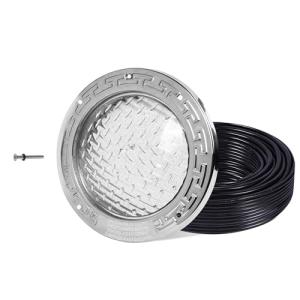
These are the heart of any pool lighting setup — fixtures mounted directly in the pool wall, below the waterline. They illuminate the water from within, creating that signature glowing effect you see in resort pools and luxury backyards.
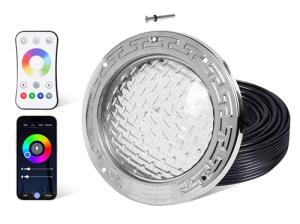
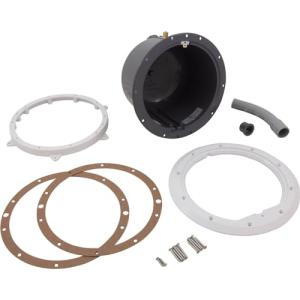
Underwater lights come in two main mounting styles. Flush-mounted fixtures sit level with the pool wall, making them ideal for new construction where they can be installed during the build. They offer a clean, seamless look and are the preferred choice when starting from scratch. Surface-mounted fixtures protrude slightly from the wall and are the better option for retrofitting an existing pool without major reconstruction work.
For in-pool lighting, the IP (Ingress Protection) rating is the most important specification to check. You want a rating of IP68 for any fixture submerged in water — this confirms the light is fully waterproof and safe for continuous underwater use.
LED Pool Lights
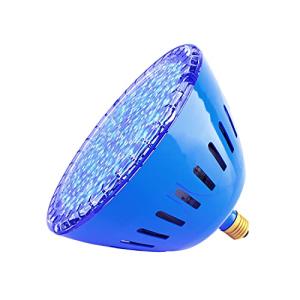
LED technology has essentially replaced every other option for new pool installations, and for good reason. The advantages are so substantial that it's worth understanding them in detail.
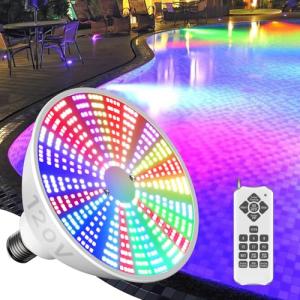
Traditional incandescent or halogen pool lights consumed anywhere from 300 to 500 watts per fixture. A comparable LED light delivers the same brightness — or better — at around 40 watts. That's roughly an 80–90% reduction in energy consumption per light. Over a full pool season, those savings add up to hundreds of dollars on your electricity bill.
The lifespan difference is even more dramatic. Incandescent bulbs typically last around 1,000 hours. Quality LED pool lights are rated for 25,000 to 50,000 hours. In practical terms, that means you may never need to replace a well-chosen LED fixture for the entire time you own your home.
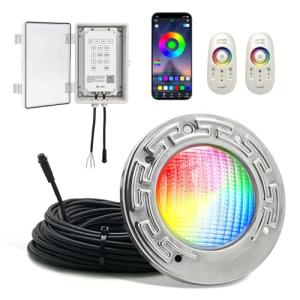
LED lights also offer something older technologies simply couldn't: color. Modern LED pool lights can produce the full visible spectrum, allowing you to switch between crisp white light for everyday swimming, vibrant blues and greens for ambiance, and dynamic multi-color shows for entertaining. The newest RGBW (Red, Green, Blue, White) systems go a step further than standard RGB, delivering more accurate whites and richer, more saturated colors for both functional and decorative use.
Fiber Optic Pool Lights
Fiber optic systems work differently from LED — light is generated at a single source and transmitted through flexible fiber optic cables to multiple points in and around the pool. The main advantage is that there's no electricity at the point of illumination, making them an extremely safe option for water environments.
The tradeoff is lower brightness compared to LED. Fiber optics tend to work best as accent or decorative lighting rather than primary illumination — they're popular for creating starfield effects, lighting water features, and adding subtle visual interest to pool interiors and surrounding hardscaping.
Solar Pool Lights
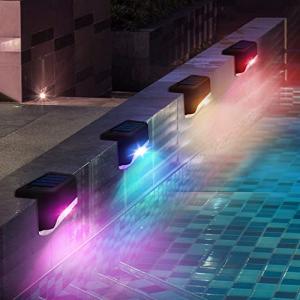
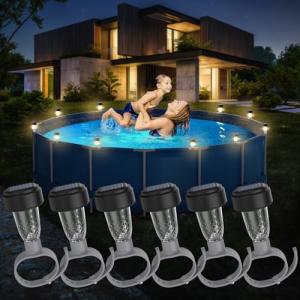
Solar-powered pool lights have improved considerably in recent years and now represent a practical option for certain applications. They're particularly well-suited for landscape and perimeter lighting — path lights, stake lights, and accent fixtures around the pool area that don't require high intensity.
The appeal is obvious: no wiring, no electricity costs, and easy DIY installation. The limitation is that solar lights are dependent on direct sunlight to charge and generally can't match the brightness or reliability of hardwired fixtures for in-pool use. For supplemental ambient lighting around a pool that already has primary LED fixtures, solar options make a lot of sense.
Floating and Decorative Lights
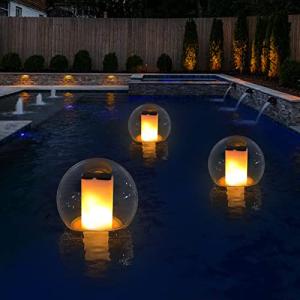
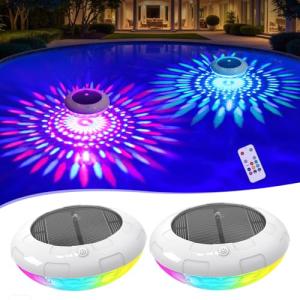
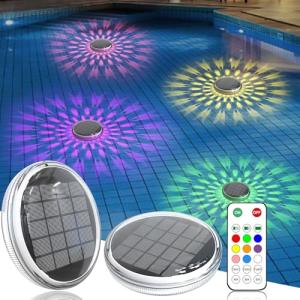
Floating pool lights sit on the water's surface and add a festive, casual element to evening gatherings. They're not a primary lighting solution, but they're popular for parties and can create beautiful reflections across the water. Many are battery-powered, color-changing, and completely portable — you can move them, store them, and add them to any pool without any installation whatsoever.
Layering Your Pool Lighting: Thinking Beyond the Water
The best pool lighting setups don't stop at the water's edge. Layering different types of light in and around the pool area is what separates a functional installation from a genuinely beautiful one.
In-Pool Lighting as the Foundation
Start with the water. Your in-pool fixtures should illuminate the pool clearly enough that swimmers can see the floor and walls, steps are visible, and anyone outside the pool can see clearly into it. For smaller pools under 30 feet, a single well-placed fixture is often sufficient. Larger pools typically benefit from two or three lights to eliminate dark corners and ensure even coverage.
Step and Hardscape Lighting
Pool steps, raised decks, and changes in grade are fall hazards after dark. Recessed step lights and low-profile hardscape lights embedded in concrete and stonework address these risks while adding a polished, architectural quality to the space. These lights don't need to be bright — their job is visibility and wayfinding, and subtle is usually better.
Landscape and Accent Lighting
If you have trees, garden beds, statues, or other focal points near the pool, directional accent lights (also called uplights) can highlight them dramatically. Casting light upward through the canopy of a tree or along a textured stone wall creates depth and visual interest that flat overhead lighting completely misses. Water features like fountains and waterfalls are especially rewarding to illuminate — the light catches the movement of the water and turns it into a focal point.
Perimeter and Path Lighting
Path lights lining the route from your house to the pool serve both safety and aesthetic purposes. They frame the space, guide guests safely, and extend the visual appeal of your pool area into the surrounding landscape. Low-voltage LED path lights are the standard choice — energy-efficient, durable, and available in a wide range of styles from sleek and modern to classic and traditional.
Smart Controls and Automation
One of the most practical developments in pool lighting over the past few years is smart control integration. Modern LED pool lighting systems can be connected to smartphone apps, home automation platforms, and even voice assistants, letting you adjust colors, set schedules, and control brightness from anywhere.
The most popular systems from manufacturers like Pentair and Hayward offer dedicated apps with pre-programmed color shows, custom scheduling, and the ability to sync lighting with music or other backyard features. If you're building a new pool or doing a significant renovation, specifying a smart-compatible lighting system from the start makes the most sense — adding it later is possible but involves additional work.
For those who prefer simplicity, many LED fixtures also work with standard timers and dimmers without any smart home integration required.
What to Look for When Shopping
A few key factors deserve attention before you commit to any pool lighting purchase:
IP Rating. As noted above, IP68 is the minimum standard for any fixture going in the water. Don't compromise on this.
Lumen Output. Lumens measure brightness. For in-pool lighting, more is generally better up to a point — you want clear visibility without blinding glare. Look at lumen output alongside beam angle to understand how a fixture will actually perform in your pool.
Color Rendering. If you're choosing color-capable LED lights, look at the color range and whether the system uses RGBW rather than just RGB for better overall quality.
Brand and Warranty. Pool lights are not easy to service once installed. Choosing a reputable brand with a solid warranty (look for at least three to five years) protects your investment and reduces the chance of dealing with a failed fixture submerged in your pool wall.
Professional Installation. Pool lighting involves working with electricity near water — there is no gray area here. Any in-pool or hardwired exterior lighting should be installed by a licensed electrician familiar with pool codes and safety standards. It's not a DIY project, and cutting corners creates real danger.
Making the Right Choice for Your Pool
The best pool lighting setup depends on your pool size, how you use it, and what kind of atmosphere you want to create. A lap pool used primarily for exercise needs something different than an entertainment-focused backyard pool with a waterfall feature and surrounding gardens.
Start by thinking about your primary goal — safety, aesthetics, energy savings, or some combination of all three. Then consider whether you want the flexibility of color-changing LEDs or the clean simplicity of white light. Factor in whether smart controls matter to you, and whether you want to light just the water or create a full landscape lighting scheme around the pool area.
Whatever direction you choose, investing in quality pool lighting is one of the most impactful upgrades you can make to your outdoor space. It extends the life of your pool, keeps your family safe, and turns a daytime amenity into an all-evening destination. Once you've seen your pool properly lit up at night, you'll wonder how you ever went without it.