Shop our full range of pool pumps for above-ground and inground pools. Find single-speed, dual-speed, and energy-saving variable-speed models from top brands.
Pool Pumps
Product List
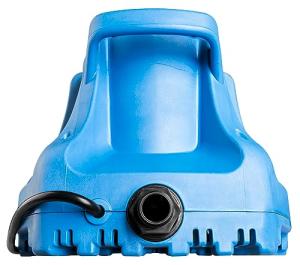
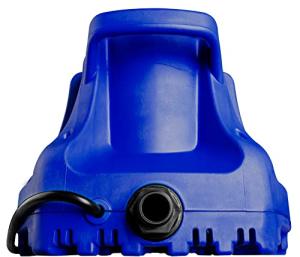
Little Giant Automatic Pool Pump
Product Review Score
4.73 out of 5 stars
214 reviews$178.89 $159.99
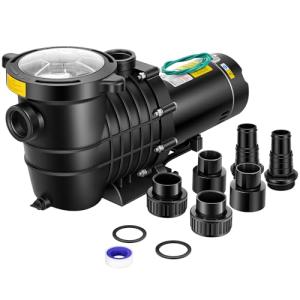
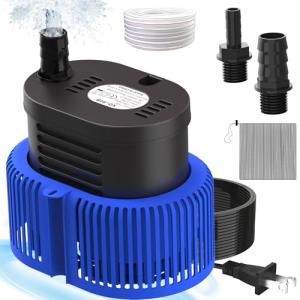
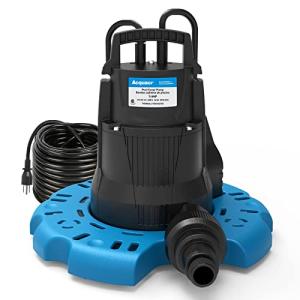
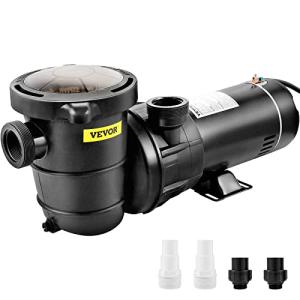
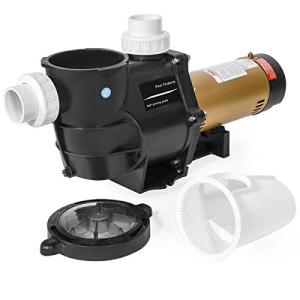
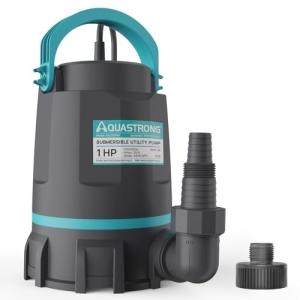
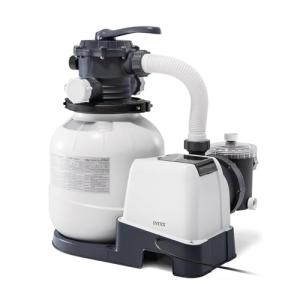
INTEX 2,100 GPH Krystal Clear Sand Filter Pum...
Product Review Score
4.77 out of 5 stars
15 reviews$203.99
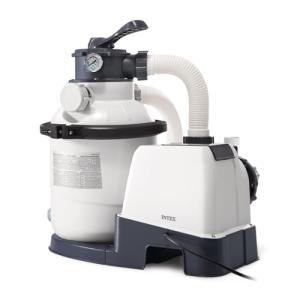
INTEX 1,500 GPH Krystal Clear Sand Filter Pum...
Product Review Score
4.31 out of 5 stars
112 reviews$245.75 $159.99
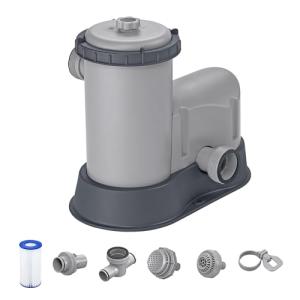
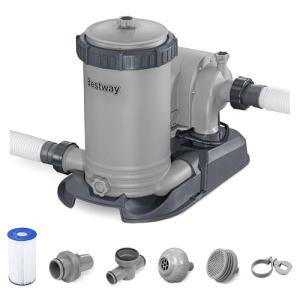
Bestway 1,500 GPH Filter Pump for Above Groun...
Product Review Score
4.75 out of 5 stars
29 reviews$119.99 $110.99
The Heart of Every Healthy Swimming Pool
If your swimming pool is a living, breathing thing — and in many ways it is — then the pool pump is its heart. Every drop of water in your pool passes through the pump, gets pushed through the filter, treated with chemicals, and returned clean and clear. When the pump works well, everything works well. When it doesn't, you'll know it fast: murky water, algae, chemical imbalances, and eventually a pool that nobody wants to swim in.
Choosing the right pool pump isn't complicated once you understand what you're looking for. This guide walks you through everything — the types available, how to size one correctly, the features worth paying attention to, and how to get the most from your investment for years to come.
How a Pool Pump Actually Works
Before diving into which pump to buy, it helps to understand what a pump actually does. Water is drawn in from the pool through the skimmer and main drain lines, pulled into the pump's strainer basket (which catches leaves and large debris), and then pushed by an impeller through your filter, heater, and any other equipment before returning to the pool.
The pump's job is to keep water moving continuously. Stagnant water is a breeding ground for bacteria and algae, and no amount of chemicals will fully compensate for poor circulation. A properly sized pump turns over your pool's entire water volume roughly once every 6 to 8 hours — this is called the turnover rate, and it's the foundation for everything else in your pool care routine.
Types of Pool Pumps
Single-Speed Pumps
Single-speed pumps are the old standard. They run at one fixed speed — typically 3,450 RPM — full power, every time they're switched on. They're the least expensive pumps to buy upfront, which is part of why they were so popular for decades.
The downside is significant, though. Running at full blast all day, every day means high electricity bills. They're also the loudest option, and they offer zero flexibility — the same speed used to run a spa jet is the same speed used for quiet overnight filtration, which is a massive waste of energy.
Many U.S. states, including California and Arizona, have already banned new single-speed pump installations above certain horsepower thresholds, and federal efficiency standards are pushing the entire industry toward variable-speed technology. If you're replacing an old single-speed pump, it's worth upgrading rather than replacing it like-for-like.
Dual-Speed Pumps
Dual-speed pumps offer two settings: high and low. The low-speed setting is significantly more energy-efficient for everyday filtration, while the high-speed setting handles demanding tasks like vacuuming, running water features, or adding chemicals that need to be quickly distributed.
They're a solid middle-ground option — more efficient than single-speed but more affordable than variable-speed. For pool owners who want some savings without jumping to the premium tier, dual-speed pumps make a lot of sense.
Variable-Speed Pumps
Variable-speed pumps are the current gold standard, and for good reason. Instead of locking you into one or two settings, they let you dial in any speed from a very low RPM all the way up to full power. Most models offer three to eight programmable speed settings for different tasks.
What makes them genuinely different under the hood is the motor type. Single and dual-speed pumps use traditional induction motors. Variable-speed pumps use permanent magnet motors — the same technology found in electric vehicles and MRI machines — which are inherently more efficient at lower speeds.
The energy savings can be dramatic. Running your pump at a lower speed for a longer period rather than blasting it at full power for a shorter time can reduce electricity consumption by 60 to 90 percent compared to a single-speed pump. For many pool owners, that translates to hundreds of dollars saved per year, meaning a variable-speed pump often pays for itself within one to three seasons.
They're also much quieter. Single-speed pumps run at a constant, often disruptive drone. Variable-speed pumps running at low speeds are barely noticeable — you can set them to run overnight without waking the neighborhood.
Federal regulations now essentially require variable-speed technology for new pumps above 1.15 total horsepower, so if you're buying new, this is almost certainly where you're headed regardless.
Above-Ground vs. Inground Pool Pumps
Pool pumps are generally designed for either above-ground or inground pools, and while there's occasional overlap, it's best to match the pump to your pool type.
Inground pool pumps are built to handle greater water volumes and the higher resistance created by longer pipe runs and more complex plumbing systems. They tend to be more powerful and are engineered with larger, more durable components to handle the demands of a full-size inground pool.
Above-ground pool pumps are typically smaller and designed for simpler plumbing configurations. Many feature conversion capability between horizontal and vertical mounting, which is handy for fitting equipment into tight spaces. They often include generously sized strainer baskets to handle the higher debris loads common in above-ground pools.
Using a pump designed for an inground pool on a small above-ground setup can actually cause problems — too much pressure, too much flow, and unnecessary wear on the rest of the system.
How to Size a Pool Pump Correctly
Getting the size right matters more than most people realize. Too small and your water won't turn over properly, leaving dead spots where algae love to grow. Too large and you're forcing water through your filter faster than it can actually clean it — debris passes straight through, energy bills skyrocket, and equipment wears out faster.
Here's a simple way to figure out what you need:
Step 1 — Know your pool's volume. For a rectangular pool, multiply length × width × average depth × 7.5 to get gallons. Oval and irregular shapes have their own formulas.
Step 2 — Calculate required flow rate. Divide your pool's total volume by 8 (your target turnover hours) to get gallons per hour, then divide by 60 to get gallons per minute (GPM). A 20,000-gallon pool needs roughly 42 GPM.
Step 3 — Check your plumbing. Standard 1.5-inch pipes handle about 42 GPM per intake line. Two-inch pipes handle around 73 GPM. Your pump shouldn't exceed what your plumbing can handle.
Step 4 — Factor in features. Spas, waterfalls, in-floor cleaning systems, and solar heaters all add resistance and demand. Account for these when calculating your total needs.
Horsepower is a common point of confusion. Most standard inground pools between 10,000 and 20,000 gallons do perfectly well with a 1 to 1.5 HP pump. Larger pools or those with multiple water features might need 2 HP or more. Resist the urge to oversize — a well-designed 1.5 HP pump can actually outperform a poorly matched 2 HP unit in real-world circulation.
Features Worth Looking For
Energy Efficiency Ratings
Since 2021, all new pool pumps sold in the U.S. are required to carry a Weighted Energy Factor (WEF) label. The higher the WEF number, the more efficiently the pump moves water per unit of electricity. When comparing models, this is one of the most useful numbers to look at for understanding long-term running costs.
Many variable-speed pumps also qualify for utility rebates and ENERGY STAR certification. Check your local power company's website before you buy — rebates of $200 to $400 are not unusual and can significantly offset the upfront cost.
Built-In Programming and Smart Controls
The best variable-speed pumps let you program different speeds for different times of day, automatically adjusting for tasks like overnight filtration, morning heating, and afternoon cleaning. Some models integrate with home automation systems or smartphone apps, letting you monitor and adjust remotely.
Look for a clear, intuitive control panel. Screens that are easy to read in bright sunlight and programming logic that doesn't require an engineering degree make everyday use much more pleasant.
Quiet Operation
If your equipment pad is anywhere near a bedroom, patio, or neighbor's fence, noise matters. Variable-speed pumps running at low speeds are significantly quieter than their single-speed counterparts. Features like enclosed fan-cooled (TEFC) motors reduce noise further. If quiet operation is a priority, look for models that specifically advertise low-noise performance.
Materials and Build Quality
Pool equipment lives outside in sun, rain, and constant chemical exposure. Look for pumps with corrosion-resistant thermoplastic housings — they won't rust, they hold up to UV exposure, and they resist the chemical environment around pool water far better than metal alternatives.
Viton shaft seals are a feature worth noting, as they last longer and resist chemical degradation better than standard seal materials. A strainer basket that's easy to remove and clean saves you frustration during regular maintenance.
Warranty
A longer warranty is often a reliable indicator of build quality. Most reputable pumps come with two to three year warranties. Brands like Hayward, Pentair, and Jandy have well-established reputations for honoring their warranties and maintaining parts availability over the long term — something that matters a great deal when you need a replacement seal or impeller five years down the road.
What to Expect in Terms of Lifespan
A well-maintained pool pump should last eight to twelve years. Variable-speed pumps often fall toward the higher end of that range because running at lower speeds reduces mechanical stress on the motor and impeller.
Signs that a pump is reaching the end of its life include grinding or rattling noises (worn bearings), persistent leaks at the shaft seal, repeated tripping of the circuit breaker, or a motor that struggles to prime. At that point, replacement is usually more economical than ongoing repair — especially if you take the opportunity to upgrade to a more efficient model.
Regular maintenance extends pump life considerably. That means cleaning the strainer basket whenever it's visibly full, checking that the pump lid O-ring stays lubricated and crack-free, watching for leaks at union connections, and making sure the pump always has adequate water flow before switching it on.
Matching Your Pump to the Rest of Your System
A pool pump doesn't work in isolation. It's part of a system that includes your filter, heater, sanitizer, and any water features. Getting these components to work together well is what separates a pool that's genuinely easy to maintain from one that's a constant source of headaches.
Make sure your pump's flow rate falls within the operating range of your filter — too much flow and the filter can't do its job, too little and filtration suffers. Sand filters, cartridge filters, and DE filters each have their own maximum GPM ratings, and your pump should stay under those thresholds.
If you have a heater or salt chlorinator, check the manufacturer's flow rate requirements for those as well. Most have a minimum flow rate for proper operation and a maximum before warranty coverage may be affected.
Making the Right Choice
The best pool pump is the one that matches your pool's specific volume, plumbing, and feature set — and that runs as efficiently as possible while keeping your water clean and balanced. For most pool owners buying new today, a variable-speed pump from a trusted brand is the clear choice: better efficiency, lower noise, smarter controls, and a regulatory landscape that's increasingly favoring this technology anyway.
Think of it as an investment in your pool as a whole. A pump that circulates water properly keeps your filter effective, your chemicals balanced, and your pool inviting all season long. Browse our full range of pool pumps below to find the right model for your setup.