
What Is a Pool Water Monitor?
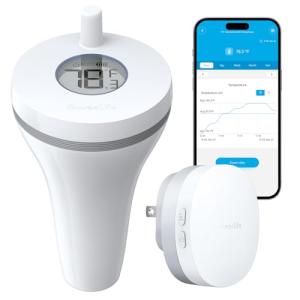
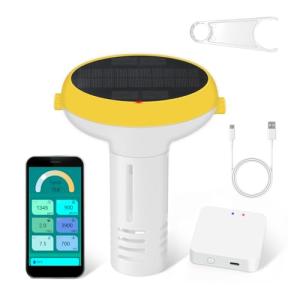
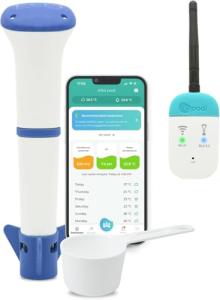
A pool water monitor is a device — often a small floating sensor or a probe you attach to your skimmer — that continuously measures the chemical composition and physical conditions of your pool water. Rather than testing once a week (or whenever you remember), these devices check your water multiple times per hour, catching problems before they turn into green swamp water or a skin-irritating chemistry disaster.
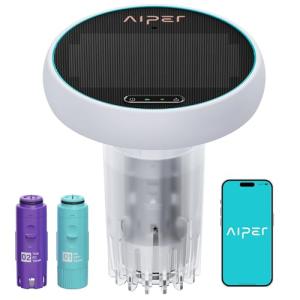
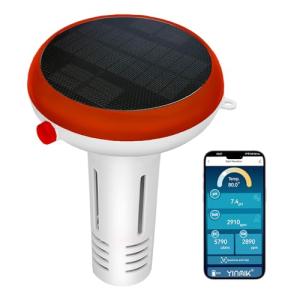
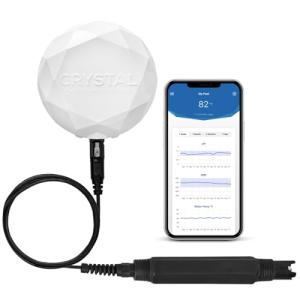
Most modern monitors sync to a smartphone app via Bluetooth or Wi-Fi. Once connected, the app gives you a live dashboard of your pool's health, alerts you when something drifts out of range, and tells you exactly what to add and how much. No more guessing whether to add a quarter cup or a full scoop of stabilizer. The app does the math for you, factoring in your pool's volume, type, and current chemical baseline.
Think of it less like a testing device and more like a personal pool technician that never takes a day off.
Why Pool Chemistry Actually Matters
Before diving into features and product types, it's worth understanding why monitoring your water chemistry isn't just about aesthetics. Unbalanced pool water is genuinely a health and safety concern.
Water that's too acidic eats through your pool's plaster and metal fixtures. Water that's not acidic enough causes calcium buildup and cloudy water that hides hazards on the pool floor. Chlorine that's too low allows bacteria and algae to thrive — including potentially dangerous pathogens like E. coli. Chlorine that's too high causes eye and skin irritation, damages swimwear, and can be harmful to children and pets who spend a lot of time in the water.
The relationship between pH, chlorine effectiveness, alkalinity, and sanitizer levels is genuinely complex. Chlorine, for instance, only does its job properly within a specific pH window. If your pH drifts even slightly, your chlorine becomes a fraction of how effective it should be — even if your test strip shows "normal" levels. A pool water monitor catches these subtle imbalances that the human eye — and even standard test strips — simply can't detect in time.
Types of Pool Water Monitors
Floating Smart Monitors
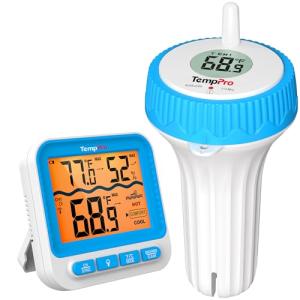
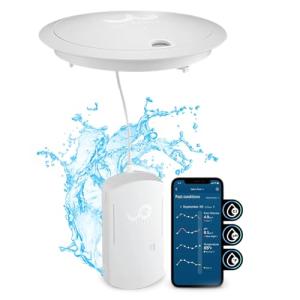
These are the most popular type for residential pools. A floating device sits on your pool's surface or is tethered near a return jet, with sensors submerged below. It measures key parameters continuously and sends data wirelessly to your phone.
Products in this category are typically easy to set up — drop the device in the water, download the app, enter your pool's details, and you're live within minutes. They're ideal for homeowners who want a low-maintenance solution that doesn't require any plumbing modifications.
Skimmer-Based Monitors
Some monitors attach directly to your pool skimmer. Since water is constantly flowing through the skimmer as part of your pool's normal circulation, skimmer-based devices get a fresh, representative sample of your pool water on a regular cycle. This design is particularly accurate because the device isn't testing stagnant water near the surface — it's analyzing the water as the pump pulls it through.
Digital Test Strip Readers
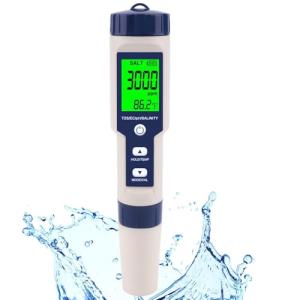
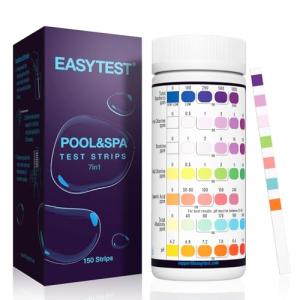
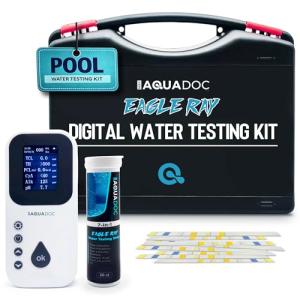
These are a step up from standard test strips without going all the way to a full smart monitor. You dip a strip, insert it into the reader device, and get a precise digital readout rather than trying to match a color to a printed chart under the glare of afternoon sun. Some models connect to an app and log your results over time. They're a more affordable entry point and a great option for people who test manually but want more accuracy.
Inline and Hardwired Monitors
At the professional end of the spectrum, inline monitors are plumbed directly into your pool's return line. These are common in commercial pools and are increasingly available for high-end residential installations. They provide continuous, highly precise data and can often integrate with automated chemical dosing systems. If you have a pool automation system already, an inline monitor can become part of a fully hands-off maintenance setup.
Key Parameters That Pool Water Monitors Track
pH
This is the most fundamental measurement in pool chemistry. The ideal range for swimming pools is between 7.2 and 7.6. Even small drifts outside this window affect swimmer comfort and the performance of every other chemical in your pool.
Free Chlorine
This is the active, working chlorine in your pool — the amount that's actually available to kill bacteria and algae. Total chlorine measurements can be misleading because they include "used up" chlorine that's no longer effective. Quality monitors specifically track free chlorine.
ORP (Oxidation-Reduction Potential)
ORP is a measure of your water's overall sanitizing power and is considered a more holistic indicator of water safety than chlorine levels alone. Commercial pools have relied on ORP monitoring for decades. It accounts for the relationship between pH and chlorine, giving you a more complete picture of whether your water is actually safe to swim in.
Alkalinity
Total alkalinity acts as a pH buffer. When alkalinity is in range, your pH stays more stable and doesn't swing wildly after rain or heavy use. When it's too low, pH becomes erratic; too high, and you'll have persistent cloudiness and scale buildup.
Temperature
Water temperature affects how quickly chlorine dissipates, how fast algae grows, and how efficiently your pump and heater run. Monitoring temperature trends also helps you anticipate when to top up chemicals during heat waves.
Water Hardness
Calcium hardness determines whether your water is "soft" or "hard." Water that's too soft is corrosive to pool surfaces and equipment; water that's too hard causes scaling and cloudy water. Some advanced monitors and testing kits include hardness readings as part of a full water profile.
Smart Features to Look For
App Integration and Alerts — The real value of a modern pool monitor isn't the sensor itself — it's the software behind it. Look for an app that gives you trend charts (not just current readings), push notifications when parameters go out of range, and dosing advice tailored to your specific pool size and chemical type.
Continuous vs. Scheduled Monitoring — Some devices test every few minutes, others once or twice a day. For most residential pools, daily readings are sufficient. But if you have a heavily used pool, frequently changing weather, or a saltwater system, more frequent readings give you earlier warnings.
Wi-Fi vs. Bluetooth — Bluetooth requires your phone to be near the pool to sync data. Wi-Fi connected monitors upload data to the cloud continuously, so you can check your pool's status from anywhere — handy if you're traveling and want to make sure your house-sitter is keeping up with the chemicals.
Subscription Costs — Some monitors are one-time purchases; others require annual subscriptions for app access, cloud storage, or replacement sensors. Factor this into the total cost of ownership before buying. A $150 device with a $99/year subscription can end up costing more over three years than a $250 device with no ongoing fees.
Compatibility With Your Pool Type — Make sure the monitor you choose is rated for your specific setup. Saltwater pools, spas, above-ground pools, and indoor pools can all have different requirements. Some sensors degrade faster in saltwater environments. Some floating monitors include a spa adapter for smaller volumes.
Who Needs a Pool Water Monitor?
New Pool Owners — If you've recently joined the ranks of pool ownership and feel overwhelmed by the chemistry, a smart monitor is one of the best investments you can make. It removes the learning curve and gives you professional-grade guidance from day one.
Busy Families — Pools get used hard in summer. More swimmers, more sunscreen, more organic matter — and more demand on your sanitizer. A monitor catches the inevitable dips in chlorine and pH before they become a problem, especially important if young kids are swimming daily.
Vacation Home and Rental Property Owners — If your pool is at a property you don't visit every day, a Wi-Fi-connected monitor lets you keep an eye on water quality remotely. Some models even let you share access with a property manager or pool service company.
People Who've Dealt With Algae or Cloudy Water — If you've battled green or murky water before, you know how expensive and time-consuming a full algae treatment can be. A monitor that catches early imbalances is genuinely preventative — and far cheaper than a bag of algaecide and three days of brushing.
Anyone Who Just Wants to Simplify Maintenance — Honestly, this is most pool owners. Nobody becomes a pool owner because they love chemistry. A good monitor eliminates the weekend routine of test strips, calculations, and store visits and replaces it with a five-minute glance at an app.
Getting the Most Out of Your Pool Water Monitor
No monitor replaces all human involvement. You'll still need to physically add chemicals when the app advises it, clean your skimmer basket, and occasionally run a manual test to cross-check your device's calibration. Most manufacturers recommend a manual verification test at the start of each season and after any major weather events.
Sensor maintenance matters too. Electrochemical sensors, particularly pH sensors, can drift over time and need periodic recalibration or replacement. Most good monitors make this process straightforward, either through a calibration kit or replacement sensor pods that snap in without tools.
Keep the sensor clean and free of sunscreen residue and calcium scale, and make sure it stays submerged — most sensors degrade quickly when exposed to prolonged sun and air.
Pool water monitors represent one of the most practical smart home upgrades available to pool owners today. They don't just save time — they genuinely protect your health, extend the life of your pool equipment, reduce chemical waste, and make the whole experience of owning a pool substantially less stressful.
Whether you choose a simple digital test reader to sharpen your manual testing, a floating smart monitor for daily automated check-ins, or a fully integrated inline system for total hands-free control, you're making a meaningful step toward a cleaner, safer, better-balanced pool. The technology has matured, the apps have gotten smarter, and the prices have come down to where there's a good option for virtually every budget and pool type.
Stop guessing. Start monitoring. Your pool — and everyone who swims in it — will thank you.