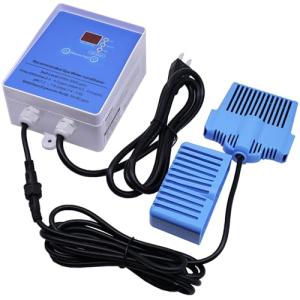
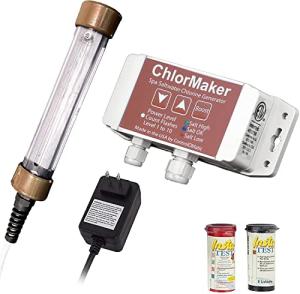
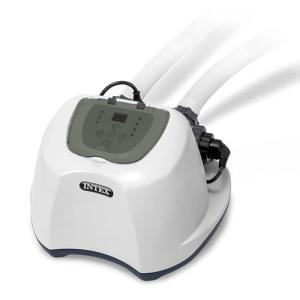
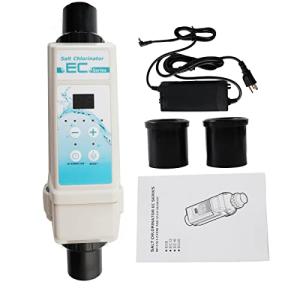
What Is a Saltwater Chlorine Generator?
If you've ever stepped out of the ocean feeling like your skin was softer than when you went in, you already have an intuitive sense of what saltwater does to your body. Now imagine bringing that same gentle, natural feeling to your backyard swimming pool. That's exactly what a saltwater chlorine generator (SWCG) makes possible — and it's why millions of pool owners have made the switch.
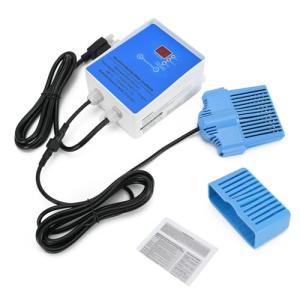
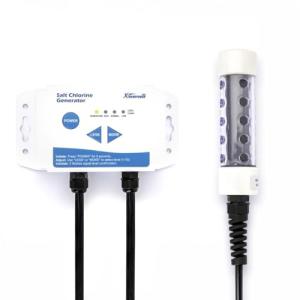
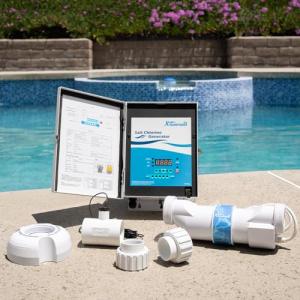
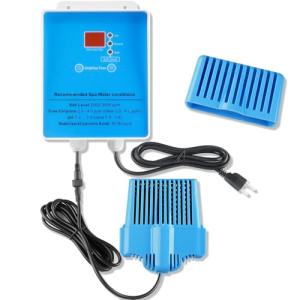
A saltwater chlorine generator is a pool sanitation system that produces chlorine on-site, right in your own pool equipment, using ordinary table salt and electricity. Instead of lugging heavy jugs of liquid chlorine home from the store, or dropping tablets into a floater and crossing your fingers, you simply maintain a modest level of dissolved salt in your water and let the system do the rest. The generator handles chlorine production automatically, day in and day out, while you spend your time actually enjoying the pool.
Despite what many people assume, a saltwater pool is not a chlorine-free pool. It's still a chlorinated pool — the difference is simply how that chlorine gets there. And that difference turns out to matter quite a lot.
How Does the Technology Actually Work?
The science behind saltwater chlorine generation is elegant in its simplicity. The process is called electrolysis, and it has been used in industrial chemistry for well over a century.
Here's what happens: Your pool water is kept at a salt concentration of roughly 3,000 to 3,500 parts per million (ppm). For context, that's about one-tenth the salinity of ocean water, so the water doesn't taste or feel noticeably salty — it just feels smooth. As this mildly salty water circulates through your pool's filtration system, it passes through the heart of the device: the salt cell.
Inside the salt cell are a series of flat titanium plates coated with precious metals, typically ruthenium or iridium. These plates are connected to a control board that sends a low-voltage direct electrical current through them. When the saltwater flows over these charged plates, the electrical current splits the sodium chloride (NaCl) molecules apart at the molecular level. This releases chlorine gas and sodium hydroxide as byproducts, which immediately dissolve into the water and form hypochlorous acid (HClO) and sodium hypochlorite — the two active sanitizing agents that keep your pool clean, clear, and free of harmful bacteria and algae.
The system then delivers this freshly generated chlorine directly into your pool water. And here's the clever part of the cycle: after the chlorine has done its job sanitizing the water, it breaks back down — and the salt is regenerated. That means the salt in your pool is recycled over and over again rather than being consumed. You only need to top up the salt occasionally to replace what's lost through splashing, backwashing, and evaporation.
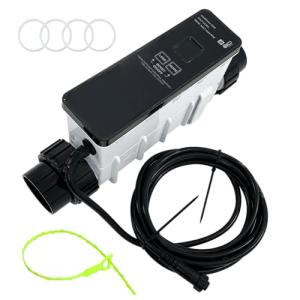
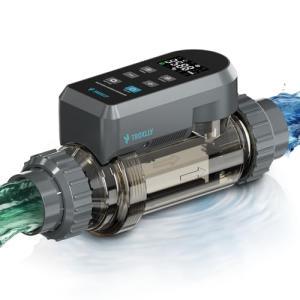
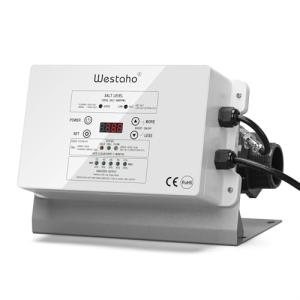
The control board gives you direct oversight of the whole operation. On basic models, you manually set the chlorine output percentage. On mid-range and premium systems, you get digital displays, automatic self-cleaning modes, real-time salt level readings, and in many modern units, WiFi connectivity that lets you monitor and adjust everything from your phone.
The Two Core Components
Every saltwater chlorine generator revolves around the same two fundamental parts.
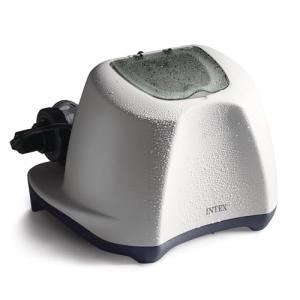
The Salt Cell is the workhorse. This is where electrolysis actually happens. The titanium plates inside it are precisely engineered to maximize the surface area exposed to water flow while withstanding years of continuous chemical and electrical stress. Over time, calcium and mineral deposits from the water can build up on these plates, which is why periodic cleaning is part of routine salt cell maintenance. Most manufacturers recommend inspecting the cell every three to six months. Well-maintained cells typically last between three and seven years before needing replacement.
The Control Board is the brain. It regulates how much electricity flows to the cell, which directly controls how much chlorine gets generated. The control board also monitors operating conditions — water flow, salt levels, cell temperature — and alerts you when something needs attention. Premium control boards connect to broader pool automation systems, allowing you to integrate chlorine production with your pump schedules, lighting, and heating from a single interface.
Why Pool Owners Love Saltwater Systems
The surge in popularity of saltwater chlorine generators isn't accidental. These systems address most of the biggest frustrations that come with traditional chlorination in one shot.
Dramatically reduced maintenance burden. With a saltwater generator running, chlorine production becomes automated. You no longer need to test and manually adjust sanitizer levels multiple times per week. The system produces a continuous, steady stream of chlorine as long as the pump is running, which means levels stay consistent rather than spiking after you add a shock treatment and then slowly dropping off over days. You still need to monitor pH, calcium hardness, and total alkalinity, but the exhausting cycle of manually dosing chlorine effectively disappears.
A noticeably better swimming experience. This is the benefit that converts skeptics into true believers. Saltwater pools feel different. The water is softer and silkier on skin because of the salt itself and because consistent, steady chlorine levels prevent the buildup of chloramines — those harsh chemical compounds that form when chlorine reacts with organic matter like sweat, sunscreen, and body oils. Chloramines are responsible for the burning, red eyes, the faded swimsuits, the bleached hair, and that sharp chemical smell that clings to you after a swim. In a well-maintained saltwater pool, those problems are dramatically reduced. Swimmers with sensitive skin, eczema, or chlorine sensitivity often find saltwater pools far more comfortable to use.
Long-term cost savings. The upfront investment in a saltwater system — typically $1,500 to $3,500 for a fully installed residential setup — is higher than simply buying chlorine tablets. But the ongoing operating costs tell a different story. A year's supply of traditional chlorine products can run $400 to $800 or more, while the annual cost of salt for a saltwater pool often comes in under $100. Over a five-to-seven-year period, that gap adds up significantly. The math tends to favor saltwater systems for anyone planning to keep their pool for more than a few seasons.
Safer chemical handling. Storing and handling pool chlorine comes with genuine risks. Concentrated chlorine products are corrosive, potentially hazardous to pets and children if improperly stored, and can create dangerous reactions if accidentally mixed with other pool chemicals. With a saltwater generator, those risks essentially vanish. You're storing and handling plain pool salt — about as hazardous as the stuff in your kitchen cabinet.
Consistent, automatic sanitization. Unlike manual chlorine dosing, which produces peaks and valleys in sanitizer levels, a saltwater generator delivers a steady baseline of chlorine whenever the pump runs. This consistency is particularly effective at preventing algae growth, because there's no window of low chlorine where algae can get a foothold. Pool owners who've battled recurring algae blooms with traditional chlorination often find that saltwater systems solve the problem for good.
What to Know Before You Buy
Saltwater chlorine generators are not a completely hands-off solution, and understanding the real picture helps you make the right choice for your pool.
pH management requires attention. As the electrolysis process generates chlorine, it also produces sodium hydroxide as a byproduct, which naturally pushes your pool's pH upward. You'll need to add muriatic acid (hydrochloric acid) or another pH-reducing product regularly to keep pH in the ideal 7.2 to 7.6 range. If pH climbs above 7.8, the chlorine your generator is producing becomes far less effective, even if your chlorine readings look fine on paper.
Corrosion is a real concern. Salt water is more electrically conductive than fresh water, and that creates accelerated corrosion risk for any metal components in or around your pool — ladders, handrails, light fixtures, heat exchangers, and pool equipment. Proper bonding of all metal components is essential, and many saltwater pool owners use sacrificial zinc anodes to protect equipment from galvanic corrosion. If your heater, pump, or other equipment isn't rated for saltwater use, you may need to factor in upgrades or replacements.
Cell sizing matters. A common mistake is buying a salt cell rated exactly for your pool's volume. Running a cell at 100% capacity continuously shortens its lifespan significantly. Professionals typically recommend purchasing a cell rated for 1.5 times your actual pool size, then running it at 60-70% output. This approach extends cell life from three or four years to potentially six or seven years, paying for the larger upfront cost many times over.
Cold water performance drops off. Saltwater generators produce less chlorine in cold water and most stop functioning efficiently below about 60°F. If you're in a region where your pool water drops into that range during shoulder seasons, you may need to supplement with conventional chlorine to maintain sanitation.
Stabilizer is still necessary. UV light from the sun breaks down free chlorine, and saltwater pools are no different from any other pool in this respect. Maintaining cyanuric acid (pool stabilizer) in the 20 to 50 ppm range protects the chlorine your generator produces from being degraded by sunlight before it can do its job.
Choosing the Right System for Your Pool
Saltwater chlorine generators are available in a range of capacities and feature sets to match pools of every size and every budget.
Entry-level systems handle pools up to around 20,000 gallons and come with basic controls for setting chlorine output manually. They do the job reliably and are a solid starting point for smaller residential pools where simplicity is the priority.
Mid-range systems add digital displays, automatic self-cleaning cycles (where the polarity of the cell plates reverses periodically to dislodge calcium scale), and built-in diagnostics that alert you to low salt, low flow, or cell issues before they become problems. These are the sweet spot for most residential pool owners.
Premium systems offer the full package: WiFi connectivity, mobile app control, advanced water chemistry monitoring, integration with pool automation platforms, and sophisticated flow and temperature compensation to keep chlorine output optimal year-round. For pool owners who want minimal manual involvement and maximum visibility into their water quality, premium systems deliver exactly that.
When comparing systems, look beyond price alone. Consider the rated cell lifespan, the warranty on both the cell and the control board, the availability of replacement cells, and whether the control board is compatible with any automation systems you already have or plan to install.
Is a Saltwater Chlorine Generator Right for You?
If you want cleaner, softer, better-feeling pool water with significantly less time spent on chemical maintenance, the answer for most pool owners is a clear yes. The technology is mature and reliable, the long-term economics are favorable, and the swimming experience it delivers is genuinely better than what traditional chlorination typically provides.
The upfront cost and the need for attentive pH management and corrosion protection are real considerations worth planning around — but for the vast majority of pool owners who make the switch, those trade-offs are well worth it. Saltwater chlorine generation represents the modern standard in residential pool sanitation, and once you've swum in a properly maintained saltwater pool, it's hard to go back.