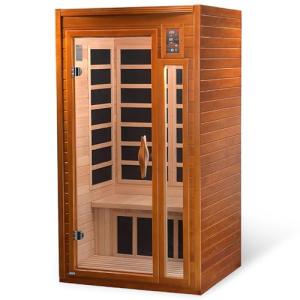
What Is a Sauna, Really?
At its core, a sauna is a heated room or enclosed space designed to induce sweating through high temperature and, depending on the type, varying levels of humidity. Traditional Finnish saunas operate at temperatures between 70°C and 100°C (160°F–212°F) with low humidity, while steam rooms flip that equation with lower heat and near-saturated moisture. Infrared saunas work differently again — they heat your body directly using light waves rather than warming the surrounding air, which means lower ambient temperatures (typically 45°C–65°C) with a deeply penetrating heat that many users find exceptionally comfortable.
Each type offers its own distinct experience and benefits. None of them is objectively "better" — the right sauna depends entirely on what you're looking for.
The Main Types of Sauna
Traditional Finnish Saunas
The Finnish sauna is the gold standard. Finland has over three million saunas for a population of five and a half million people, which tells you everything about how seriously they take this ritual. A traditional sauna uses an electric heater or wood-burning stove loaded with sauna stones (kiuas) that absorb and radiate intense heat. Users can pour water over the stones to generate bursts of steam called löyly — a word the Finns consider untranslatable, because it captures not just the steam itself but the feeling it creates.
Traditional saunas heat to high temperatures quickly and offer that signature dry-heat experience. They're social spaces. In Finnish culture, the sauna is where you have honest conversations, make decisions, and unwind with people you trust. Many traditional saunas come in outdoor cabin formats — freestanding structures with their own aesthetic charm — though indoor barrel saunas and wall-panelled room saunas are equally popular.
If you want the full, authentic experience — intense heat, the ritual of löyly, and that bone-deep warmth that lingers for hours — a traditional Finnish sauna is your starting point.
Infrared Saunas
Infrared saunas have surged in popularity over the past decade, and for good reason. Rather than heating the air around you, infrared panels emit wavelengths of light that are absorbed directly by the body's tissues. This produces a deep, penetrating warmth at temperatures that are far more accessible — especially for people who find traditional sauna heat overwhelming.
Within the infrared category, there are further distinctions worth understanding:
Near-infrared wavelengths are the shortest, penetrating the skin's surface most shallowly. They're associated with skin rejuvenation, wound healing, and cellular repair.
Mid-infrared wavelengths penetrate deeper into soft tissue and are often linked to improved circulation and muscle recovery.
Far-infrared wavelengths go deepest of all, reaching muscle and joint tissue, and are the most commonly used in commercial and home infrared saunas. Far-infrared heat is frequently cited in connection with detoxification, chronic pain management, and cardiovascular support.
Full-spectrum infrared saunas combine all three, delivering a comprehensive session in one unit.
One practical advantage of infrared saunas: they're generally easier to install, require less structural preparation, and heat up faster than traditional models. Many plug into a standard electrical outlet. They're an excellent entry point for first-time sauna buyers.
Wood-Burning Saunas
There's a romanticism to a wood-burning sauna that no electric model can quite replicate. The smell of burning birch or pine, the crackling of the fire, the slower, more meditative process of building heat — it's a different kind of experience, and for many people, it's the only kind worth having.
Wood-burning saunas are typically outdoor structures, often barrel-shaped or cabin-style. They don't require electricity, which makes them ideal for remote properties, off-grid cabins, or anyone who simply prefers a more elemental ritual. The trade-off is time: it takes 30 to 60 minutes to reach temperature, and you'll need a steady supply of firewood. But if you're the kind of person who enjoys that process — the splitting of wood, the tending of the fire, the anticipation — it adds rather than subtracts.
Barrel Saunas
Technically a form factor rather than a heating type, barrel saunas deserve their own mention because they've become one of the most recognisable and beloved styles on the market. Their cylindrical shape isn't just aesthetically striking — it's thermodynamically efficient. Heat rises from the heater and circulates in a natural convection pattern around the curved walls, meaning faster, more even heating with less energy.
Barrel saunas sit beautifully in outdoor settings. Place one on a deck, in a garden, beside a lake, or at the edge of a forest, and you've created an instant focal point. They're available in both electric and wood-burning configurations, with sizes ranging from intimate two-person pods to large social saunas that can comfortably seat six or more.
Indoor Saunas and Sauna Rooms
Not everyone has outdoor space, and that's no barrier to sauna ownership. Indoor saunas are designed to be installed in existing rooms — a spare bathroom, a basement, a converted utility room. Modular panel systems make installation relatively straightforward, and many indoor units can be fully assembled without professional help.
Corner saunas, which fit neatly into a 90-degree corner, are particularly space-efficient. Some indoor models are designed as freestanding cabinets — essentially a sauna in a box — that require nothing more than a power outlet and floor space.
Key Features to Consider When Buying a Sauna
Size and Capacity
Saunas are typically rated by the number of people they can accommodate. A one-to-two person sauna suits a single user or a couple and takes up minimal space. Four-person and six-person models are popular for families or those who enjoy sauna as a social ritual. Think about not just how many people will use it simultaneously, but also how much room you want to stretch out and lie down — because lying flat on the bench, feet raised, is widely considered the optimal position for heat exposure.
Heater Type and Power
The heater is the heart of your sauna. Electric heaters are the most common choice for indoor and many outdoor models — they're controllable, consistent, and easy to use. Look for heaters with sufficient wattage for your sauna's cubic footage (a rough rule is 1kW per cubic metre of space). Wood-burning heaters offer that authentic experience but require more management. Infrared panels are rated by their wattage and the quality of the emitters — carbon fibre panels tend to offer more even heat distribution than older ceramic models.
Wood Type and Build Quality
The wood used in a sauna's construction matters more than you might think. It needs to withstand repeated cycles of high heat, moisture, and cooling without warping, cracking, or off-gassing unpleasant chemicals. The most respected choices include:
Nordic spruce — light, resin-free, and a classic choice for traditional Finnish saunas.
Canadian hemlock — a popular option for infrared saunas, fine-grained and stable.
Cedar — naturally aromatic, resistant to moisture and insects, and beautiful to look at. Western red cedar is a premium choice.
Thermo-treated aspen — heat-treated to improve stability and reduce the chance of splintering. A good choice for people with sensitive skin.
Avoid saunas built with plywood, MDF, or resinous softwoods — these can release harmful compounds when heated.
Controls and Technology
Modern saunas come with a range of control options, from simple manual dials to digital panels with programmable timers, temperature memory settings, and even smartphone app integration. If you want to preheat your sauna remotely so it's ready when you finish work, that's now a standard feature on many mid-to-high-end models.
Chromotherapy (colour light therapy) is another popular addition, particularly in infrared saunas — coloured LED lighting built into the cabin can enhance relaxation or provide a specific therapeutic focus depending on the wavelength used.
Health and Wellbeing Benefits
The research into sauna use has grown substantially in recent years, and the findings are consistently encouraging. Regular sauna bathing has been associated with a wide range of physiological and psychological benefits.
Cardiovascular health is one of the most studied areas. Sessions in a sauna cause a meaningful increase in heart rate — comparable to moderate exercise — and have been linked in long-term studies with reduced risk of cardiovascular events.
Muscle recovery and pain relief are among the most commonly reported benefits among athletes and active users. The heat improves circulation, reduces inflammation, and relaxes muscle tissue — effects that are particularly pronounced with infrared heat, which penetrates more deeply than ambient heat alone.
Stress reduction and sleep quality are almost universally reported benefits. The enforced stillness, the physical warmth, and the measurable drop in cortisol that follows a sauna session create conditions that are deeply conducive to rest. Many users report that sauna use, particularly in the evening, dramatically improves their sleep.
Skin health benefits from the improved circulation and sweating that saunas induce, which can help flush pores and give skin a clearer, more vital appearance over time.
Choosing the Right Sauna for Your Space
Outdoor Saunas
Outdoor saunas — whether barrel-shaped, cabin-style, or pod designs — suit gardens, decks, and rural properties. They typically require a flat, stable base (concrete pad, timber decking, or compacted gravel), a power supply for electric models, and some consideration for drainage. Many outdoor saunas are delivered as kits that can be assembled over a weekend with basic tools.
Indoor Saunas
For urban homes or apartments, indoor models are the practical choice. Measure your space carefully before purchasing, paying attention to ceiling height (most saunas require at least 2 metres of clearance), ventilation requirements, and proximity to a power outlet. Some high-powered saunas require a dedicated circuit.
Portable and Compact Saunas
For those with minimal space or who want a lower-commitment entry point, portable saunas — including folding fabric infrared tents and compact one-person pods — offer a surprisingly effective experience at a fraction of the cost and footprint of a full cabin.
Maintenance: What to Expect
Saunas are low-maintenance by nature, but they do require some basic care. Keep benches clean with a mild, non-chemical cleaner. Allow the sauna to dry thoroughly after each use by leaving the door ajar. Sand wooden surfaces periodically to refresh them. Clean sauna stones annually and replace any that have cracked. For infrared saunas, wipe down panels gently and check connections occasionally.
With proper care, a well-built sauna will last decades.
Final Thoughts: Why a Sauna Is Worth It
There are very few home investments that change your daily routine as consistently and as positively as a sauna. It's not a piece of equipment that ends up gathering dust. It becomes a ritual — something you look forward to, something that marks the transition from a hard day to a good evening, something that keeps your body and mind functioning at their best.
Whatever your budget, your space, or your experience level, there's a sauna in this category built for you. Take your time, think about how you'll use it, and choose something that genuinely fits your life. The heat will do the rest.