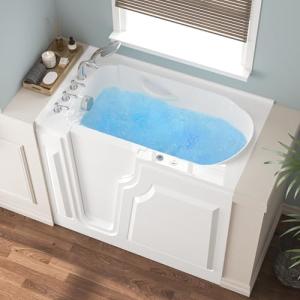
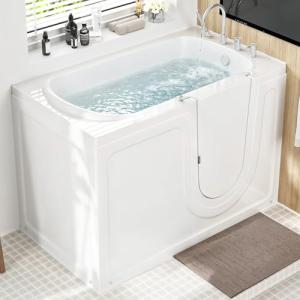
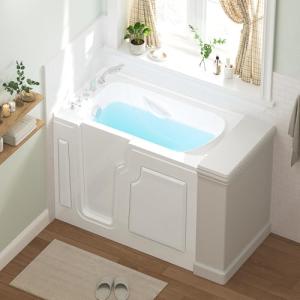
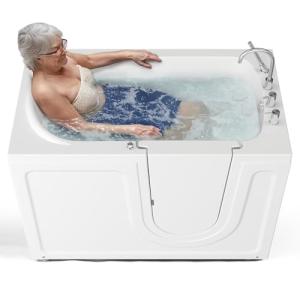
Who Are Walk-In Bathtubs For?
The short answer: more people than you'd think.
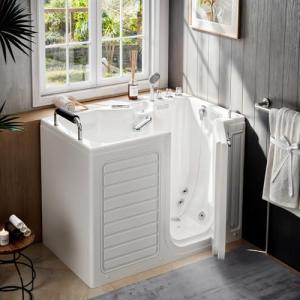
The obvious audience is older adults who want to age in place — meaning stay in their own home rather than moving to assisted living. Falls are the leading cause of serious injury among seniors, and the bathroom is where many of those falls happen. A walk-in tub removes the biggest single hazard: the step-over.
But walk-in tubs also serve people with arthritis, fibromyalgia, Parkinson's disease, multiple sclerosis, post-surgical recovery needs, and a range of other conditions where deep soaking and hydrotherapy offer genuine therapeutic relief. People recovering from joint replacement surgeries, those managing chronic back pain, and individuals with physical disabilities of any age are all strong candidates.
In a survey of over 600 people with mobility issues, 65% said they installed home modifications like walk-in tubs specifically to increase safety and prevent falls. Of those who already owned one, 86% said it had a positive or very positive impact on their lives. That's a remarkably high satisfaction rate for any home improvement product.
Types of Walk-In Bathtubs
Not all walk-in tubs are built the same. Understanding the main types helps you figure out which one fits your life.
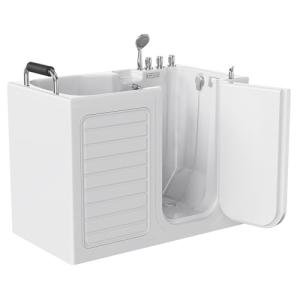
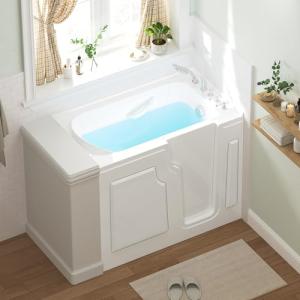
Soaker Walk-In Tubs are the entry point of the category. No jets, no air systems — just a deep tub with a safe door, a built-in seat, grab bars, and non-slip flooring. They're ideal for people who want safer bathing without paying for therapeutic features they may not need. These are typically the most affordable option and the easiest to maintain.
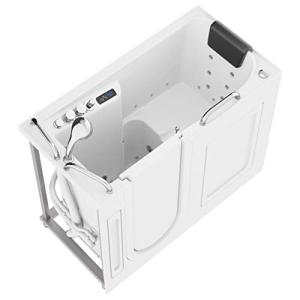
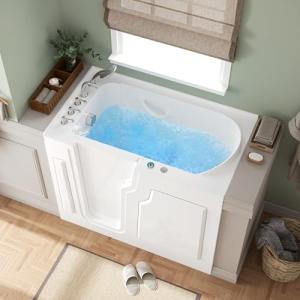
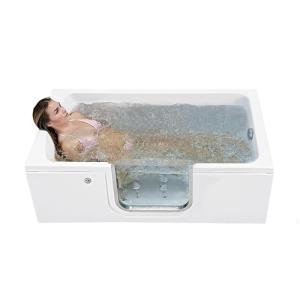
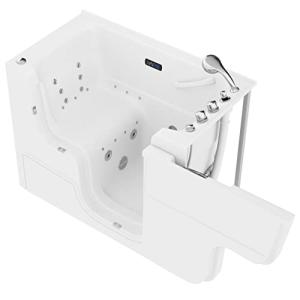
Hydrotherapy (Whirlpool) Tubs add water jets that target specific muscle groups — lower back, legs, feet, calves, and arms. The warm water combined with directed pressure can provide meaningful relief for joint pain, poor circulation, and inflammation. These are especially popular with arthritis sufferers and anyone dealing with chronic muscular pain.
Air Therapy Tubs use dozens of tiny air jets distributed across the tub floor and sides to create a full-body effervescent massage effect. The sensation is gentler and more diffuse than water jets, wrapping the body in warmth and movement. Many people with sensitive skin or conditions like fibromyalgia prefer air therapy over water jets.
Hybrid Tubs combine both water jet hydrotherapy and air therapy in a single unit, letting you use one or both systems at once. This is the most immersive therapeutic experience available and is popular with buyers who want the full spa-like effect at home.
Combination Tub/Shower Units are designed for people who want the flexibility of both a full bath and a standing shower in the same fixture. These models typically include a full shower surround, a showerhead, and sometimes a glass door. They're practical for households where different family members have different preferences, and they're helpful for days when a full soak isn't needed or practical.
Bariatric Walk-In Tubs are wider, sturdier models built to accommodate larger body frames. Most standard walk-in tubs support up to 300–400 lbs, while bariatric models extend that range significantly. If standard tub dimensions feel restrictive, bariatric options offer more seat room and higher weight capacity.
Two-Person Walk-In Tubs are among the most premium configurations available, designed for couples who want to bathe together. These are larger units with dual seating, and they're at the higher end of the price range.
Key Safety Features to Look For
Safety is the core reason most people buy a walk-in tub, so it's worth understanding exactly what features matter and why.
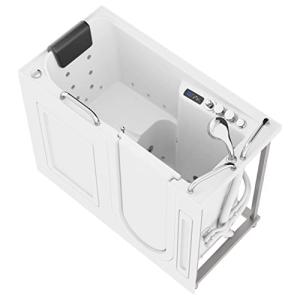
Low step-in threshold is probably the most important single feature. Standard bathtubs require stepping over a rim that can be 15–20 inches high — a genuine fall hazard. Quality walk-in tubs reduce this to 2–4 inches. Some models, like certain Kohler designs, get down to just 3 inches. That low entry threshold alone dramatically reduces fall risk during entry and exit.
Built-in seating means you don't have to lower yourself to the tub floor and then get back up. The seat keeps you elevated, stable, and in control throughout the entire bath. Look for contoured, ergonomic seats with enough depth and height to suit your body comfortably.
Grab bars should be strategically placed — near the door, beside the seat, and along the walls — so you always have something firm to hold. Well-designed tubs integrate grab bars into the structure rather than treating them as afterthoughts.
Non-slip flooring on the tub base is essential. Even seated bathing involves shifting and repositioning, and a slick surface inside the tub is still dangerous. Textured, slip-resistant flooring should be standard on any walk-in tub worth buying.
Inward-opening or outward-opening doors — most walk-in tub doors open inward, sealed by the water pressure inside. Some models offer outward-opening doors or sliding designs. Check that the door seal is robust and that the door opens and closes easily with one hand.
Handheld showerhead allows you to rinse off while seated, and is useful for washing hair or rinsing the tub between uses. Most walk-in tubs include this as standard.
Therapeutic and Comfort Features
Beyond the baseline safety specs, this is where walk-in tubs really differentiate themselves — and where many buyers find the most long-term value.
Hydrotherapy jets aren't just pleasant; they have legitimate therapeutic applications. The combination of warm water immersion and targeted massage increases blood circulation, reduces inflammation, and improves joint flexibility. For people with arthritis, the relief can be significant enough to reduce dependence on pain medication.
Heated backrests and seats keep your body warm throughout the soak, preventing the common frustration of getting cold while waiting for the tub to fill — a real issue in a deep tub that can hold up to 80 gallons of water.
Chromotherapy lighting uses colored LED lights to create mood-influencing effects. It might sound like a gimmick, but color-based light therapy has documented effects on mood regulation and relaxation. Blue tones calm, warmer tones energize. For people dealing with anxiety, depression, or chronic pain-related mood issues, it's a meaningful addition.
Aromatherapy systems allow you to introduce essential oils into the bath experience through the air or water systems. Combined with hydrotherapy, this creates a genuinely spa-like atmosphere at home.
Ozone cleaning systems, offered by brands like Safe Step, automatically sanitize the tub after use, reducing bacterial buildup in jet systems and making maintenance more manageable.
Fast-drain technology addresses one of the legitimate drawbacks of walk-in tubs: you have to wait inside the tub while it drains before you can open the door and exit. Standard drainage can take 5–10 minutes. Fast-drain systems get that down to 1–2 minutes, which is much more comfortable in practice.
Walk-In Bathtub Sizes and Fit
Standard walk-in tubs are typically 50–60 inches long and 28–32 inches wide — roughly the same footprint as a conventional bathtub. This means many homeowners can replace their existing tub without major bathroom remodeling.
That said, you should measure your bathroom carefully before purchasing. The door needs clearance to open, the unit needs to sit level on a structurally sound floor, and your hot water heater needs to be large enough to fill the tub comfortably. Deep walk-in tubs can hold 50–80 gallons, so an undersized water heater is a genuine compatibility issue.
For smaller bathrooms, compact walk-in tub models exist in shorter lengths. For larger spaces or users with specific needs, custom sizing and bariatric configurations are available from most major brands.
Cost: What to Expect
Walk-in bathtubs represent a significant investment, and it's worth being clear-eyed about the numbers before getting attached to a specific model.
Basic soaker walk-in tubs typically start around $2,000–$5,000 for the unit itself. Mid-range models with hydrotherapy jets run $5,000–$10,000. Premium models with hybrid therapy systems, chromotherapy, heated seats, and fast-drain technology can reach $15,000–$22,000.
Installation adds $2,500–$8,000 depending on your bathroom's existing layout and whether plumbing or electrical modifications are needed. A straightforward swap of an old tub for a new walk-in unit on the lower end; relocating plumbing or upgrading electrical systems on the higher end.
All in, most buyers spend somewhere between $5,000 and $20,000 for a fully installed walk-in tub. That's real money — but compare it to the ongoing cost of in-home care assistance, or the steep monthly expense of assisted living facilities, and the math often shifts considerably.
Medicare typically doesn't cover walk-in tubs, as they're classified as home modifications rather than medical equipment. However, veterans may qualify for VA grants like the HISA program. Some state Medicaid programs offer partial assistance. And in some cases, walk-in tubs can qualify as a tax-deductible medical expense — worth discussing with a tax professional.
The Honest Downsides
Walk-in tubs are genuinely useful, but they're not perfect, and it's worth knowing the drawbacks upfront.
The wait-to-exit issue is the most commonly cited frustration. Because the door must stay closed while the tub is full, you have to remain seated inside as the water drains. Fast-drain technology helps, but it's still a few minutes of sitting in an increasingly cool, empty tub. This bothers some people more than others.
Deep tubs mean more water, longer fill times, and higher utility costs. You'll need a water heater with adequate capacity, and baths will take longer to draw than a traditional tub.
Resale value is nuanced. Walk-in tubs appeal strongly to buyers who need them, but may not add value for buyers who don't — and some real estate professionals suggest they can be a neutral or slightly negative factor for general buyers.
Maintenance matters, particularly for jet systems. The channels that carry water and air in therapeutic models can harbor bacteria if not properly cleaned and flushed. Most manufacturers recommend regular cleaning cycles; some models include automated ozone cleaning to make this easier.
Choosing the Right Walk-In Tub: A Practical Checklist
Before you contact a dealer or request a quote, work through these questions:
What's driving the purchase? Safety, pain relief, or both — your answer shapes which features matter most. Do you need wheelchair accessibility or bariatric sizing? What are your bathroom's exact dimensions, and what's the footprint of models you're considering? Does your water heater have sufficient capacity? Do you want a tub-only unit or a combination tub/shower? What's your realistic budget, including installation? Are you or a family member a veteran, or might you qualify for state assistance programs?
Take your time with the decision. Walk-in tubs are long-term investments — well-maintained units typically last 15–20 years — and the right one, matched correctly to your needs and your bathroom, genuinely delivers on its promise.
Walk-in bathtubs occupy an interesting space: they're part safety equipment, part home improvement, and part daily wellness tool. When they're right for a household, they tend to be transformative. People describe getting their independence back. Caregivers describe reduced physical strain. Families describe peace of mind they hadn't realized they were missing.
The key is going in with clear expectations. Know what you need, understand what you're paying for, and don't let either the most enthusiastic sales pitch or the most skeptical review make the decision for you. The right walk-in tub for your situation exists — it's just a matter of finding it.