BOTLIFE PC20: Core Specifications at a Glance
Before the detailed breakdown, here's the hardware foundation you're working with:
- Suction Power: 5,000 GPH (gallons per hour) via triple motor system
- Brushes: Dual active brushes
- Filter: 150μm ultra-fine filtration
- Battery: 5,200mAh lithium
- Coverage: Up to 1,830 square feet per charge
- Charge Time: 2.5 hours
- Climbing Capability: 30° slopes, obstacles up to 1.18 inches
- Control: Bluetooth app
- Self-Parking: Yes, automatic poolside docking
- Pool Compatibility: Inground and above ground
- Cleaning Coverage: Floor, walls, and waterline
These are the specs that matter. Now let's talk about what they mean in practice.
Triple Motors and 5,000 GPH: The Cleaning Engine
The PC20 runs three motors, delivers 5,000 GPH of suction, and pairs that power with dual active brushes to capture everything from leaves to fine particles through a 150μm ultra-fine filter.
That triple-motor architecture is worth pausing on. Most entry-level cordless robots use a single motor that handles both movement and suction, which means one is always being compromised for the other. When the robot is climbing a wall, suction drops. When it's pushing hard suction, its movement slows. Three dedicated motors separate these functions, allowing the PC20 to maintain suction performance regardless of what surface it's working on.
5,000 GPH is a meaningful number in the context of cordless robots. It matches the suction figures you'd typically find in premium corded models, which has historically been the main argument against going cordless: power. The PC20 closes that gap considerably.
The dual active brushes aren't passive rollers — they actually scrub surfaces rather than relying on suction alone. This matters on walls and the waterline where algae and calcium deposits can build up as a film that suction alone won't dislodge. Active brushing addresses that problem mechanically.
The 150μm filter catches debris that most pool filters miss — fine sand, pollen, tiny organic particles, the invisible cloud of sediment that makes water look slightly hazy even when it's technically clean. This level of filtration is what separates a robot that makes your pool look cleaner from one that actually makes your pool water cleaner.
Smart Navigation: What It Actually Does
"Smart navigation" is one of the most abused phrases in robotic appliance marketing. It can mean anything from a basic obstacle sensor to a full spatial mapping system. In the PC20's case, it refers to a systematic path-planning algorithm that maps the pool dimensions and executes methodical cleaning coverage rather than moving randomly.
Random movement cleaners have an inherent problem: they rely on probability to achieve full coverage. On a good run, they might cover 90% of the pool floor. On a bad one, they might repeatedly clean the same strip while leaving corners untouched. Systematic navigation eliminates that variable by planning an actual route.
In a pool cleaning context, systematic navigation matters more than it might seem. A robot that misses 10% of the floor on every run means 10% of the debris stays in your pool, potentially recirculating through your water chemistry system. Consistent, complete coverage is the baseline requirement for the robot to actually do its job.
The PC20's navigation also handles the transition between surfaces — from floor to wall to waterline — without getting stuck at the junction. That transition point is where many cheaper robots fail. The PC20's climbing capability is part of the solution here.
Wall Climbing and Waterline Cleaning: The Features That Separate the Good from the Great
Floor-only cleaning is the bare minimum. Any robot worth owning in 2026 should clean walls too, and the waterline — that ring of grime, sunscreen, body oils, and calcium that collects right at the surface — is the hardest area to reach and the one that makes a pool look neglected fastest.
The PC20 climbs 30° slopes, crosses obstacles up to 1.18 inches, and navigates steps to clean walls, floors, and waterlines without getting stuck.
Thirty degrees is a steeper incline than the walls of most standard inground pools, which means the PC20 should handle virtually any residential pool geometry without struggling. The 1.18-inch obstacle clearance means it can navigate over typical pool features — drains, fittings, raised tile edges — that send cheaper robots spinning in place or reversing indefinitely.
The waterline cleaning capability is genuinely important for both aesthetics and maintenance. That grimy ring at the surface isn't just cosmetic — it's a biofilm that can harbor bacteria and affect water chemistry readings. Scrubbing it regularly keeps water conditions more stable and significantly reduces the amount of manual scrubbing you need to do with a brush on a pole.
Battery, Runtime, and the Self-Parking Feature That Changes Everything
Here is where the PC20 makes its most compelling argument against the common criticisms of cordless pool robots.
With its 5,200mAh battery, the PC20 cleans up to 1,830 square feet on a single charge and fully recharges in just 2.5 hours.
1,830 square feet is a generous coverage figure — larger than many residential inground pools. A standard 16×32 foot pool has roughly 512 square feet of floor surface. Add wall area and the total cleaned surface climbs, but the PC20's runtime should comfortably handle a complete clean cycle for pools of typical residential dimensions.
The 2.5-hour charge time is fast for a robot battery of this capacity. If you're running the PC20 daily — which is unusual but possible — the turnaround time between charges is practical rather than punishing.
But the feature that most directly addresses the core frustration of cordless pool robots is the self-parking system.
The PC20 automatically docks at the poolside when the battery is low or cleaning is done, and comes with a lifting hook for effortless retrieval and rapid water drainage.
This is the feature that ends the anxious waiting. The primary objection to cordless robots among serious pool owners has always been the retrieval problem: you have to be around when the robot finishes, or you risk it sinking to the bottom as the battery dies. Self-parking solves this. When the PC20 determines it has completed its cleaning cycle — or detects that its battery is running low — it navigates to the pool wall and parks there, accessible and ready to be lifted out at your convenience.
The included lifting hook handles the retrieval without getting your hands wet, and the drainage design means water evacuates quickly rather than pouring out across your deck when you lift the robot clear.
This isn't a trivial quality-of-life improvement. It's the difference between a robot that works for you and one that requires you to work around it.
App Control and Bluetooth Connectivity
The PC20 offers smart app control via Bluetooth for managing cleaning modes, suction power, and runtime.
The Bluetooth-based app puts a usable control interface in your pocket. You can select cleaning modes — floor only, floor and wall, or full coverage including waterline — adjust suction intensity depending on how dirty the pool is after a storm versus routine maintenance, and monitor or schedule cleaning cycles without being physically poolside.
Bluetooth rather than Wi-Fi connectivity means the range is limited to roughly 30 meters in ideal conditions, which covers most backyard scenarios without requiring your pool robot to be connected to your home network. There's a tradeoff here: you won't receive notifications while away from home, and you can't start a remote cleaning cycle from your office. For users who want that level of remote control, it's a limitation worth noting. For users who prefer keeping smart home devices off their primary network, it's actually a feature.
The app interface also handles firmware management for the robot, which means improvements and bug fixes can be pushed without requiring physical servicing.
IP68 Waterproofing and Build Quality
A pool robot that's anything less than fully waterproof is a contradiction in terms, but the specific rating matters. The IP68 waterproof rating allows cleaning in pools up to 3 meters deep — well beyond the depth of any standard residential pool.
IP68 is the highest standard waterproofing classification, meaning complete, continuous submersion protection. For a robot operating in a chemically treated water environment, this level of ingress protection is essential for long-term durability. Chlorine and other pool chemicals are corrosive over time, and proper sealing prevents water intrusion that would damage the motor systems and electronics.
The cordless design also eliminates the most common failure point of traditional corded robots: the cable. Cords fray, develop shorts, tangle around pool fittings, and degrade under UV exposure. The PC20 carries all its power internally, removing that maintenance variable entirely.
Who Should Buy the BOTLIFE PC20?
The PC20 is a well-matched product for a specific type of pool owner, and it's worth being honest about who that is.
It's the right choice if you have a mid-sized inground or above ground pool — roughly up to 1,830 square feet — and you want a fully automated cleaning solution that handles floor, walls, and waterline without constant supervision. The self-parking feature makes it genuinely hands-off in a way many competitors don't manage. The triple motor system and 5,000 GPH suction mean it's not sacrificing performance for cordless convenience. The app control and smart navigation add usability without complicating the experience.
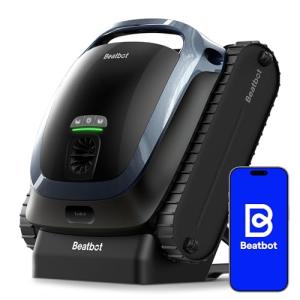
It's less ideal if you have a very large commercial pool or an unusually complex pool geometry with multiple levels or extensive step arrangements. The Bluetooth-only connectivity also limits it for users who want full remote access outside Bluetooth range. And if your budget extends toward $1,500 and above, the premium cordless segment — including robots like the Beatbot AquaSense 2 — offers features like surface parking, water clarification, and more advanced navigation mapping that the PC20 doesn't include.
For the majority of residential pool owners who want thorough, automated cleaning at a reasonable price point, the PC20 hits the mark squarely.
BOTLIFE PC20 vs. The Competition: Comparison Table
The mid-range cordless robotic pool cleaner market is genuinely competitive in 2026. Here's how the PC20 stacks up against the most relevant alternatives:
| Feature | BOTLIFE PC20 | AIPER Scuba S1 (2026) | WYBOT C2 | Beatbot AquaSense 2 |
|---|---|---|---|---|
| Suction Power | 5,000 GPH | ~4,000 GPH | ~4,500 GPH | ~5,500 GPH |
| Motors | Triple (3) | Dual (2) | Dual (2) | Dual (2) |
| Battery | 5,200mAh | Extended 240-min | ~150-min | ~120-min |
| Coverage | 1,830 sq.ft | ~1,600 sq.ft | ~2,150 sq.ft | ~3,875 sq.ft |
| Charge Time | 2.5 hours | ~3 hours | ~3 hours | ~4 hours |
| Wall Climbing | ✅ Yes (30°) | ✅ Yes | ✅ Yes | ✅ Yes |
| Waterline Cleaning | ✅ Yes | ✅ Yes | ✅ Yes | ✅ Yes (double-pass) |
| Self-Parking | ✅ Auto-park | ✅ Yes | ✅ Yes | ✅ Surface parking |
| App Control | ✅ Bluetooth | ✅ Wi-Fi + App | ✅ Wi-Fi + App | ✅ Wi-Fi + App |
| Filter Rating | 150μm ultra-fine | Dual filtration | Ultra-fine | Ultra-fine |
| Pool Type | Inground + Above Ground | Inground | Inground + Above Ground | Inground |
| Estimated Price Range | Mid-range | Mid-range | Mid-range | Premium ($1,500+) |
| Obstacle Clearance | 1.18 inches | Standard | Standard | Standard |
A few things stand out from this comparison. The PC20's triple motor setup is unique in this segment — the competitors listed all use dual motors. In practical terms, this means the PC20 can dedicate independent power to suction, drive, and brush functions simultaneously without the performance tradeoffs that come with shared motor systems.
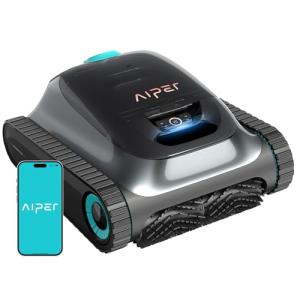
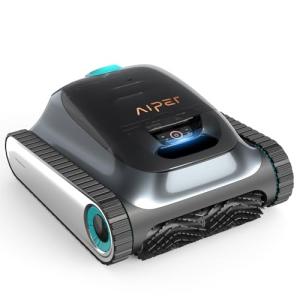
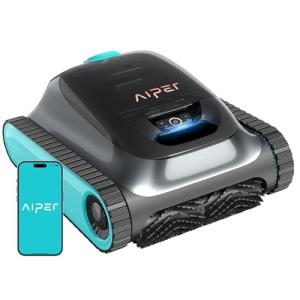
The AIPER Scuba S1 2026 upgrade brings an extended battery life that's competitive, but its single filtration system versus the PC20's 150μm ultra-fine filter means it may not capture the finest particles as consistently. The WYBOT C2 has strong coverage area and a good app experience, with Wi-Fi connectivity giving it an edge for remote scheduling. The Beatbot AquaSense 2 is the premium choice with double-pass waterline scrubbing and surface parking, but it comes at a significantly higher price point that places it in a different budget category for most buyers.
Where the PC20 distinguishes itself most clearly is the combination of triple motor power, self-parking with a dedicated lifting hook, ultra-fine filtration, and 1,830 square foot coverage at its price point. That's a feature density that few mid-range competitors currently match.
The Maintenance Reality: What Ownership Actually Looks Like
A pool robot review that doesn't address the ongoing maintenance reality isn't complete. Here's the honest version of what owning a PC20 looks like week to week.
After each cleaning cycle, you'll need to remove and rinse the filter basket. The 150μm filter captures fine debris efficiently, which means it also fills up — particularly after heavy use or post-storm cleaning. The filter cleaning process is straightforward: remove the basket, rinse under a hose, reinsert. This takes about two minutes and should be done after each use to maintain suction performance.
The dual active brushes will eventually wear and need replacement, as they do with any robotic cleaner. Brush longevity depends on pool surface texture — rougher surfaces like concrete and pebble finishes wear brushes faster than smooth vinyl or fiberglass. Most users report meaningful brush life before replacement is needed.
Charging the battery between uses is the other routine step. At 2.5 hours to full charge, this fits naturally into an overnight or post-swim routine.
What you don't need to do: manage tangled cords, manually fish the robot out of the deep end with a net, or babysit the cleaning cycle. The self-parking feature genuinely delivers on the hands-off promise in a way that makes a practical difference to the daily ownership experience.
Frequently Asked Questions
Does the BOTLIFE PC20 work in above ground pools? Yes. The PC20 is designed for both inground and above ground pools, and its obstacle clearance and climbing capability allow it to handle the typical edge and wall geometries of both pool types.
How does the self-parking work if the pool has no defined "side"? The robot uses proximity sensing to detect the pool wall and navigates toward it when it determines the cleaning cycle is complete or the battery threshold is reached. It parks against the wall rather than at a dedicated docking station, and the lifting hook makes retrieval clean and dry.
Can you run the PC20 while people are swimming? No. Like all robotic pool cleaners, the PC20 should be used in an empty pool. Running it while swimmers are present creates both a safety risk and a cleaning inefficiency — turbulence from swimmers disrupts the robot's navigation and reduces cleaning effectiveness.
What pool surfaces is the PC20 compatible with? The PC20 is compatible with standard residential pool surfaces including concrete, vinyl, fiberglass, and tile. The active brushes and obstacle clearance make it adaptable to pools with steps, drains, and fittings.
Does the filter need replacing, or just rinsing? The filter is designed for regular rinsing rather than frequent replacement. Deep cleaning with a soft brush is recommended periodically, and replacement filters are available for when the filter shows visible wear.
The robotic pool cleaner market in 2026 is noisy. There are dozens of cordless robots making essentially the same claims — smart navigation, wall climbing, app control, self-parking — and at first glance, many of them look nearly identical. The BOTLIFE PC20 isn't a revolutionary product, but it's a genuinely well-executed one.
The triple motor system at this price point is the headline differentiator. Three dedicated motors mean the PC20 doesn't have to choose between cleaning and moving effectively. Add 5,000 GPH suction, 150μm filtration, legitimate wall and waterline cleaning, a self-parking system that actually works, and a 2.5-hour recharge time, and you have a package that answers the most common complaints about mid-range cordless pool robots directly.
The Bluetooth-only app connectivity is a real limitation if you want remote scheduling and notifications from anywhere. The coverage ceiling of 1,830 square feet puts very large pools outside its range. And buyers who want the most sophisticated navigation, surface parking, or water clarification features will need to look at the premium tier — and pay premium prices.
But for the vast majority of residential pool owners with a standard inground or above ground pool, the PC20 is a capable, feature-complete robotic cleaner that earns its place in the water. It cleans where competitors stop, parks itself when it's done, and charges quickly enough to be ready when you need it next.
Pool ownership should be a pleasure. The BOTLIFE PC20 makes a credible case that it can be.
→ Check the current price and availability of the BOTLIFE PC20 on Amazon